Introduction
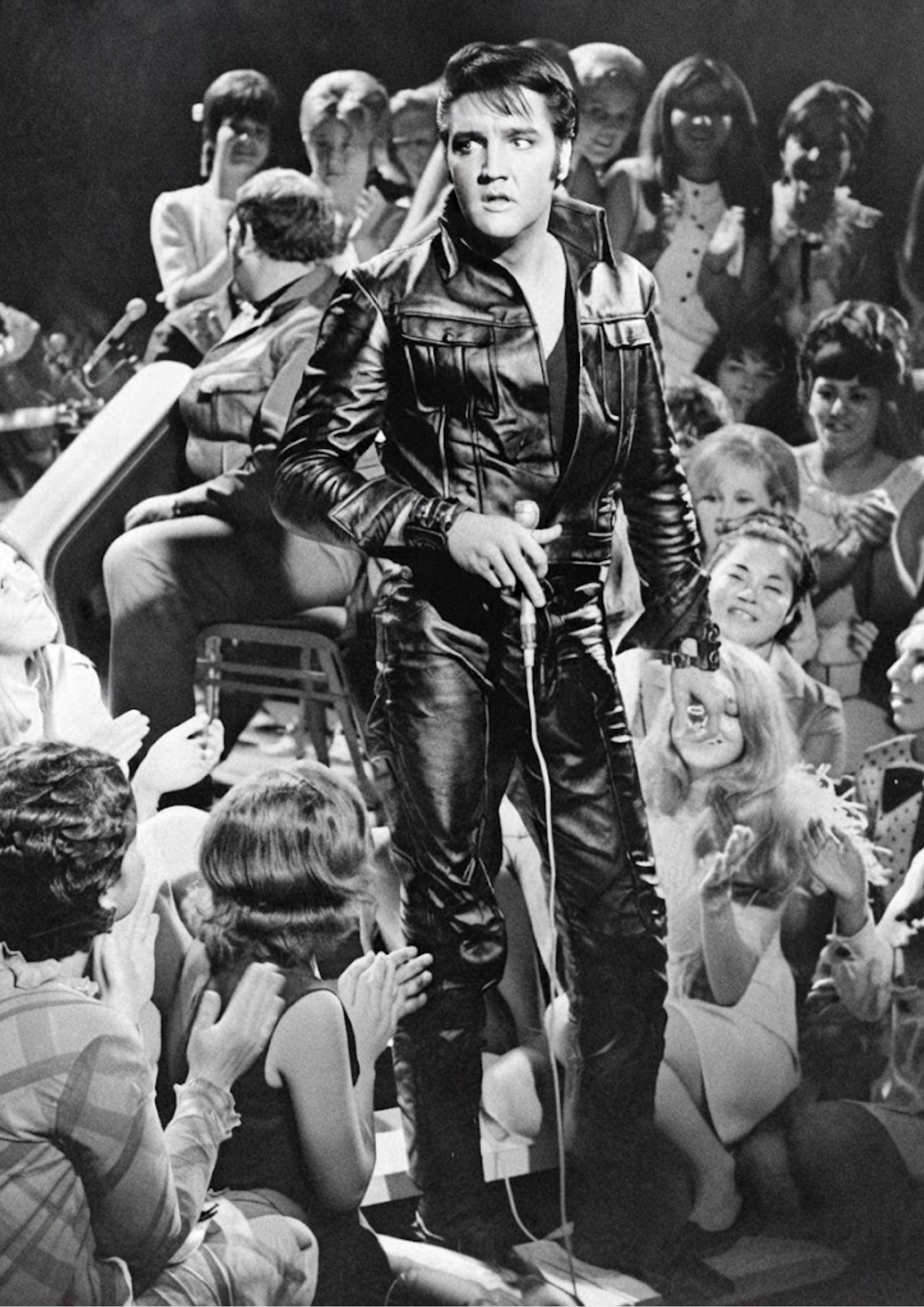
The King and His Shadow: Unveiling the Secret Fears That Haunted Elvis’s Final Years
When we reflect upon the golden era of rock and roll, the name Elvis Presley instantly conjures an image of unmatched majesty. He was the undisputed King, an artist whose celestial charisma captivated millions and forever altered the cultural DNA of modern music. Yet, as the calendar turned toward his final decade, the glittering lights of Las Vegas and the roaring crowds began to frame a much more sombre reality. Beneath the bespoke jumpsuits and the adoring applause, a quiet, corrosive storm was brewing within the King’s mind—one characterized by a deep, crippling paranoia that turned his later years into a gilded cage of isolation.
To truly understand Elvis in the twilight of his life, one must look beyond the stage and examine the psychological weight of his extraordinary existence. By the late 1960s, a climate of generalized fear—sparked by societal turbulence and high-profile tragedies such as the Manson family murders—began to deeply fracture his sense of safety. For a man who lived his entire adult life exposed to the ferocious demands of the public eye, this external anxiety metastasized into intense suspicion. His inner circle, the loyal companions of the “Memphis Mafia,” watched with mounting alarm as the King’s world shrank. Security measures grew increasingly labyrinthine, and the sanctuary of his own home became fortified against imagined threats, turning everyday existence into an exhausting exercise in hyper-vigilance.
This mounting paranoia was profoundly intertwined with the relentless pressure cooker of his career. Bound by grueling residency obligations and insulated by a business machinery that often kept harsh realities at bay, Elvis found himself increasingly detached from the outside world. He was surrounded by people yet fundamentally alone, trapped by the very myth he had created. His immense wealth and legendary status could not buy him the one thing he desperately craved: peace of mind. Instead, suspicion clouded his relationships, and the once-spontaneous joy that defined his youth was gradually replaced by a pervasive, suffocating apprehension.
For mature audiences and discerning music enthusiasts who remember the sheer, unbridled brilliance of his rise, looking back at these dark psychological struggles offers a sobering perspective. Elvis Presley’s legacy is undeniably monumental, but it is also deeply human. By exploring the quiet paranoia that shadowed his final chapters, we move past the glittering myth to witness the heavy emotional toll of unmatched fame. It stands as a poignant reminder that even the brightest cultural icons are vulnerable to the invisible cages of the mind, leaving us to honor his enduring musical contributions with a profound sense of empathy and reflection.