Introduction
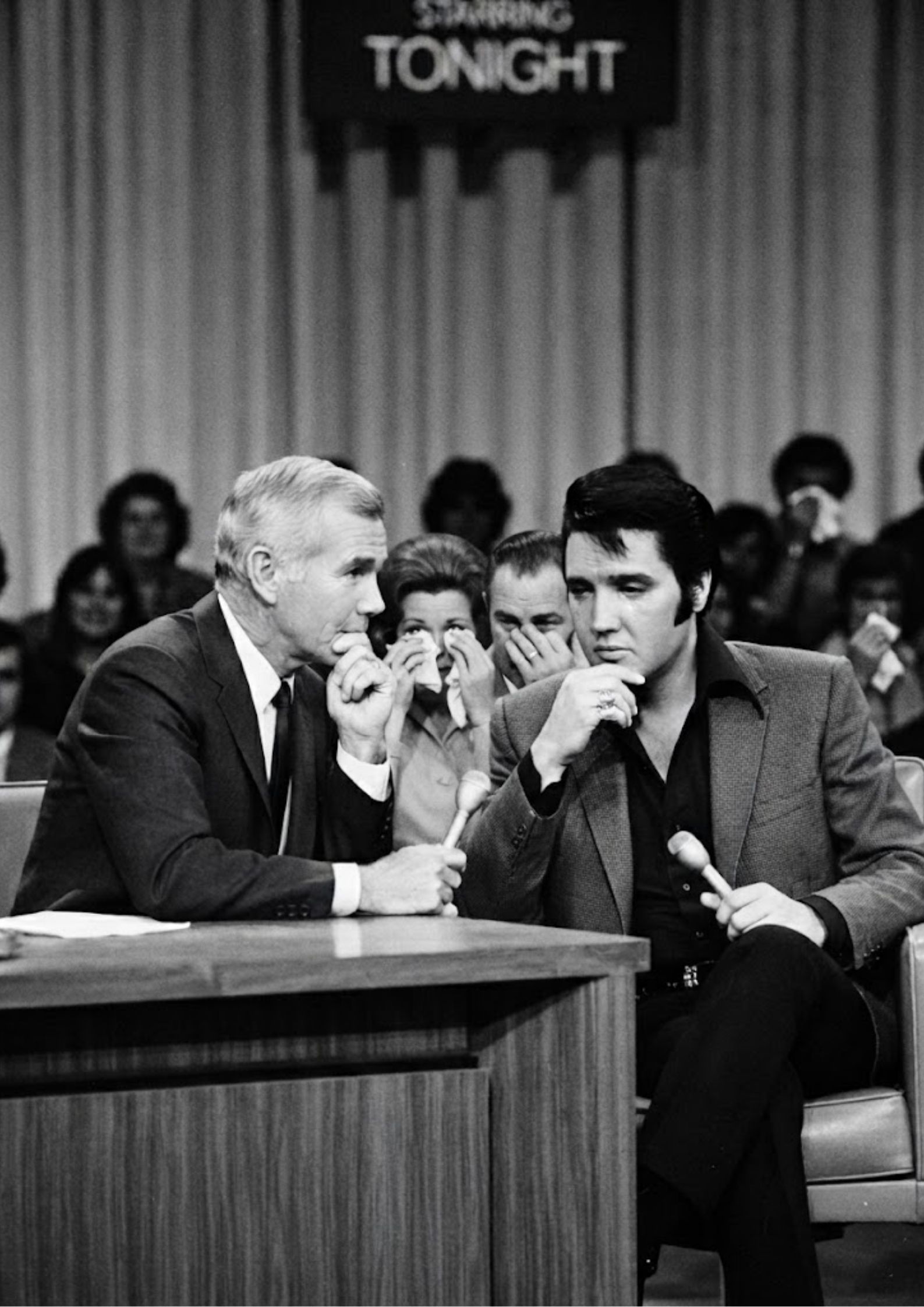
Exposing the Dark Secret: How Johnny Carson’s Live-Air Ambush on Elvis Ended in Tragic Tears!
When looking back at the golden age of American television and pop culture, few encounters carry as much retrospective weight as the dynamic between late-night television royalty Johnny Carson and the irreplaceable King of Rock and Roll, Elvis Presley. For mature music enthusiasts and discerning audiences who lived through the seismic shifts of the mid-twentieth century, the mere mention of these two giants brings back a flood of memories. While Carson was renowned for his sharp wit, immaculate comedic timing, and an uncanny ability to peel back the layers of his celebrity guests, his interactions with Presley—and the broader cultural narratives surrounding them—reveal a profound story of mutual respect, hidden vulnerability, and emotional resonance that continues to captivate us today.
To understand why a potential confrontation or an “expose” between Carson and Elvis carries such narrative weight, one must appreciate the immense pressure resting on the shoulders of both men. Johnny Carson commanded the late-night airwaves, acting as the ultimate cultural gatekeeper for millions of Americans. On the other side stood Elvis, a global titan whose life was heavily shielded by an impenetrable fortress of management, security, and fame. For years, rumors circulated about whether Carson would ever truly push the King past his rehearsed charm on live television. Yet, whenever the topic of Presley arose in cultural discourse, what unfolded was rarely a dismantling of a star, but rather a collective realization of the heavy toll exacted by absolute stardom.
The true emotional core of their intertwined legacies is revealed not in scandal, but in the poignant reality of how fragile true artistic genius can be. Elvis possessed a vocal instrument and a soulful delivery that connected on a deeply human level with millions. When fans tuned in to see reflections of their favorite icon, they were searching for authenticity—a glimpse of the humble Mississippi boy who changed music forever. When cultural commentators like Carson touched upon the pressures, the isolation, and the relentless demands placed upon the King, it struck a universal chord. It reminded an entire generation that behind the dazzling sequined jumpsuits and the roaring stadiums lay a profoundly human soul grappling with the loneliness of the summit.
For those of us who have followed music history across the decades, these historical crossroads serve as powerful reminders of an era when television brought a nation together. The emotional weight of Elvis’s journey, viewed through the lens of late-night television history, transcends mere entertainment. It remains an enduring testament to a golden age of artistry—one defined by breathtaking talent, unspoken sacrifices, and a timeless bond between an artist and his audience that will never be forgotten.