Introduction
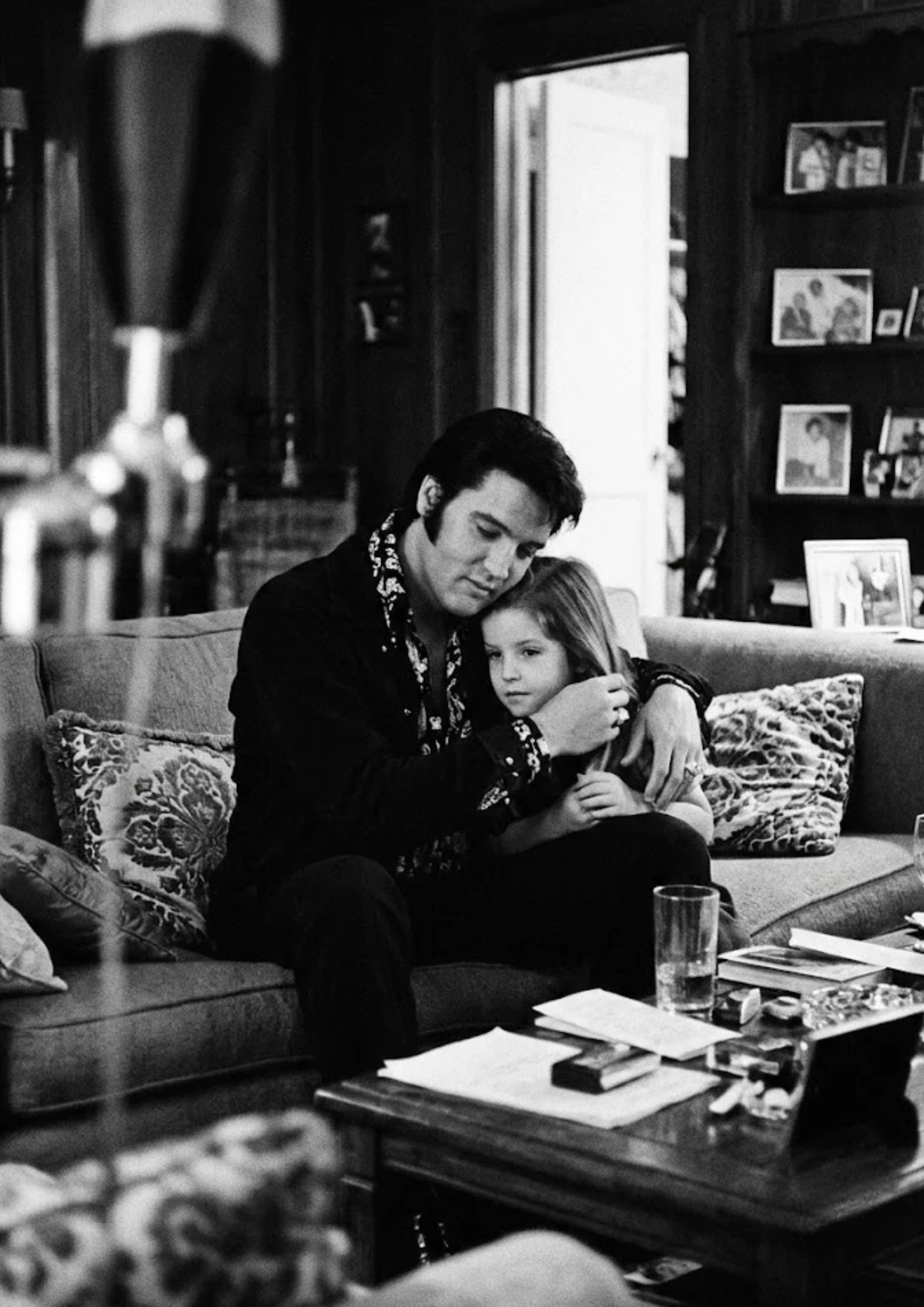
The Broken Vow at Graceland: Inside the Childhood Fear That Haunted Lisa Marie Presley Long Before the King Fell
To the global public, Elvis Presley was an untouchable archetype of mid-century excess, charismatic vigor, and musical rebellion. Yet behind the heavily guarded wrought-iron gates of Graceland, that colossal cultural footprint contracted into a fragile, domestic focus. To a nine-year-old Lisa Marie Presley, the man draped in rhinestoned jumpsuits was simply a father whose mortality felt perilously tenuous. Long before mass media confronted his physical decline, it was the acute intuition of a frightened child that registered the storm gathering within the mansion’s upper quarters.
The tragedy of their bond rests on a quiet, private exchange that would echo across decades. As later recounted by Lisa Marie and preserved in her posthumously finished memoir, From Here to the Great Unknown—completed by her daughter, Riley Keough—the young girl was persistently gripped by a premonition of loss. Confronted by her anxiety, Elvis offered the timeless, instinctive comfort of a protective parent: a whispered promise that she had nothing to fear, that he was never leaving her side. For a child navigating an insular kingdom of bodyguards, nocturnal schedules, and blinding adoration, those words served as an emotional anchor.
On August 16, 1977, that anchor shattered. At just forty-two, Elvis collapsed inside Graceland, leaving behind a bewildered nine-year-old to absorb the incomprehensible silence of an empty throne. While international headlines framed the passing as the abrupt twilight of an era in popular music, the devastation for Lisa Marie was purely existential. The King belonged to the crowds of Las Vegas, the historical archives of Sun Studio, and the commercial machinery of Hollywood; the father, however, belonged entirely to her—and no amount of posthumous accolades could bridge the gap of an interrupted conversation.
In the years following, sensational lore often circulated rumors of mysterious final tapes and hidden messages left behind by the music icon. Yet the genuine, documented reality carries far more resonance than speculative tabloid fiction. The only tapes that truly defined the narrative were the raw, intimate recordings Lisa Marie left behind for her own daughter, Riley, detailing the perpetual grief of surviving an immortal icon.
Ultimately, the Presley legacy is not merely one of chart supremacy or commercial resurrection. It is an enduring portrait of human vulnerability caught within the machinery of myth. Elvis Presley conquered the world, yet could not outrun the frailties of his own human form—leaving behind an immortal vow broken by fate, and a daughter who carried the weight of that unfinished childhood promise until her final breath.