Introduction
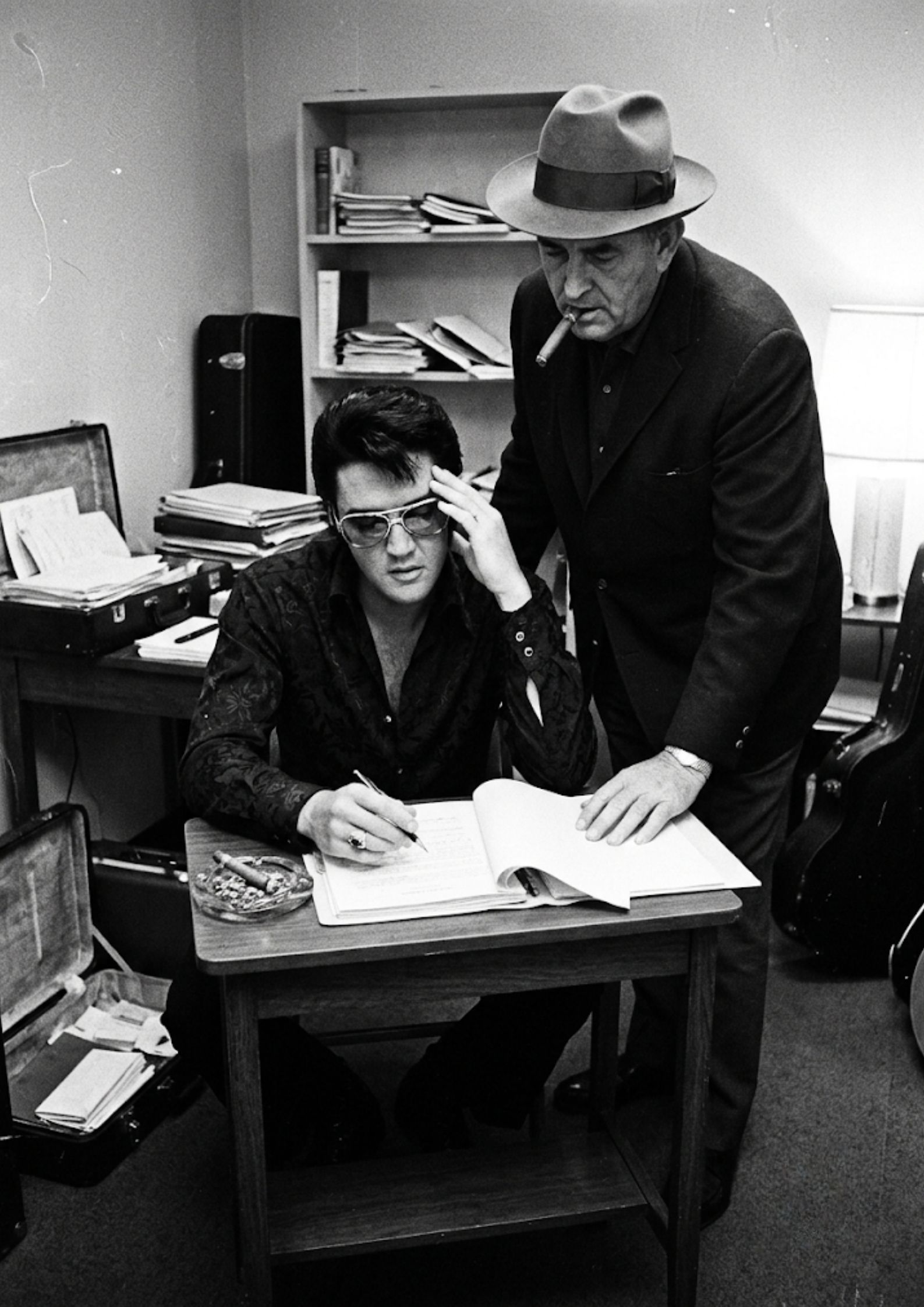
The Watcher at the Bedside: THE SHOCKING Nocturnal Vigil, Tragic Rescues, and Final Heartbreak of Elvis Presley’s Forgotten Guardian
To the millions of fans who packed arenas across America, the mid-1970s Elvis Presley was an untouchable, larger-than-life force—a glittering, cape-clad deity of American entertainment. But past the heavy velvet curtains of Graceland, after the adrenaline of the stage had faded into quiet isolation, Presley was a man in freefall. And for four and a half years, a young Memphis beauty named Linda Thompson was the only barrier between the King and a tragic, premature end.
While popular history often glosses over the grueling realities of Presley’s final years, Thompson’s intimate 2016 memoir, A Little Thing Called Life: On Loving Elvis Presley, Bruce Jenner, and Songs in Between, exposes the harrowing, sleepless night-watch she endured. Her testimony, supported by the memoirs of the Memphis Mafia and inner-circle accounts, reveals that being the girlfriend of the world’s most famous entertainer was not a glamorous fairy tale. It was a relentless, terrifying ordeal of amateur medical watchfulness, where loving Elvis meant spending every night listening to make sure he was still breathing.
The Nocturnal Sentinel: The Vigil Over a Fading King
When Linda met Elvis in July 1972 at a private movie screening in Memphis, she was a twenty-two-year-old Miss Tennessee pageant winner, entirely unprepared for the medical crisis she was about to inherit.
The dream of loving her childhood idol quickly dissolved into a grueling routine. Thompson’s book recounts her shock at discovering the densely cluttered nightstand beside Elvis’s bed, packed with prescription bottles. Relies on doctor-prescribed pharmaceuticals—amphetamines to start the day, heavily sedating barbiturates like Placidyl to force sleep, and a cocktail of painkillers—Elvis viewed his dependency as legitimate medical care, unaware of the fatal toll it was taking on his body.
Thompson soon realized that she could not afford to sleep.
For the next four and a half years, her primary role shifted from companion to nocturnal sentinel. While Elvis slept, heavily medicated, Thompson stayed awake for hours, watching his chest rise and fall, checking for the erratic, shallow breathing that signaled a respiratory emergency. In interviews, she described her life during this period as being akin to caring for a newborn, constantly checking for signs of life. By her own estimation, she intervened to rescue or revive him from life-threatening breathing episodes ten to twelve times.
One night in 1976 became a terrifying centerpiece of this ordeal.
After consuming a heavily sedating dosage, Elvis had fallen asleep while eating chicken noodle soup, his face entirely submerged in the bowl. Finding him unresponsive, a panicked Thompson had to jump onto the bed, lift his head by his hair, and physically clear the semi-solid food from his throat to prevent him from suffocating. It was a grotesque, desperate rescue—the kind of crisis that never made the newspapers, but which occurred with frightening regularity behind Graceland’s closed doors.
The Prison of Devotion: Surviving the Entourage
The relentless burden of keeping Presley alive was compounded by the intense, claustrophobic nature of his possessiveness. Bound to a man who demanded her constant, undivided attention, Thompson lived as a heavily monitored prisoner of Elvis’s insecurities.
He dictated her appearance, grew fiercely jealous of any outside interactions, and frequently strayed with other women, expecting her absolute forgiveness. While Thompson stayed by his side through exhausting, weeks-long hospital stays, sometimes sleeping on a cot beside his bed, she found herself increasingly isolated. At Graceland, the Memphis Mafia and even Elvis’s father, Vernon, relied on her selfless, round-the-clock watch, treating her as the ultimate insurance policy against the tragedy they all knew was coming.
By late 1976, the toll of this ceaseless vigilance had become unsustainable.
A young woman with her own aspirations of normalcy and family, Thompson realized she was slowly destroying herself to preserve a man who refused to be saved. The breaking point arrived at a San Francisco hotel at the end of 1976. When Elvis gently suggested she fly back to Memphis to rest—a cover, Thompson knew, for another woman already waiting in the wings—she refused to argue.
“I love you, too,” she said, choosing survival over the endless, heartbreaking watch. It would be the last time she ever saw him alive.
The Last Call and the Haunting Legacy
The news she had spent four and a half years trying to prevent finally came on August 16, 1977.
But it did not come from a news anchor or an estate representative. It came in the form of a frantic, sobbing phone call to Los Angeles from nine-year-old Lisa Marie Presley.
“My daddy’s dead!” the child cried to the woman who had once been her surrogate protector, delivering the devastating, final confirmation: “He’s smothered in the carpet.”
For decades after the funeral, Thompson was haunted by the agonizing, inevitable question: Could she have saved him if she had stayed?
Vernon Presley and several of Elvis’s closest associates openly told her that had she been at Graceland that August afternoon, the King would still be alive. Yet Thompson eventually found peace in a hard, liberating truth: no single human being could have permanently halted the self-destructive slide of Elvis Presley. Staying would have only delayed the inevitable, likely leaving her to discover his lifeless body herself—a trauma she was ultimately spared.
Linda Thompson did not let the shadow of Graceland define her. She went on to become a highly successful, Academy Award-nominated lyricist, famously co-writing the heart-wrenching Whitney Houston ballad “I Have Nothing”—a song she later revealed was deeply inspired by the consuming, all-or-nothing reality of loving the biggest star on earth.
Elvis Presley’s legacy is built on the electrifying triumphs of a cultural revolution. But Linda Thompson’s memories tell the human story of the silent, exhausting war fought in the dark—where a young woman spent the best years of her youth watching over a fading king, only to realize that sometimes, the only person you can save is yourself.
Now, you have seen the heavy, invisible price of loving a legend. Do you believe that if Linda had stayed, she could have rewritten the tragic end of Elvis Presley’s story? Or is there a limit to what love can carry before it must choose to walk away?