Introduction
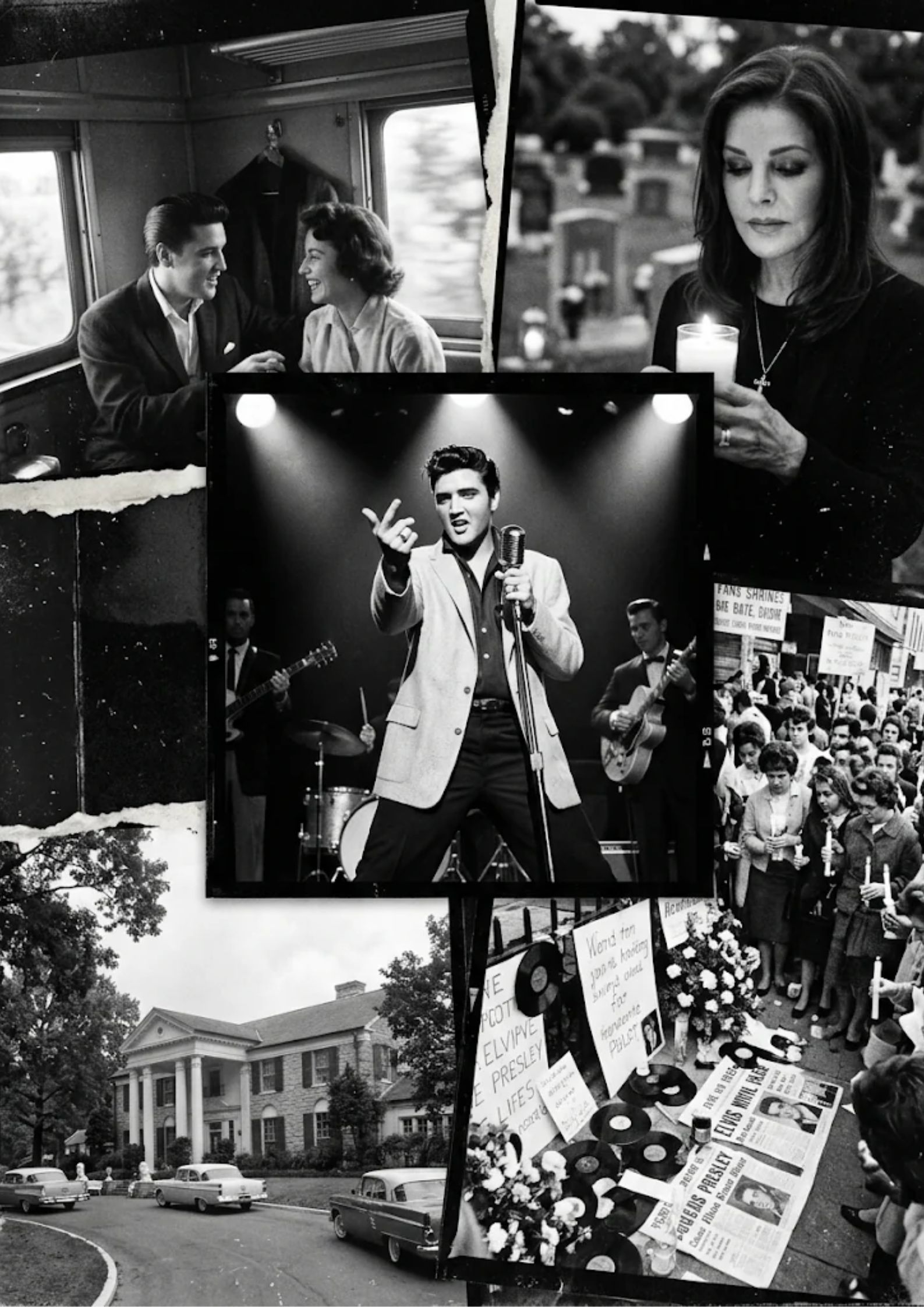
The Finger That Saved the King: The SHOCKING 1956 Jacksonville Showdown That Almost Put Elvis in Handcuffs
In August 1956, twenty-one-year-old Elvis Presley was not just the most volatile cultural lightning rod in the United States; he was sixty minutes away from a county jail cell. Across the Deep South, his frenetic rhythm, leather-lunged vocals, and uninhibited pelvic gyrations had driven millions of suburban teenagers into hysterical frenzy—and pushed conservative authorities to the brink of panic. In Jacksonville, Florida, civic hysteria finally mobilized the full force of the law, setting the stage for an extraordinary standoff between judicial censorship and rock-and-roll rebellion.
The city’s power brokers were armed and waiting. During an earlier appearance in Jacksonville, teenage girls had swarmed the bandstand, shredding Presley’s stage attire in a chaotic stampede. Local clergy wasted no time in seizing the moral panic; Reverend Robert Gray publicly decried the young singer as an emissary of spiritual degeneracy, urging local courts to intervene before the youth of Florida were irreversibly corrupted.
Enter Marion Gooding, a formidable Juvenile Court judge who had no interest in empty rhetoric. Armed with legal statutes concerning the “impairment of the morals of minors,” Gooding drafted arrest warrants bearing Presley’s name. The mandate delivered to Presley’s camp was chillingly explicit: one suggestive forward pelvic thrust, and the performance would be halted by law enforcement, with the King escorted directly off the stage in handcuffs.
On August 10 and 11, the ornate auditorium of the Florida Theatre transformed into an armed perimeter. Thousands of ticket-holders paying $1.25 packed the venue, but nestled in the orchestra pit were uniformed police officers wielding film cameras to document evidentiary proof of indecency. At the rear of the theater, Judge Gooding sat in silent surveillance, warrants in hand, ready to issue the order.
Faced with state suppression, Presley executed a masterstroke of theatrical defiance. Rather than canceling the engagements or inciting a riot, he stepped up to the microphone and stood rigidly flat-footed, as guitarist Scotty Moore later recounted. The wild, prowling showman appeared frozen in place, neutering the legal grounds for obscenity.
Yet the King refused total capitulation. With police cameras whirring in the pit, Elvis redirected every ounce of rhythm, rebellion, and kinetic energy into his left little finger. Throughout all six sold-out performances, he rhythmically curled, wiggled, and snapped that single digit to the tempo of the music—mocking the absurdity of the court’s demands while driving the packed auditorium into delirious ecstasy.
It was an undeniable checkmate. Under the precise letter of the law, a wiggling finger could not be prosecuted as moral degradation. Judge Gooding was so impressed by Presley’s composure under legal threat that he never signed the warrants, even permitting his own daughters to attend the subsequent shows. Decades later, family accounts confirmed that the hardline magistrate evolved into an ardent lifelong fan, faithfully tuning into Presley’s television specials.
During his historic ’68 Comeback Special, Presley famously laughed as he recalled performing under the watchful eyes of Florida state troopers, immortalizing the evening his pinky finger outmaneuvered the American penal system. Today, the Jacksonville showdown remains a definitive parable of twentieth-century culture: the moment an empire attempted to imprison the future of sound, only to watch it escape on the tip of a single finger.