Introduction
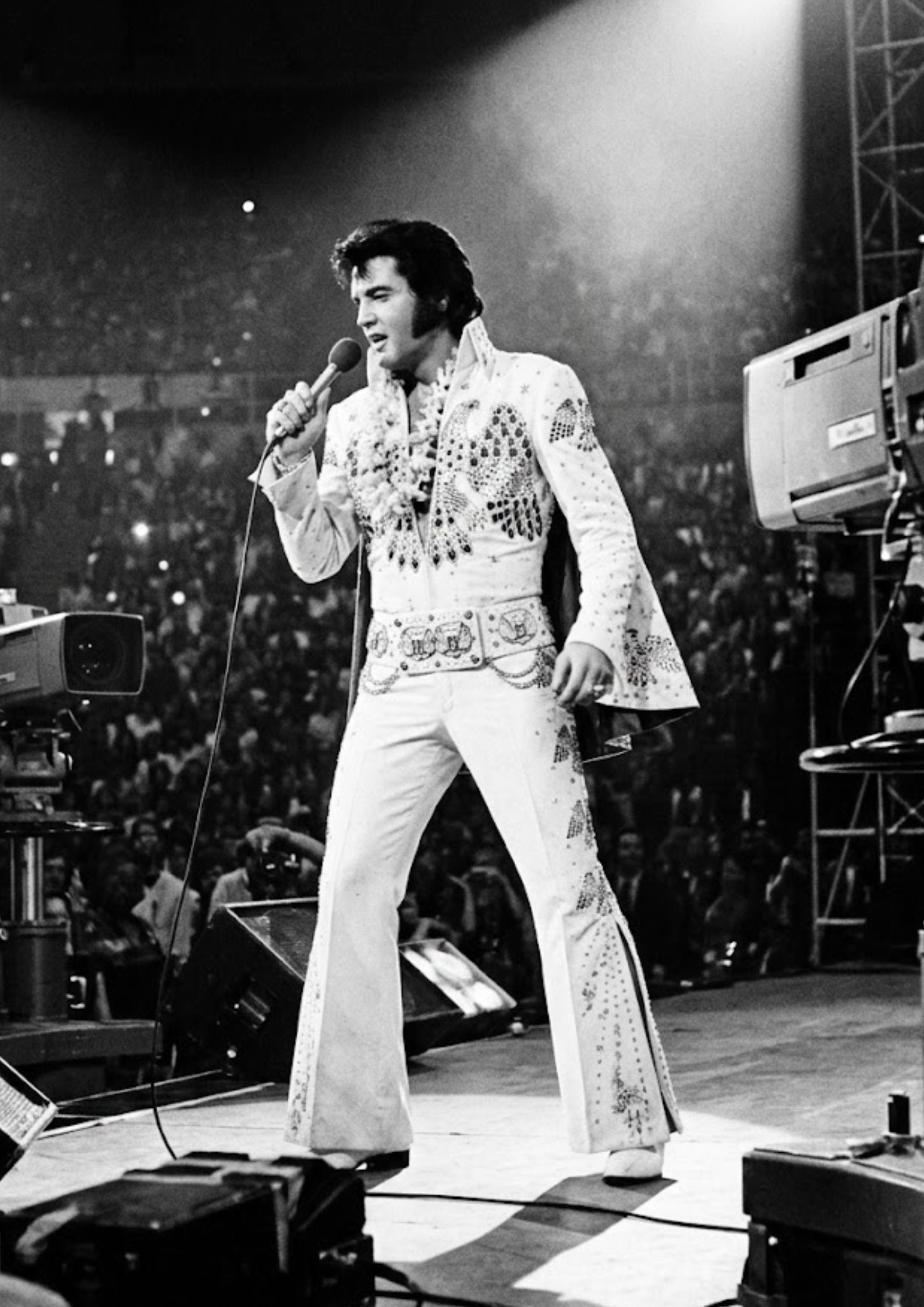
Orbiting the King: The SHOCKING 1973 Broadcast That Conquered the Planet Before the Internet
On September 4, 1972, inside a crowded Las Vegas conference room, RCA President Rocco Laginestra stepped to the podium beside Elvis Presley to make an announcement that bordered on science fiction for the era: the King of Rock and Roll would beam a solo concert live to the world via orbital satellite. Long before fiber optics, YouTube, or livestreaming existed, the venture represented a multimillion-dollar logistical gamble that would either redefine global mass media or disintegrate in front of an international audience.
On January 14, 1973, that calculated wager became Elvis: Aloha from Hawaii via Satellite, an unprecedented television milestone that permanently shifted the boundaries of live entertainment.
Staged at the Honolulu International Center before an electrified capacity crowd, Elvis strode onto the platform clad in Bill Belew’s iconic white American Eagle jumpsuit. The logistical execution required military-level precision: live orbital feeds were transmitted across Asia and Oceania, while taped delays reached European and American networks across staggered time zones to maximize viewership. While promotional estimates long claimed the broadcast reached upwards of one billion viewers—a figure reflecting theoretical market coverage rather than verified, simultaneous headcounts—the cultural and industrial footprint was undeniable.
The concert delivered a masterclass in vocal and stylistic command, seamlessly pivoting from the driving rhythm of “Burning Love” and “Steamroller Blues” to the swelling gospel-infused majesty of “An American Trilogy.” Technology carried the signal into living rooms across multiple continents, but the broadcast’s success rested entirely on Elvis’s undeniable stage presence, cutting through static and foreign languages alike.
Behind the technical triumph stood Elvis’s shrewd, controversial manager, Colonel Tom Parker, working in tandem with network engineers and RCA executives. Parker understood that a massive televised spectacle could be leveraged into unprecedented commercial synergy. RCA rushed out the double-album soundtrack Aloha from Hawaii via Satellite, which promptly vaulted to Number 1 on both Billboard’s pop and country charts—proving that a televised live event could generate a lasting retail phenomenon.
Beyond the numbers and chart triumphs, Aloha from Hawaii remains a watershed moment in media history. In 1973, when live international communication was expensive, brittle, and rare, Elvis Presley proved that music could bypass geographical borders through technological innovation. He didn’t need modern fiber-optic cables or digital platforms to unite millions across oceans; he conquered the globe from a solitary stage in the Pacific, turning an ambitious satellite experiment into rock and roll immortality.