Introduction
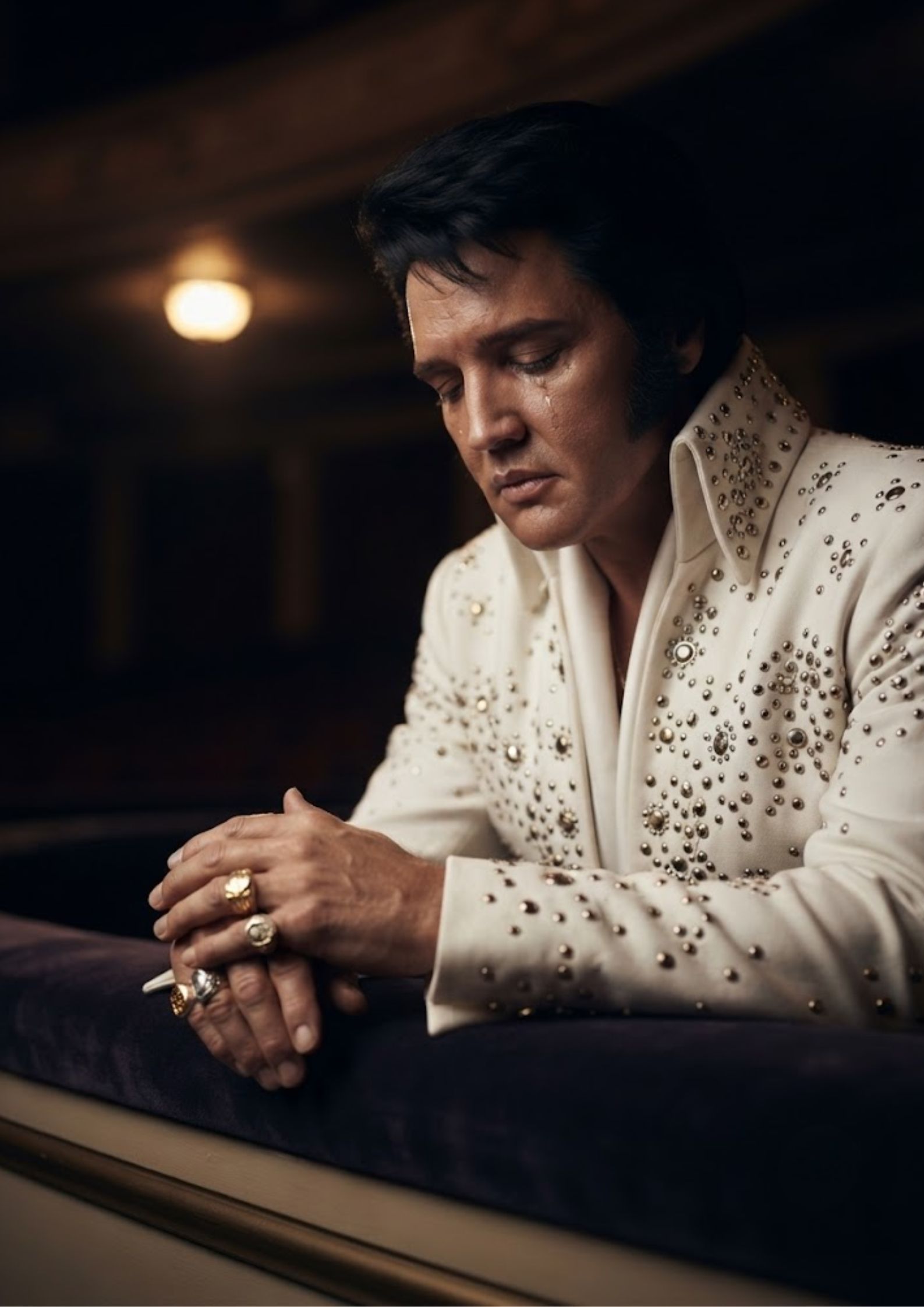
Late Tears and the Hidden Truth: Why Priscilla Had to Cry Out, ‘It Was Hard to Watch’ Elvis at the End?
For those of us who have lived through the golden eras of modern music and witnessed the meteoric rise of rock and roll, the name Elvis Presley evokes a timeless sense of wonder. Yet, beyond the glittering jumpsuits, the chart-topping records, and the roaring arenas, there remains a more somber and reflective chapter—one that is rarely discussed without a heavy heart. Years after the legendary icon left us, Priscilla Presley opened up in interviews about what it was truly like to witness the final stretch of his career, describing a reality that was difficult and heartbreaking to watch.
To understand the weight of those final years, one must look past the myth of the superstar and see the human being caught inside the machinery of fame. By the late 1970s, the relentless touring schedule, the immense pressure of public expectation, and a life lived almost entirely under the spotlight had taken a profound physical and emotional toll. Priscilla, who shared a deeply formative history with the King and remained connected to him through their daughter Lisa Marie, often spoke with quiet candor about the sorrow of seeing someone so vibrant and powerful slowly burdened by the sheer velocity of his own legend.
Watching someone you care deeply about struggle against the invisible walls of exhaustion is an experience many mature readers can deeply empathize with. Priscilla noted that despite the applause and the adoration of millions, the isolation behind the scenes was palpable. The shows continued because the world demanded it, and the curtains rose night after night, but the vibrant energy that once defined the early days in Memphis and Hollywood had given way to a quieter, more fragile reality. It is a poignant reminder that immense talent does not shield a person from the trials of physical and emotional fatigue.
Ultimately, Priscilla’s reflections on Elvis’s final chapter do not diminish his legacy; rather, they humanize it. They remind us that behind every immortal melody and historic performance stood a real man carrying burdens the audience could never fully see. For longtime admirers looking back across the decades, these honest insights invite us to remember the King of Rock and Roll not just for his unmatched artistry, but with deep compassion for the heavy crown he wore until the very end.