Introduction
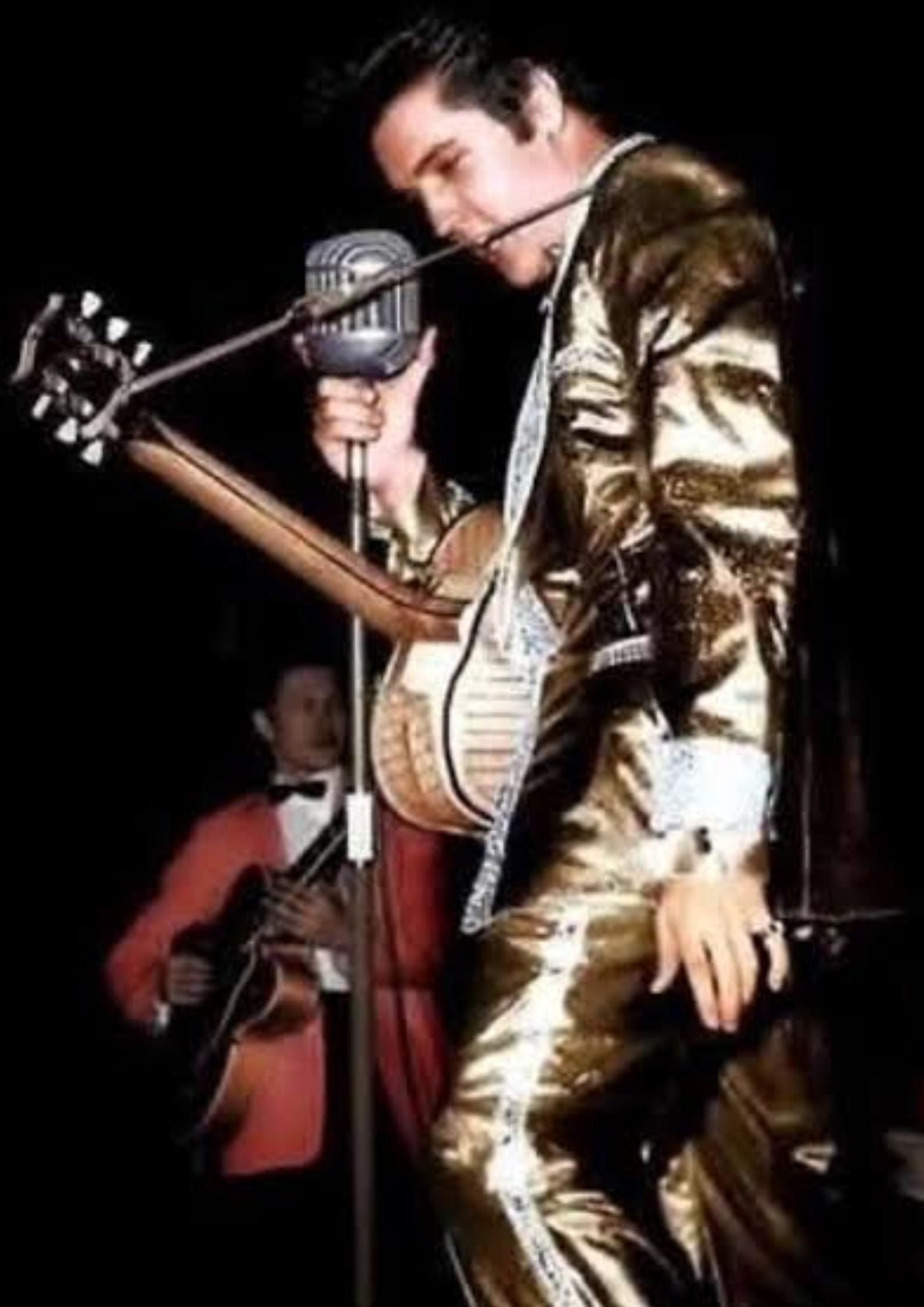
Police Lines, 4,000 Handwritten Letters, and the Surprising Truth Behind Elvis Presley’s 1957 Microphone
ST. LOUIS, MO — March 29, 1957. Outside a local radio station in St. Louis, a heavy cordon of police officers worked to hold back a surging sea of screaming fans. At just 22 years old, Elvis Presley was no longer merely a rising singer; he had become a full-blown cultural earthquake shaking the foundations of American entertainment.
Yet, the moment the studio doors closed and the red “On Air” light flickered on, listeners across the city heard something entirely at odds with the hysteria outside. Behind the towering legend of the artist dominating the Country, Rock and Roll, and Pop charts stood a slightly hesitant, remarkably humble young man who still seemed unable to believe his own fortune.
This surviving archival broadcast from St. Louis offers an unfiltered snapshot of the human being behind the King of Rock and Roll—captured just before his global fame became untouchable.
Humility at the Height of Hysterical Fame
From the opening seconds of the broadcast, the radio host could barely contain his excitement, vividly describing the commotion surrounding Elvis’s arrival and the phalanx of police required to keep order. He proudly introduced his guest as the nation’s undisputed number-one artist across three distinct musical genres.
When asked how it felt to command such unprecedented crossover success, Elvis offered no rehearsed speech about his musical revolution or personal triumph. Instead, he paused, searched for the right words, and candidly admitted that the entire phenomenon still felt unreal to him.
Even more telling was his reaction when the host credited him with breaking down industry barriers and paving the way for a new generation of performers. Rather than accepting the praise, Elvis politely deflected the credit, choosing instead to emphasize how kind and welcoming people had been to him. At a moment when overnight stardom could easily inflate a young artist’s ego, Presley’s instinct was gratitude rather than self-aggrandizement.
The 4,000-Letter Frenzy and an Artist’s Promise
The sheer magnitude of Elvis’s 1957 appeal was underscored by a staggering statistic revealed during the broadcast: a station contest offering tickets to see him perform had drawn more than 4,000 letters in just five days.
Consider that figure in the context of 1957—an era decades removed from social media, instant messaging, or digital ticketing platforms. More than four thousand people sat down, wrote letters by hand, stamped envelopes, and mailed them in for a slim chance to witness the Mississippi-born phenomenon in person.
Asked to deliver a message to those devoted listeners, Elvis promised no flashy spectacles or commercial milestones. He simply pledged to work his hardest to give them music they could genuinely enjoy, expressing deep appreciation for the creative freedom to choose his own songs and perform them on his own terms.
A Lighthearted Detour Behind the Spotlight
The conversation took an unexpectedly playful turn when the host introduced his own quirky fan organization—the “Stump Jumper Club”—and ceremoniously named Elvis its honorary president, a lighthearted nod to the singer’s explosive, high-energy stage movements.
A club badge was presented on the spot, and Elvis accepted the title with warm laughter and genuine good humor. For a few unscripted minutes, the global icon disappeared, leaving behind a grounded 22-year-old sharing a joke in a radio booth.
The St. Louis interview ended with polite thanks and warm wishes, preserving a rare, humanizing portrait of a superstar in the making. Decades later, the true magic of this vintage recording isn’t found in scandal or theatrical drama, but in its striking contrast: surrounded by screaming crowds and police barricades, Elvis Presley still spoke like a young man deeply grateful that anyone wanted to hear him sing.
What do you believe is the true secret behind Elvis Presley’s enduring legacy across generations: his revolutionary musical talent, or the rare humility and warmth he maintained even at the height of his fame? Share your thoughts in the comments below!