Introduction
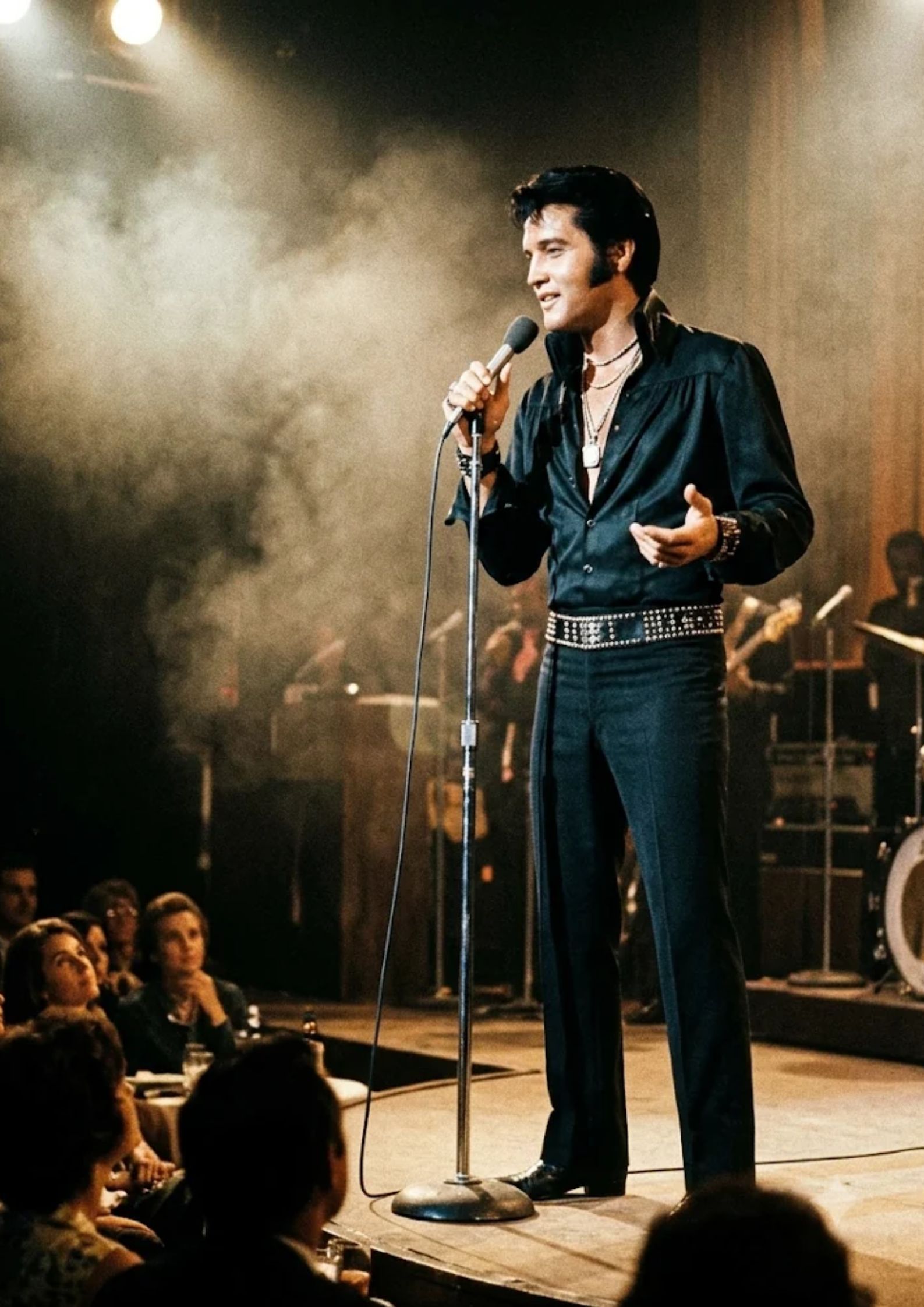
Behind the Crown: Inside Elvis Presley’s Historic 1969 Las Vegas Monologue and the Night the King Told His Own Story
LAS VEGAS, NV — August 22, 1969. Inside the packed, smoke-filled Showroom of the International Hotel, the air was electric. After nearly a decade of formulaic Hollywood movies that had sidelined his touring career, Elvis Presley was in the midst of one of the greatest live comebacks in entertainment history. The crowd expected the earth-shattering vocals, the signature physical swagger, and the hits that had defined an era.
But during the dinner show on this particular night, the King of Rock and Roll did something extraordinary. He stepped away from the setlist, took a breath, and spoke directly, vulnerably, and candidly to his audience.
In a rare segment formally cataloged as the “Monologue (Lifestory),” Elvis delivered an unscripted, self-reflective narrative of his own life. This wasn’t a press release or a guarded interview—it was an intimate, humorous, and sometimes heartbreaking conversation with the people who had built his throne.
Preserved on the official release Live 1969, this legendary recording offers an invaluable, unfiltered glimpse of the human being behind the myth.
The Stakes of the 1969 Return
To understand the weight of this monologue, one must understand the vulnerability of Elvis’s position in 1969. At 34, Presley was fighting to prove he was still culturally relevant in a music landscape transformed by the Beatles, Woodstock, and the civil rights movement.
His Las Vegas residency at the newly opened International Hotel was a massive gamble. The pressure to maintain a larger-than-life persona was immense. Night after night, Elvis met that pressure with intense, high-energy sets, backed by a sprawling orchestra and his elite TCB Band.
But during the August 22 show, the music stopped.
For nearly ten minutes, Elvis stood alone with the microphone, inviting the audience past the barrier of his fame. With natural self-deprecation, Southern charm, and sharp humor, he traced his trajectory from a dirt-poor teenager in Tupelo, Mississippi, to a polarizing musical outlaw in Memphis, through to the army years and the Hollywood hiatus.
Importantly, he didn’t offer a polished PR script. He discussed the panic of his early TV appearances, the absurdity of the movie years, and the genuine fear that the world had forgotten him.
Why the Spoken Voice of the King Matters
Throughout his career, Elvis Presley’s relationship with the public was heavily mediated by his controversial manager, “Colonel” Tom Parker, and the protective circle of the Memphis Mafia. He rarely gave candid, open-ended interviews, and when he did, the questions were strictly policed.
The Vegas monologue was a rare breach of that fortress.
When a singer performs, the emotion is channeled through melody, key, and rhythm. But when they speak, the armor of the music is gone. Listeners of the August 22 recording can hear Elvis’s authentic cadence—the casual Southern drawl, the quick, nervous laughter, and the pauses where he gauges the audience’s warmth.
He poking fun at his famous “gyrating” hips, mocking the outrage of the 1950s establishment, and speaking about his beloved mother, Gladys. By doing so, Elvis was reclaiming his own narrative, offering a live audience his own perspective on the phenomenon he had become.
Preserving a Moment of Raw Connection
The monologue, positioned alongside powerful performances of “Hound Dog,” “Memories,” and the “Mystery Train / Tiger Man” medley, serves as the emotional anchor of the Live 1969 collection.
More than half a century later, the recording holds particular weight because it captures a moment before the Vegas residency became a routine, or the jumpsuits of the 1970s became a burden. In August 1969, Elvis was hungry, engaged, and intimately connected to his art.
The value of the “Lifestory” monologue isn’t that it reveals any scandalous secrets; its significance lies in its sheer authenticity. For a brief moment, the theatrical illusion of “The King” was suspended, leaving only a man from Mississippi, marveling at the strange, historic path that had brought him to that stage.
Why do you think Elvis chose this specific moment in 1969 to bypass his handlers and tell his story directly to the public? Was it an artist reclaiming his identity, or simply a showman at the peak of his power? Share your thoughts in the comments below!