Introduction
The Unforgiving High Note and the British Blockade: Inside the Complex Legal Odyssey Behind Elvis Presley’s 20-Million-Selling Masterpiece
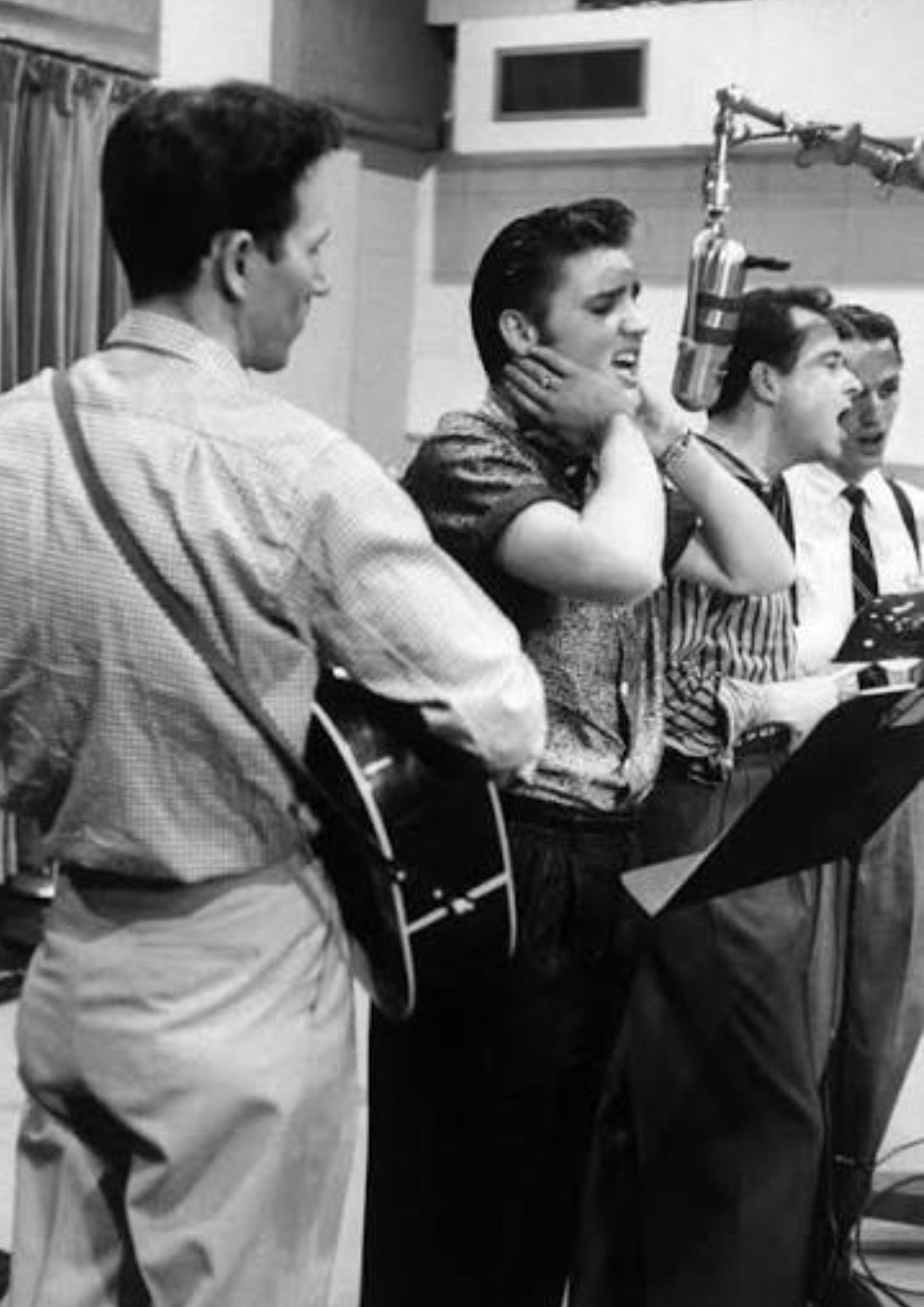
NASHVILLE, TN — On the night of April 3, 1960, inside RCA’s legendary Studio B in Nashville, the air hung thick with quiet, exhausted tension.
Elvis Presley, barely four weeks removed from his discharge from the U.S. Army, was standing before the microphone attempting to track a demanding new recording titled It’s Now or Never. Pushing his naturally warm baritone to the razor’s edge of an operatic tenor, the song demanded a sweeping, sustained high note at its dramatic finish.
Sensing the singer’s vocal strain after dozens of relentless attempts, legendary engineer Bill Porter offered a common studio shortcut: record the ending in fragments and splice the tapes together.
Elvis flatly refused.
“I’m not splicing anything,” he insisted. “I’m going to sing it all the way through, or not at all.”
Presley stayed at the microphone until his unassisted voice struck the note cleanly. Yet, while the finished master would go on to sell more than 20 million copies worldwide—cementing itself as one of the best-selling singles in recorded music history—a sudden international legal crossfire brought its release to a screeching halt in the world’s most influential record market: the United Kingdom.
The Pauper’s Melodic Ghost
The DNA of It’s Now or Never stretches far back beyond the neon landscape of post-war America. Its foundation was laid in Naples, Italy, in 1898, when poet Giovanni Capurro and composer Eduardo di Capua penned the beloved Neapolitan classic ’O Sole Mio.
Despite creating one of the most recognizable melodies in human history, both men were victims of the predatory publishing standards of the era. They sold the rights outright for modest one-off sums to keep food on the table. Di Capua died in destitute obscurity, while his soaring melody traveled across continents, recorded by Enrico Caruso and even improvised as an impromptu national anthem at the 1920 Olympic Games in Antwerp when officials misplaced the Italian sheet music.
By 1949, American crooner Tony Martin adapted the melody into a popular hit titled There’s No Tomorrow. Nearly a decade later, in a modest rented house in Bad Nauheim, West Germany, Private Elvis Presley discovered Martin’s 78-RPM record. Captivated by the dramatic, semi-classical phrasing, Presley resolved that the melody would serve as the cornerstone of his musical rebirth once his military service concluded.
30 Minutes on Madison Avenue
Upon his return stateside, Presley instructed music publisher Freddy Bienstock to commission entirely new English lyrics tailored specifically to his voice.
Bienstock brought the assignment to the Brill Building in New York, handing the brief to songwriters Aaron Schroeder and Wally Gold. In a burst of creative velocity, the pair completed the lyrics in less than half an hour, pairing classical Italian romance with an infectious Cuban rumba backbeat.
When released in the United States on July 5, 1960, It’s Now or Never detonated across Billboard, holding the Number One spot for five consecutive weeks. Critics were astonished. The raw rockabilly rebel had transformed into a refined, Bel Canto stylist capable of breathtaking vocal control.
The record’s cultural resonance was immediate and profound. In Los Angeles, a teenage Barry White, incarcerated for stealing tires, heard Presley’s dramatic vocal over a prison radio and broke down in tears. Deeply moved by the record’s sonic majesty, White vowed on the spot to abandon street crime and dedicate his life to music—igniting the path of another future soul icon.
The British Embargo
While American radios blasted the single around the clock, British record shops faced a complete blackout. Across the Atlantic, fans could only read about the phenomenon in imports and trade magazines; the vinyl itself was strictly prohibited from being manufactured or sold.
The roadblock was a tangled international copyright snare. In the United States, ’O Sole Mio had fallen safely into the public domain. Under British law, however, copyright protection was tied to the life of the composer plus fifty years. Because di Capua had passed away in 1917, the original composition was still fiercely protected under the legal ownership of British publisher Chappell & Co.
RCA could not press a single copy in Great Britain without risking crippling infringement lawsuits.
For four months, legal teams engaged in protracted, high-stakes negotiations across London and New York. As the delay dragged into autumn, public curiosity grew into a frantic consumer frenzy.
When the legal clearance was finally signed in late October 1960, the result shattered industry precedent. It’s Now or Never debuted straight at Number One on the newly formed UK Record Retailer chart—the first record in British history to accomplish the feat. It held the summit for eight straight weeks, securing the coveted 1960 Christmas Number One slot and establishing a sales benchmark that stood for decades.
The Final Bow and the Hundred-Year Secret
Presley never relegated the song to mere nostalgia. During his 1970s concert tours, he routinely had backing tenor Sherrill Nielsen open with the traditional Neapolitan verses of ’O Sole Mio before cutting in with his powerful English refrain. He delivered it at his penultimate concert in Indianapolis on June 26, 1977—a mere seven weeks before his untimely death.
The legal saga, however, outlived the King.
In 2002, an Italian court ruling formally recognized composer Alfredo Mazzucchi as a legitimate co-creator of ’O Sole Mio, confirming he had sold an unpublished manuscript of melodies to di Capua in the late 19th century. The ruling effectively extended the song’s European copyright protections all the way to 2042.
From the impoverished alleyways of 19th-century Naples to an American army base in Germany, through high-stakes copyright embargoes in London to a sweat-drenched microphone in Nashville, It’s Now or Never stands as an enduring monument to artistic integrity. It remains an indelible reminder that while hits capture a brief cultural moment, true classics are forged by artists who refuse to fake the high notes.