Introduction
The Cult of the King: Inside the SHOCKING Post-Mortem Phenomenon of Elvis Presley
When Elvis Presley was pronounced dead at Memphis’s Baptist Memorial Hospital on August 16, 1977, conventional wisdom suggested the shockwave would eventually yield to standard cultural commemoration. Instead, his sudden passing triggered one of the most astonishing mass-psychological phenomena of the modern era. Rather than mourning a departed entertainer, a significant faction of his global following categorically refused to accept the finality of his death—giving birth to an unprecedented blend of grief, denial, and near-religious adoration that rewrote the rules of celebrity obsession.
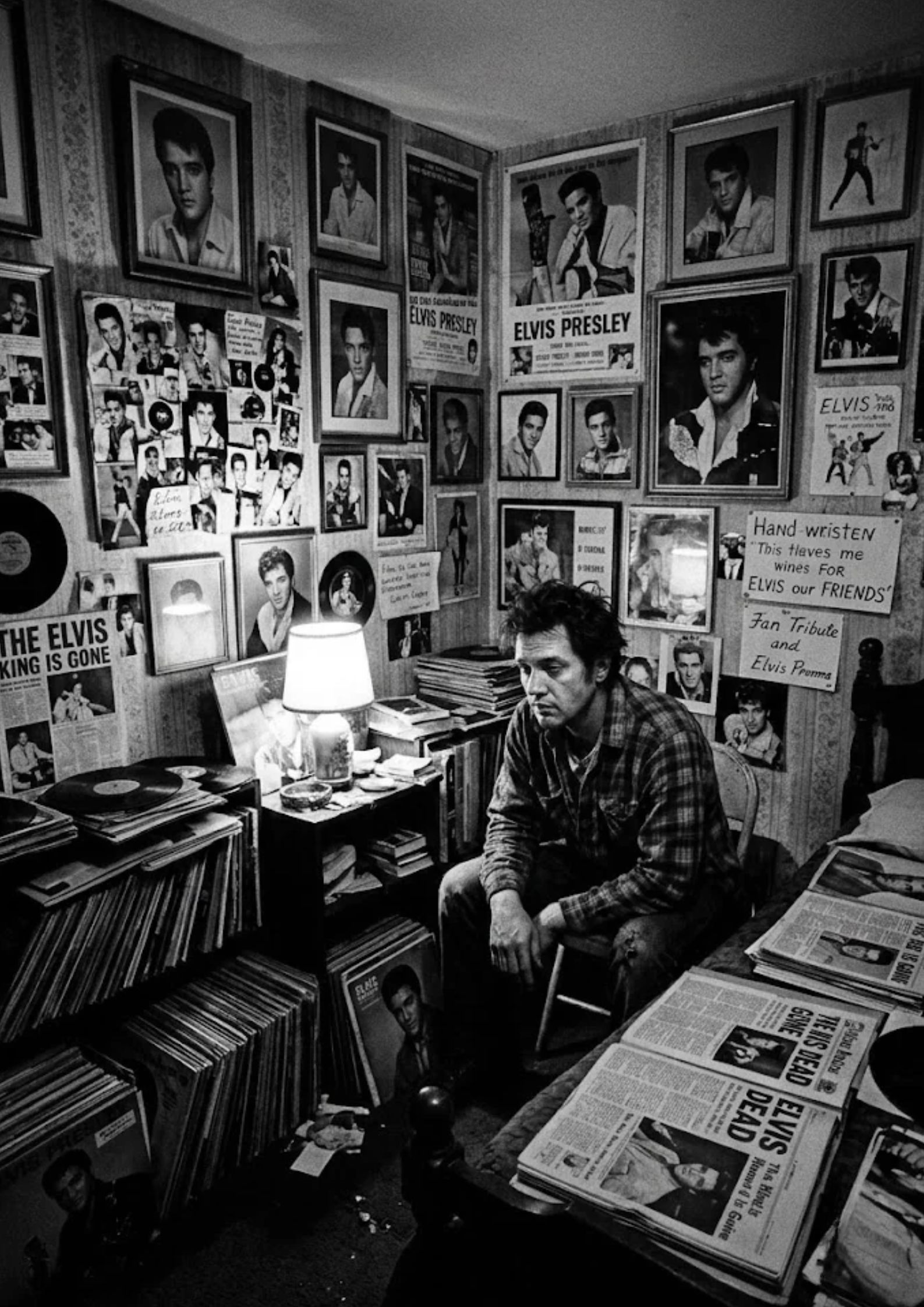
The depth of this collective refusal was laid bare in 1980 by the BBC documentary Elvis Lives, a forensic exploration of how a musical icon transitioned from deceased pop superstar to immortal cultural deity. Across the globe, fans transformed ordinary living rooms into gilded shrines, spending life savings to acquire any tactile link to Presley’s physical existence. Possessions as trivial as scraps of Las Vegas hotel bedsheets, multiple duplicate newsprint runs, and concert-used guitar picks were venerated like holy relics. Graceland, once a private sanctuary, was immediately re-consecrated by the public as a pilgrimage site, drawing grief-stricken travelers from continents away solely to stand before the earth of the Meditation Garden.
Yet beneath this raw, unfiltered devotion, a fiercely contested commercial war erupted. In the late 1970s and early 1980s, the borderline between memorial preservation and ruthless exploitation blurred overnight. While ordinary streetfronts bordering Elvis Presley Boulevard morphed into souvenir depots churning out unauthorized tchotchkes, purist factions within the fandom expressed fury, arguing that a titan of American art was being cheapened into cheap novelty merchandise.
Concurrently, the refusal to let Presley go manifested in far more extreme personal transformations. The industry of the Elvis tribute artist mutated from lighthearted homage into total identity assimilation. Performers spent fortunes—and in documented instances, endured intense surgical procedures and months of facial reconstruction—to physically alter their features to mirror the King’s jawline and pompadour. For these individuals, Elvis ceased to be an external performer; he became a vessel of borrowed existence.
Beyond the physical came the esoteric: persistent rumors of faked deaths, theories of spiritual reincarnation, and stories of parents naming children after his full moniker in the faint hope of carrying his essence forward. For millions who discovered solace in his gospel recordings, Presley’s voice took on an almost sacramental authority, transcending musical performance to alter personal faith.
Almost half a century after his death, the phenomenon of “Elvis Lives” does not depend on conspiracy theories or staged sightings in remote convenience stores. It survives because Elvis Presley represented an irreplaceable cultural axis point for a generation that refused to acknowledge its own mortality. In doing so, his following proved that the most formidable legacy is not built on hit records alone, but on an audience’s unyielding demand to keep the myth alive long after the music has stopped.