Introduction
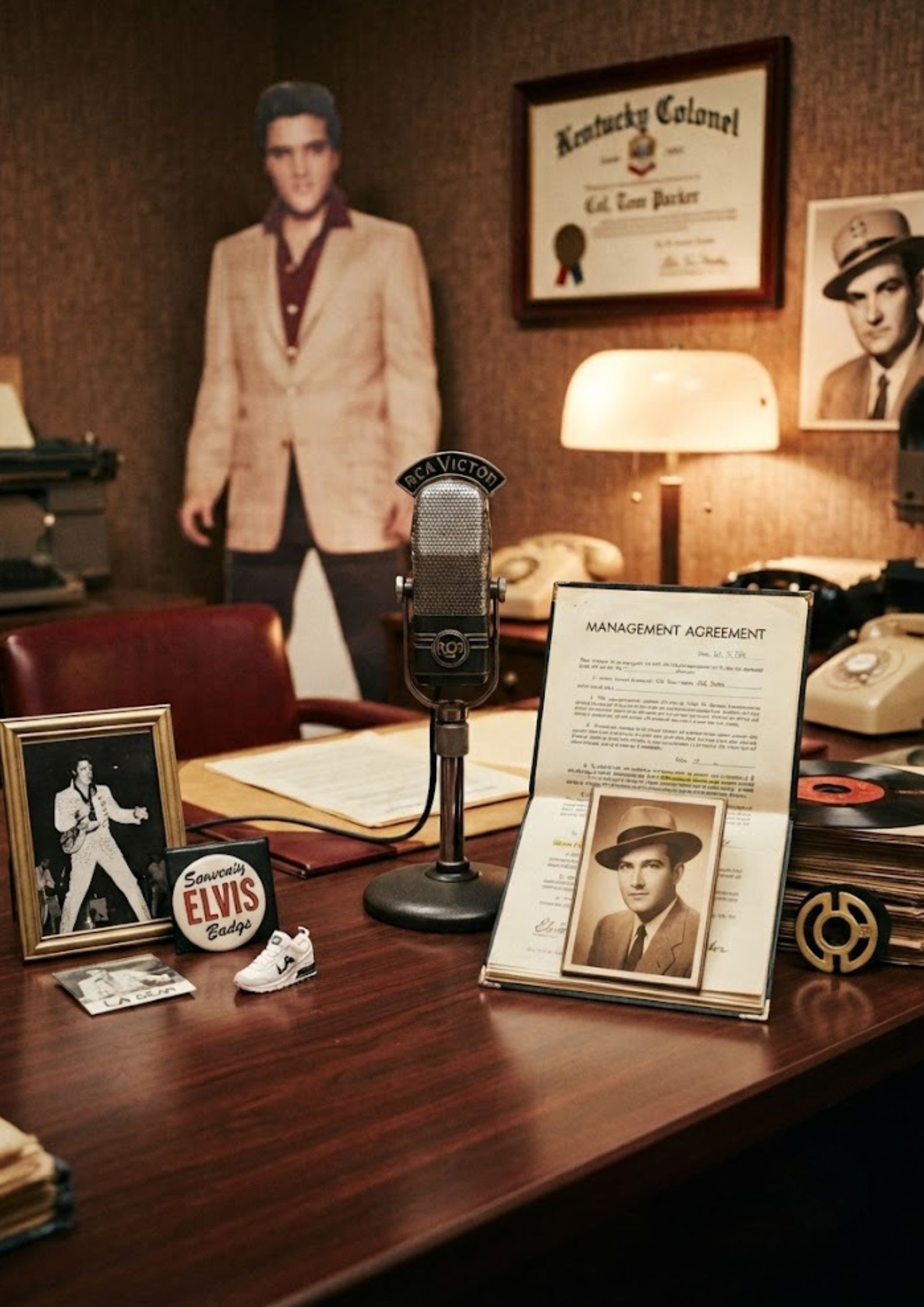
The Man Behind the Legend: Unveiling the Enigmatic Manager of Elvis Presley
For generations, the global community has marveled at the electrifying performances, unmatched voice, and magnetic charisma of Elvis Presley. Yet, behind the glittering jumpsuits, sold-out arenas, and timeless records lies one of the most fascinating and controversial figures in music history: Colonel Tom Parker. For mature readers and lifelong admirers of musical heritage, exploring the man who orchestrated the King of Rock and Roll’s career reveals a masterclass in psychological promotion, relentless ambition, and a unique showmanship born from the era of traveling carnivals.
From Carnival Roots to Musical Empire
Long before he ever crossed paths with a young Elvis Presley in Memphis, the man known to the world as Colonel Tom Parker was quietly mastering the art of human attention. Born Andreas Cornelius van Kuijk in the Netherlands before immigrating to the United States, Parker spent his formative years working within the bustling ecosystem of traveling carnivals and circuses.
This unconventional education taught him lessons that traditional business schools could never replicate. He learned how to capture a crowd’s attention in mere seconds, how to build intense anticipation, and, most importantly, how to sell excitement long before an audience ever stepped foot near a ticket booth. Parker firmly understood a foundational marketing principle: perception often becomes reality. If people genuinely believed an attraction was the biggest event in town, then it simply was.
The Blueprint of Success: The Eddie Arnold Years
Many casual fans assume Parker’s career began and ended with Elvis, but his blueprint for superstardom was actually forged years earlier with country music singer Eddie Arnold. Managing Arnold through the 1940s and early 1950s, Parker tested nearly every promotional strategy that he would later deploy for Elvis.
Parker did not view his artists merely as talented vocalists; his philosophy was that an artist had to be an absolute “event”. Weeks before Arnold was scheduled to perform in a city, Parker launched exhaustive advertising campaigns. He flooded local newspapers, distributed thousands of posters to hardware and feed stores, coordinated radio interviews, and worked tirelessly with sponsors. This relentless work ethic—often spanning eighteen-hour days—secured Arnold an astonishing streak of consecutive top hits and solidified Parker’s reputation as a promotional genius.
Shaping the King of Rock and Roll
When Parker eventually transitioned his focus to Elvis Presley, he brought this exact playbook to an unprecedented scale. Recognizing Elvis’s raw, undeniable talent and unique visual appeal, Parker secured total control over the singer’s career trajectory. He negotiated lucrative recording contracts with RCA, orchestrated a massive merchandise empire, and seamlessly bridged the gap between music and Hollywood cinema.
While history has often debated the complex dynamics of their relationship—particularly regarding financial splits and the intense, grueling touring schedules that ultimately took a heavy toll on Elvis’s health—the historical reality remains undeniable. Parker worked with a relentless drive to ensure his artist stayed at the absolute pinnacle of global success.
For those who cherish the legacy of classic American music, examining the life and methods of Colonel Tom Parker offers a vital perspective. He was a master storyteller and a brilliant, if complicated, architect of fame who proved that extraordinary talent, when paired with revolutionary promotion, can echo through the corridors of time forever.