Introduction
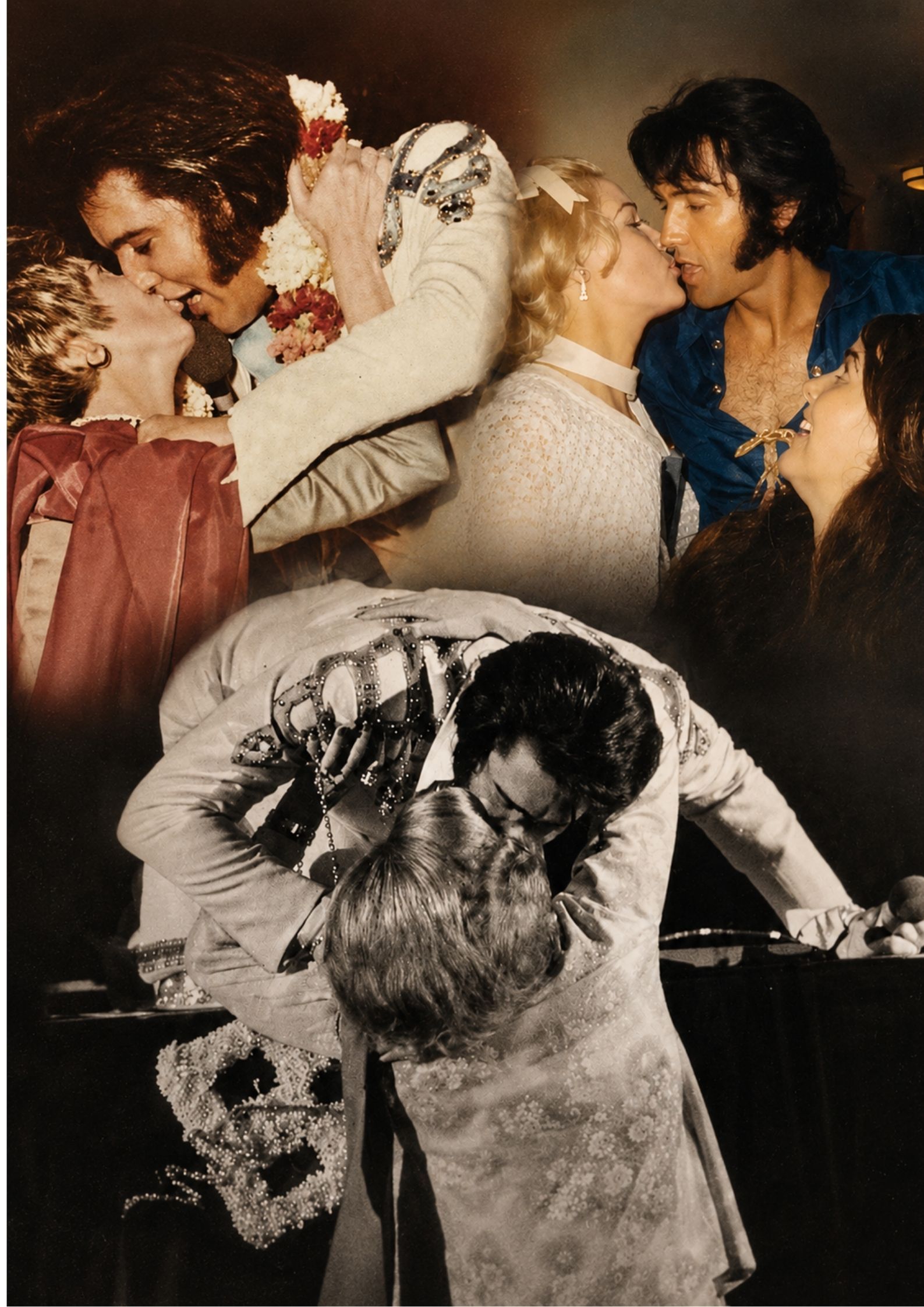
The King of Controversy: How Elvis Presley’s Scandalous Stage Presence Defied the Moral Code of 1950s America
When Elvis Presley burst onto the national stage in the mid-1950s, he did more than just ignite a musical revolution; he triggered a profound social earthquake that rattled the pillars of mid-century polite society. For an older, more traditional generation accustomed to the composed, distant crooners of the post-war era, the raw, unfiltered energy of Elvis and his fervent female admirers crossed boundaries that were once thought unshakeable. It was a cultural clash between Victorian-era decorum and the roaring, unbridled pulse of modern youth culture.
The storm centered largely around the unprecedented physical closeness and emotional fervor witnessed inside packed auditoriums. When Elvis stepped up to the microphone, his dynamic stage presence and rhythmic movements sparked an immediate, visceral reaction from young women in the audience. To conservative critics, educators, and anxious parents, the screaming crowds, the collective swooning, and the frantic rushes toward the stage weren’t merely displays of fandom—they were alarming symptoms of a collapsing moral code. The physical proximity and intense emotional adulation defied every established social norm of public restraint and decorum.
Critics of the era frequently voiced outrage over the breaking of traditional boundaries. Young women openly wept, tore at their clothing, and threw themselves toward the stage, abandoning the polite distance that society expected of them. Meanwhile, Elvis engaged with his admirers in ways that shattered the traditional ivory tower of celebrity. His signature stage motions and direct, smoldering eye contact created an intense, personal illusion of connection that felt shockingly intimate for households governed by strict etiquette. Commentators of the time editorialized heavily against what they viewed as a dangerous descent into mass hysteria, arguing that such unrestrained public displays threatened the very fabric of social order.
Yet, looking back with the benefit of historical perspective, what alarmed the traditionalists then was actually the birth of modern cultural expression. The phenomenon between Elvis and his female fans wasn’t a breakdown of society, but rather an early eruption of youthful autonomy. Those roaring concert halls became a sanctuary where a generation found its voice, proving that music possesses the rare power to dismantle old rules and forge entirely new ways of human connection. The King didn’t just break the rules of the concert hall—he rewrote the script of modern entertainment forever.