Introduction
Weapon of the Cold War: The SHOCKING Geopolitical Transformation of Elvis Presley
Before Elvis Presley was universally enshrined as the velvet-draped, nostalgic symbol of post-war Americana, he was branded the single greatest moral hazard facing the nation. In the mid-1950s, conservative civic groups, religious figures, and terrified parents viewed the swiveling, eyeliner-wearing truck driver from Mississippi not as an entertainer, but as a dangerous subversion of traditional values. His provocative stage presence and explosive fusion of rhythm and blues were seen as an existential threat to white suburban domesticity.
Yet, within a decade, this supposed cultural outlaw was weaponized by the United States government as its primary soft-power asset in a high-stakes ideological war against the Soviet Union.
As meticulously detailed in academic evaluations like Inventing Elvis, Presley’s rise cannot be uncoupled from the broader geopolitics of the Cold War. As Washington and Moscow competed for hearts and minds across Europe, popular culture emerged as an unprecedented tactical weapon. The Soviet bloc weaponized American racial violence and capitalist decay in its propaganda; the United States needed a living, breathing testament to upward mobility, artistic freedom, and unbridled youth dynamism. Elvis, whether conscious of his role or not, became the standard-bearer.
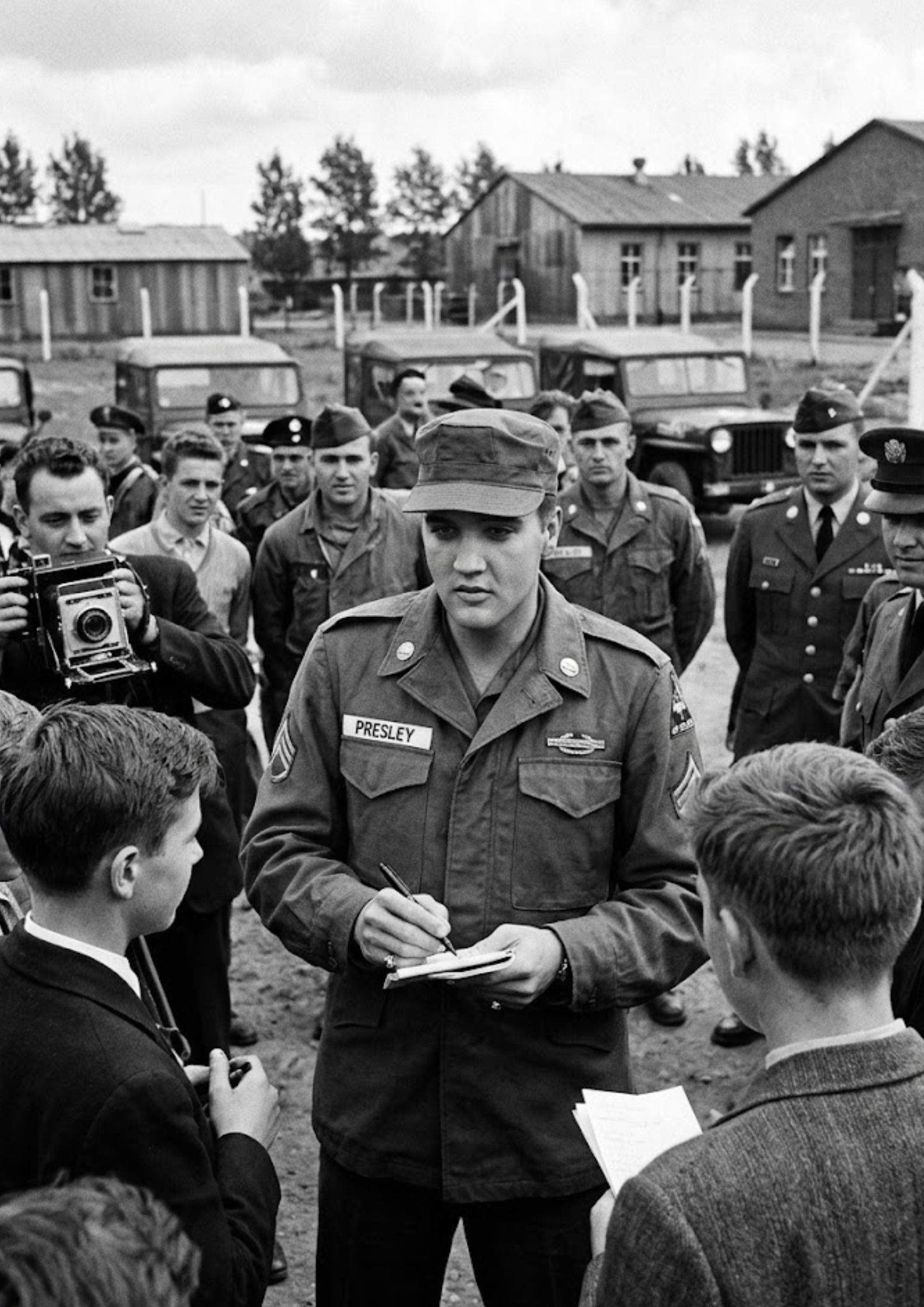
The pivotal turning point arrived in March 1958 with his induction into the U.S. Army. Instead of seeking special services or cushy celebrity deployments, Presley accepted assignment as a regular soldier in Friedberg, West Germany. It was a masterclass in institutional rebranding. Overnight, the pelvic-thrusting rebel who had scandalized television censors was reframed as a dutiful, clean-cut soldier standing watch on the frontline of the Iron Curtain. By serving without complaint alongside ordinary enlisted men, Elvis neutralized his domestic critics and re-emerged as an informal ambassador for the American democratic ideal.
Throughout the 1960s, Hollywood amplified this geopolitical narrative. In dozens of Technicolor musicals, Elvis portrayed tanned, carefree archetypes—race car drivers, helicopter pilots, and singing tour guides set against the backdrop of Hawaii, Miami, and Las Vegas. To an international audience recovering from the ravages of World War II, these films projected an irresistible, consumerist paradise of abundance, freedom, and romance.
Yet this triumph proved to be a gilded double-edged sword. As the optimism of the post-war era fractured into the Vietnam War, political assassinations, and economic stagflation in the 1970s, Presley’s personal trajectory mirrored the nation’s disillusionment. The lean, leather-clad renegade was gradually supplanted by a bloated, medically compromised superstar trapped inside a grueling Las Vegas casino residency.
To foreign critics, Elvis’s final, tragic decline ceased to represent American vitality; instead, it became a grotesque parable of American overconsumption, commercial exploitation, and celebrity excess. He had conquered the global imagination as the embodiment of the American Dream, only to perish as an indictment of its destructive extremes.
Decades after his August 1977 collapse, stripped of myth and glossy merchandising, Elvis Presley remains an indispensable lens for understanding modern history. He was never simply an entertainer who sold millions of records; he was a mirror held up to an empire at the apex of its power. The enduring mystery of the King is not merely that he altered the trajectory of modern sound, but that his meteoric rise, strategic militarization, and ultimate unraveling told the entire story of twentieth-century America.