Introduction
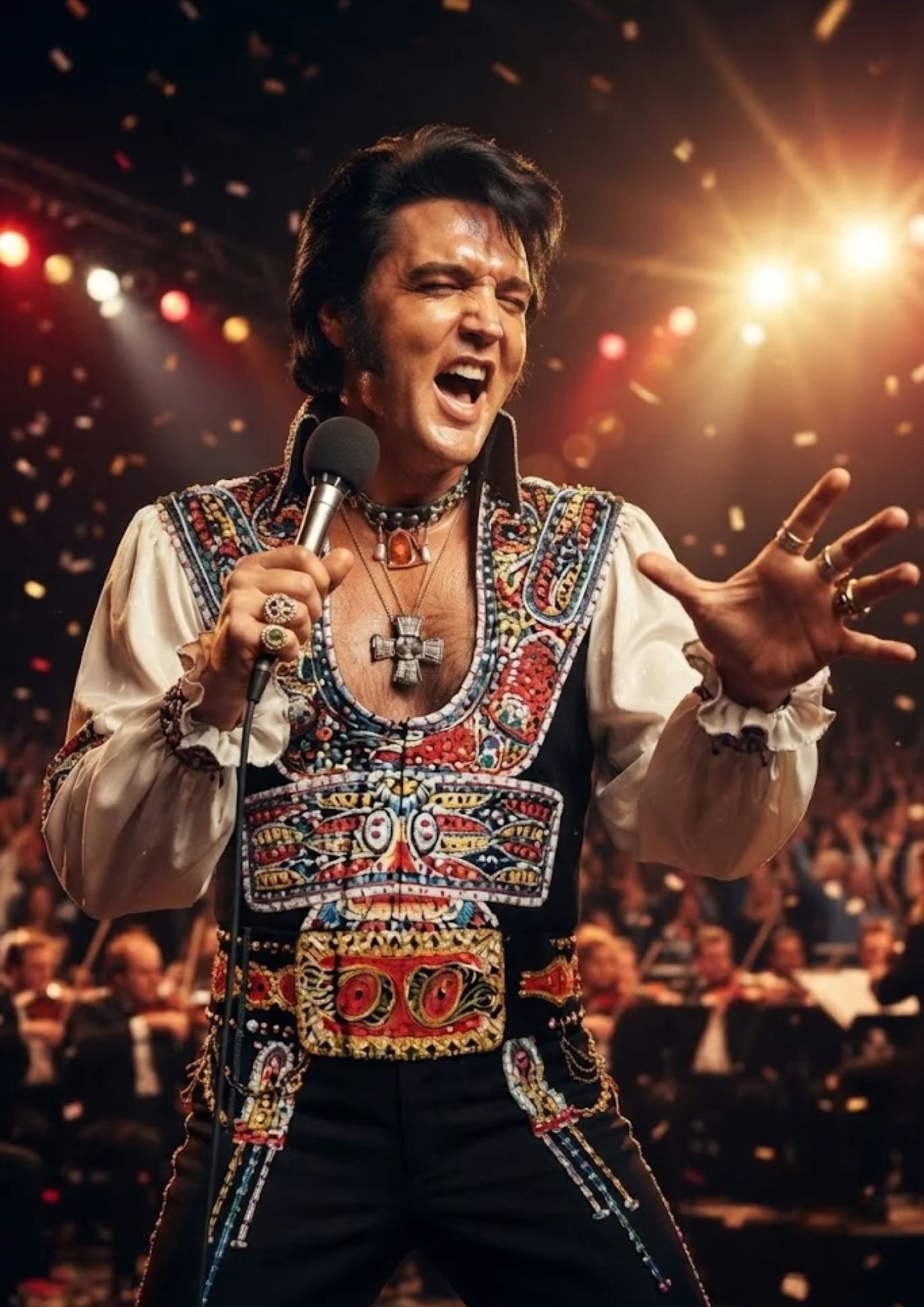
THE UNTOLD SECRET OF THE KING OF ROCK’S VOICE: The Chilling Truth Behind the Hidden Opera Technique in “Surrender”!
For decades, the world remained convinced that Elvis Presley was merely a pure rock ‘n’ roll star born from blues and country melodies. Yet, beneath the glittering cape and untamed exterior lies an untold vocal secret: the “King of Rock ‘n’ Roll” actually possessed elite opera techniques powerful enough to overshadow any classical vocalist.
When listening to the 1961 recording of the song “Surrender”, listeners easily get swept away in a passionate romantic performance. But beyond the conventional pop veneer, a breathtaking truth emerges: the DNA of classic Italian music and the renowned bel canto style.
Elite Technique Surpassing All Vocal Boundaries
“Surrender” was adapted from the 1902 Neapolitan song “Torna a Surriento” by Ernesto and Giambattista De Curtis. Imbued with challenging operatic soul, the track demanded extreme vocal register transitions between the chest voice and high pitches. For many singers, this is a nightmarish hurdle that easily splits the voice into two distinct parts.
Yet Elvis handled it with astonishing smoothness.
Right from the opening moments, as the melody glided through tense, melancholic minor chords, Elvis did not simply deliver the notes. He sculpted every single phrase with strictly controlled vibrato, turning a complex vocal challenge into natural fluidity. By the chorus, when the melody shifted into a brilliant major harmony, Elvis expanded his volume powerfully while retaining the profound emotional depth of the lyrics.
Musical Thief or Born Genius?
Many music analysts point out that Elvis likely found inspiration in his idol, Mario Lanza—the operatic monument who brought classical art to the masses. However, the true miracle lies in the fact that Elvis never needed to strive to become a traditional opera singer.
He was Elvis. His genius lay in his ability to filter and mold every genre of music—from blues, gospel, and pop to classical-influenced romantic melodies—and transform them into his very own language.
Behind the dance moves that rocked the world and Hollywood feature films lay an artist constantly battling musical structures requiring absolute precision. Stripping away the production layer to listen to Elvis’s isolated vocals in “Surrender” delivers a genuine shock: it reveals an extraordinarily flexible instrument capable of gentle whispering before exploding with power in a split second.
Ultimately, the biggest surprise is not that Elvis could sing “Surrender”, but how effortlessly he took a demanding operatic legacy, swallowed it whole into his innate instinct, and turned it into an immortal manifesto of his own.