Introduction
The Secrets of Elvis Presley’s Final Seven Days: Unfinished Plans and the Truth Few People Know
When we reflect upon the legacy of the King of Rock and Roll, it is all too easy to view his life backward. With the tragic finality of August 16, 1977, firmly etched into history books, hindsight tends to cast a shadow over every final movie, every final photograph, and every final song. Yet, if we strip away the dramatic lens of hindsight and examine the documented timeline of his actual last seven days, an entirely different, deeply human story emerges—one of an artist looking forward, tending to his family, and preparing for the stage.
Ordinary Moments Before the Storm
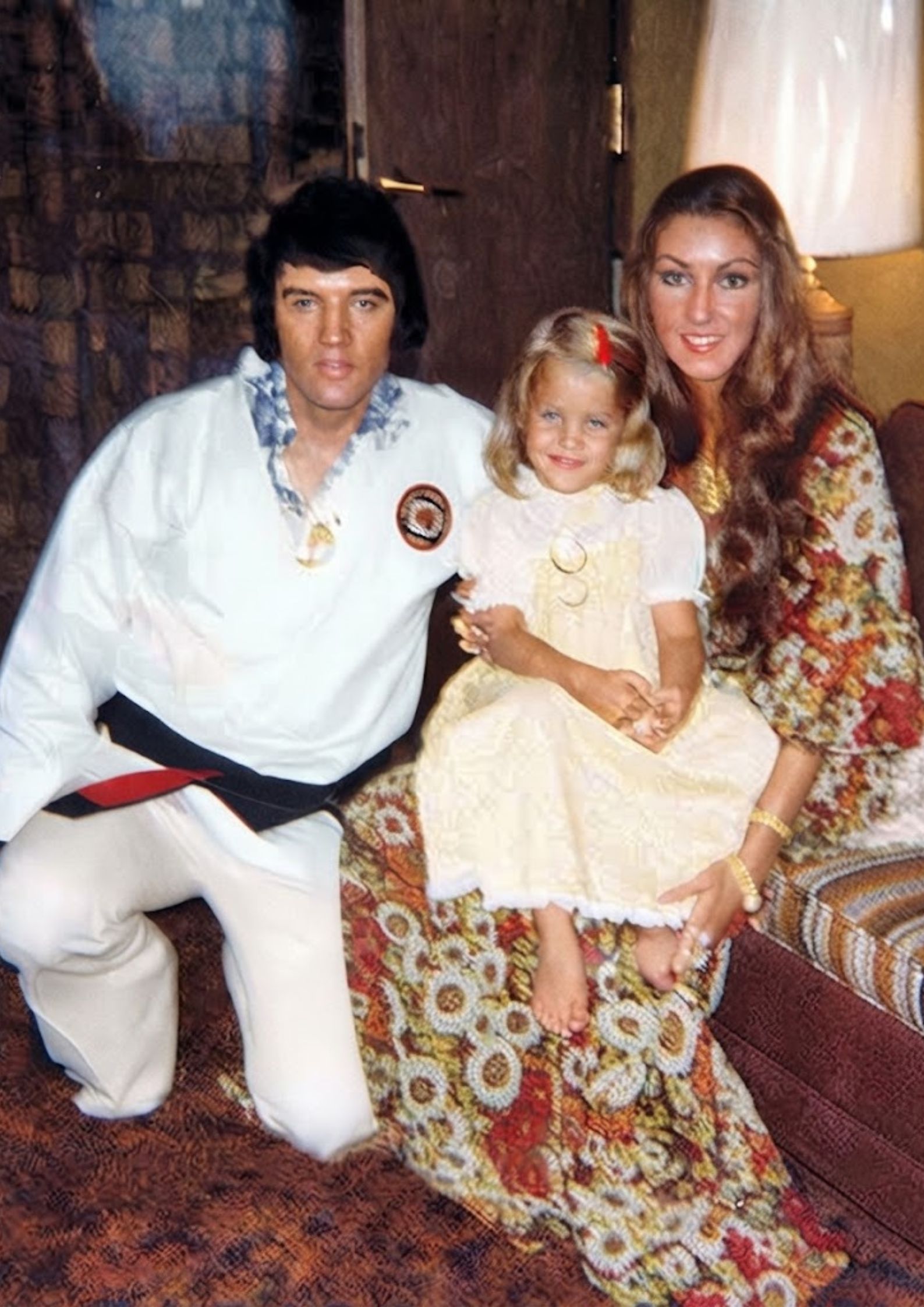
Looking back at the week of August 10 through August 16, 1977, Elvis Presley’s life at Graceland was filled with a surprising mix of ordinary family routines and preparations for the road. During those warm summer days in Memphis, his nine-year-old daughter, Lisa Marie, was visiting. Rather than isolating himself in despair, Elvis focused on simple paternal joys—taking Lisa and her young cousins for a gentle ride around the property in a golf cart and arranging a private midnight screening of the James Bond film The Spy Who Loved Me at a local theater.
At the same time, practical concerns occupied his thoughts. Like anyone preparing to return to a grueling touring schedule, Elvis was mindful of his physical conditioning. Accounts from those closest to him note that he began watching his diet—focusing on small portions of yogurt and fresh water—because a stage jumpsuit felt too heavy, and he wanted to look and feel his best for his devoted audiences.
The Logistics of a Future That Never Came
Perhaps the most poignant realization from examining Elvis’s final week is that he had no inkling that his time was drawing to a close. The infrastructure for his upcoming tour was fully mobilized. His private jet, the Lisa Marie, had been fueled and prepared at the tarmac. Inside the aircraft, a road case containing the signature silk scarves he handed out to fans from the stage was packed and ready. Far away in Portland, Maine, his manager, Colonel Tom Parker, along with the advanced crew, had already arrived and were actively mapping out the opening night of the tour.
During his final hours on August 15 and into the early morning of August 16, Elvis kept up his nocturnal habits. After a late-night dental appointment to care for a troublesome tooth, he returned home, spent time discussing business logistics, and even walked over to the racquetball court at four in the morning to share laughs and play a game with friends. Afterwards, he sat at his piano and played a few soulful tunes, including “Blue Eyes Crying in the Rain”.
Honoring the Man Behind the Legend
When the morning of August 16 arrived, Elvis retired to his private quarters, talking briefly about his plans, reading, and attempting to find rest before heading out on tour. When tragedy struck later that afternoon, it caught a world—and an entire touring crew—completely unawares.
For mature readers and lifelong admirers who grew up alongside his timeless voice, revisiting these final seven days reminds us not just of how his story ended, but of how fiercely he cared about his craft, his family, and his audience until the very end. Elvis Presley did not experience that week as a final farewell; he experienced it with the expectation of tomorrow. And in understanding that truth, we honor a man who gave every last beat of his heart to the music he loved.