Introduction
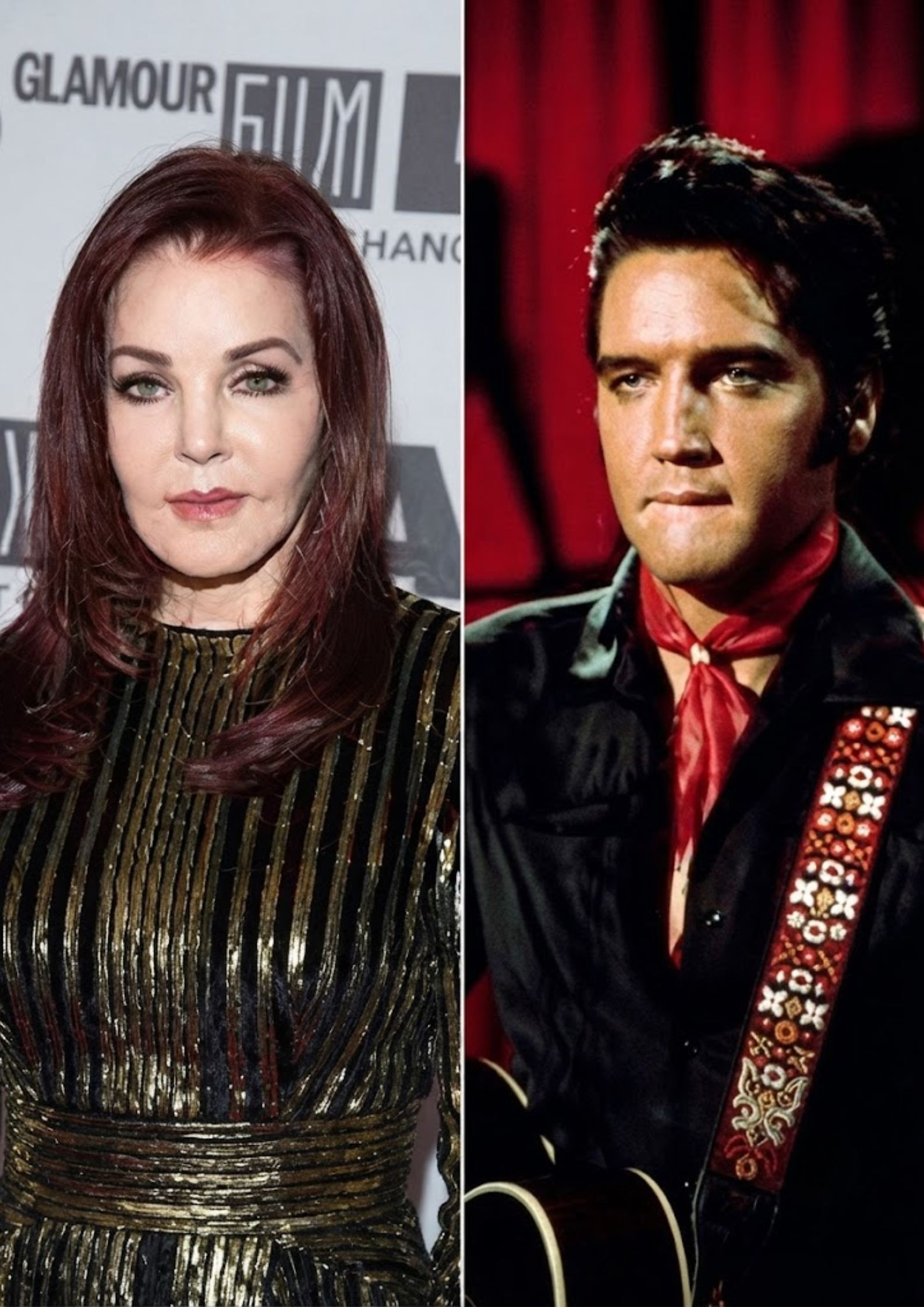
The October 9, 1973 Turning Point: When the “King of Rock” Gave Up It All for an Apology and the Road Back Home
There are stories the world remembers. And then there are stories people wish had ended differently.
Everyone knows the public version of the marriage between Elvis Presley and Priscilla Presley. The headlines. The photographs. The courthouse. The separation that became part of music history forever.
But almost nobody talks about the moment that could have changed everything…
October 9, 1973: When the “Fame Trap” Stoped
Outside the courthouse, the cameras were waiting. Reporters already believed they knew the ending. Papers sat ready on a table, ready to quietly close one of America’s most famous love stories in sullen silence.
Then something unexpected happened.
In that breathless moment, Elvis looks across at Priscilla. Suddenly, through the mist of fame, the blinding spotlight, the screaming crowds, and the suffocating pressure that had consumed his life for years, Elvis sees something else. For the first time in years, he is no longer looking at a public image. He is looking at the woman who once made Graceland feel like a true “home.”
That realization strikes his soul harder than any stage performance ever could.
Because deep down, Elvis understands a chilling truth: Cars can be replaced. Mansions can be replaced. Sold-out concerts can be replaced. Even legends can someday be replaced by newer legends.
But the only person who truly understood the man behind “The King” could never be found again.
Not an icon. Not a performer. Just a lonely man struggling beneath the heavy depths of glory.
A Heart-Wrenching Confession and Fate’s U-Turn
Instead of walking away forever, Elvis reaches out to hold Priscilla’s hand and whispers words that no one in that room dared to imagine:
“I don’t want to win this. I want to go home.”
And just like that, the story takes a different turn.
This isn’t a rosy fairy tale, but an emotional battle between family and the music industry machine that demanded so much from America’s biggest star. Inside Graceland, the atmosphere begins to shift. Quiet dinners fill the void of chaos. Little Lisa Marie gets to spend more time with her father. Elvis begins to question the exhausting schedule that once dictated every second of his life.
For the first time, he dares to ask dangerous questions:
-
What if this success is costing far too much?
-
Can thunderous applause truly heal a deep midnight emptiness?
-
And why does being loved by millions still leave a man completely hollow when the lights go out?
True Happiness: Not the Stage, But the Doorstep of Home
This alternate version offers a different world—one where Elvis Presley realizes he doesn’t need to continually sacrifice himself just to remain immortal in the public eye. A world where Lisa Marie grows up with ordinary mornings, joyful laughter echoing through the halls of Graceland, and countless precious memories with her beloved father.
Where the “King of Rock and Roll” finally figures out that the greatest victory in life was never another concert, another platinum record, or another standing ovation.
It was simply making it home before it was too late.
And perhaps that is why this ending touches the reader’s soul so deeply. Because beyond fame, glory, and iconic imagery, all of us—at the end of the day—share the exact same wish as Elvis: To be purely loved for who we truly are, even when the music finally stops.