Introduction
The Night the Living Room Shook: How Elvis Presley’s 1956 Broadcast Altered American Culture Forever
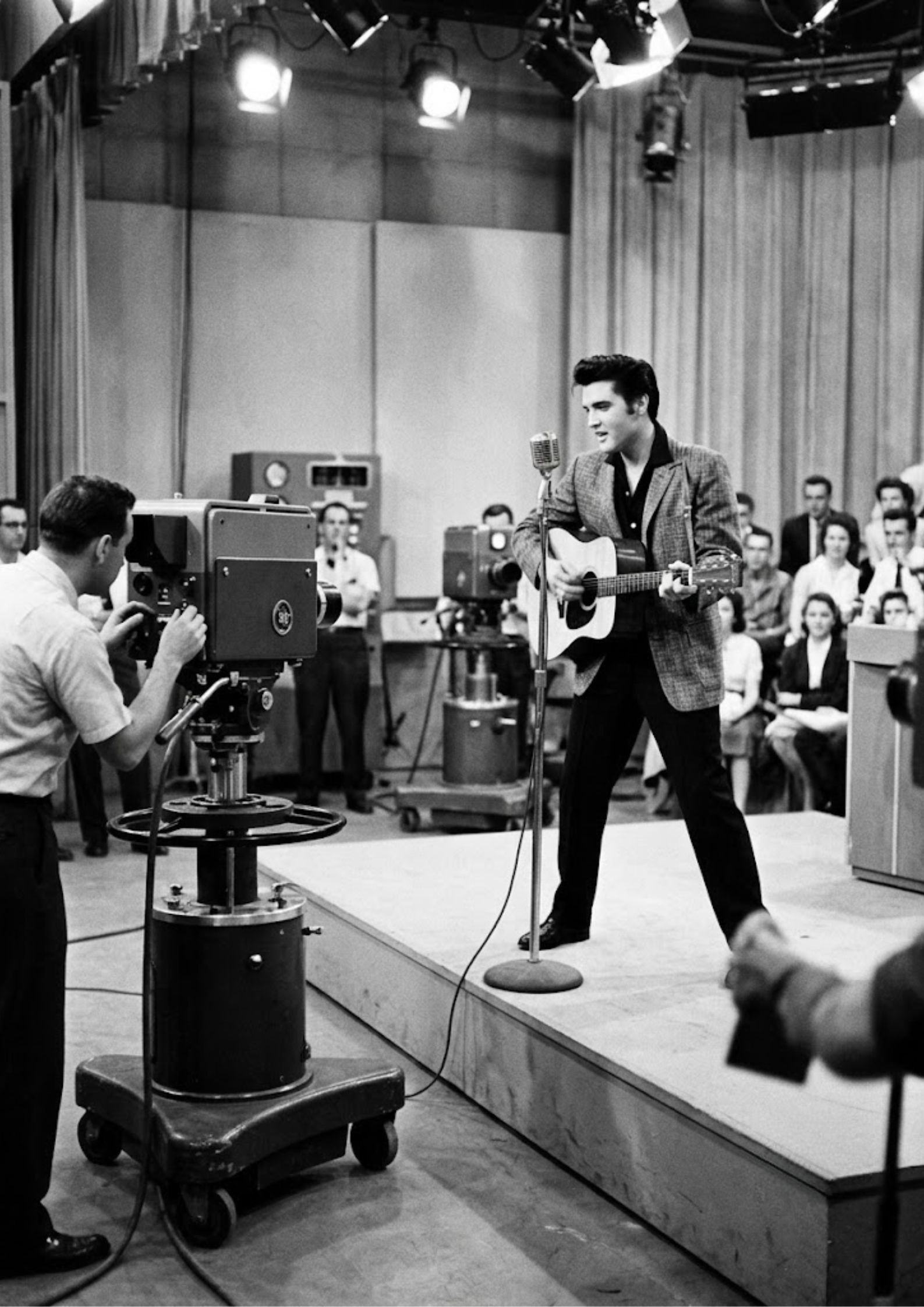
In the autumn of 1956, American households gathered around their living room television sets for what was traditionally a quiet Sunday evening ritual. Families of three generations sat side by side, expecting the wholesome variety acts that host Ed Sullivan had made a staple of weekend broadcasting. Instead, on that historic broadcast, a twenty-one-year-old singer from Tupelo, Mississippi, stepped up to the microphone—and live television was never quite the same again.
From the first chord, Elvis Presley did not merely perform; he unleashed a sonic and physical dynamic that American prime-time television had never seen. Until that moment, popular vocalists stood anchored before the camera, relying on polished crooning and subdued, courtly gestures. Presley, by contrast, threw his entire physical frame into the rhythm, bending into the notes and punctuating the backbeat with an electric, kinetic vitality. Studio cameras caught an instantaneous split in public reaction: while teenagers in the auditorium gasped and shrieked with unvarnished delight, home viewers watched in a mix of fascination and outright bewilderment.
Behind the scenes in the control room, network producers and studio executives immediately went into an uproar. Unaccustomed to such unchecked physical exuberance on family screens, directors were petrified of prospective sponsor boycotts and regulatory rebukes. In a desperate bid to moderate the visual impact, camera operators received hurried commands to reframe their lenses, cutting away the lower half of Presley’s movements and broadcasting him exclusively from the waist up.
Yet this frantic effort at censorship backfired completely. By attempting to constrain his presentation, the network only deepened the mystique. Overnight, Presley ceased to be an ordinary recording artist; he became a cultural fault line. Traditional commentators denounced the broadcast as an unwelcome disruption of decorum, but millions of young Americans heard something entirely different: a vibrant, uninhibited declaration of creative vitality and generational identity.
Looking back across seven decades, that 1956 performance stands as more than mere pop trivia. It was the catalyst that ushered television from a conservative radio companion into the raw, defining visual medium of modern popular culture. When Elvis walked off that stage, the quiet era of living room entertainment had officially drawn to a close.