Introduction
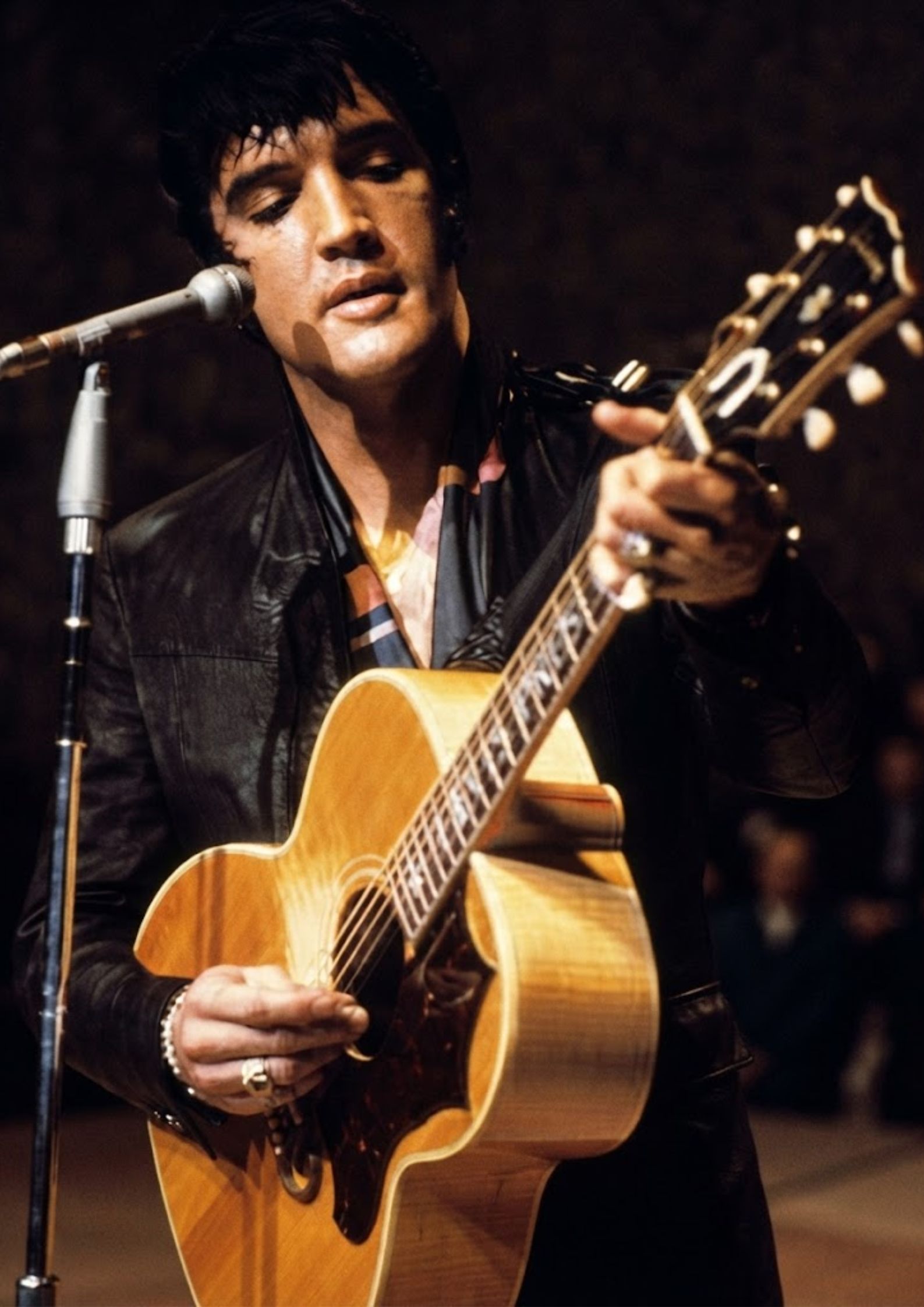
THE MAN BEHIND THE SHADOW: The Painful Truth Behind the Drained Fortune of the “King of Rock and Roll”
In the annals of global entertainment history, few artists ever reached the dizzying heights of commercial success achieved by Elvis Presley. Selling over a billion records, starring in thirty-one films, and commanding sold-out residencies in Las Vegas, he stood as an unmatched monetary engine. Yet when the legend passed away on August 16, 1977, at the age of forty-two at his Memphis home, the world was stunned to learn that his net estate was valued at roughly five million dollars—a fraction of the immense wealth he had generated over two decades.
Many observers are quick to blame his lavish lifestyle, his fleet of Cadillacs, or his generous gift-giving. However, the true story hides a far greater tragedy: the financial devastation was not merely a result of personal spending, but of a system where one manager held absolute control over every contract, signature, and dollar.
The man operating in the shadows was Colonel Tom Parker—not a real military colonel, but a Dutch immigrant living under a false identity. While Parker initially proved shrewd at turning Elvis into a commercial phenomenon, his control soon morphed into a form of intense exploitation. Instead of standard managerial commissions, Parker negotiated his cut upward until he was taking as much as fifty percent of Elvis’s earnings on major deals. This meant half of every record royalty, film paycheck, and Vegas performance fee vanished into the manager’s pocket before Elvis ever saw a cent.
The climax of this financial disaster occurred in 1973, when Parker brokered a deal selling the rights to Elvis’s entire recording back catalog to RCA for a one-time payment of 5.4 million dollars. It was the financial equivalent of selling the farm itself rather than just the harvest, stripping away decades of future royalties for a meager payout that was heavily slashed by taxes and management fees. Having grown up in grinding poverty without ever learning how to manage wealth, Elvis trusted his management entirely, assuming everything was being properly looked after.
The financial tragedy of Elvis Presley serves as a poignant reminder of an artistic titan left entirely unprotected against commercial manipulation. It was only years later, through the steady determination and business acumen of Priscilla Presley—who rescued Graceland by opening it to the public as a tourist attraction—that the legacy of the “King of Rock and Roll” was truly restored to its rightful glory.
Video: