Introdution
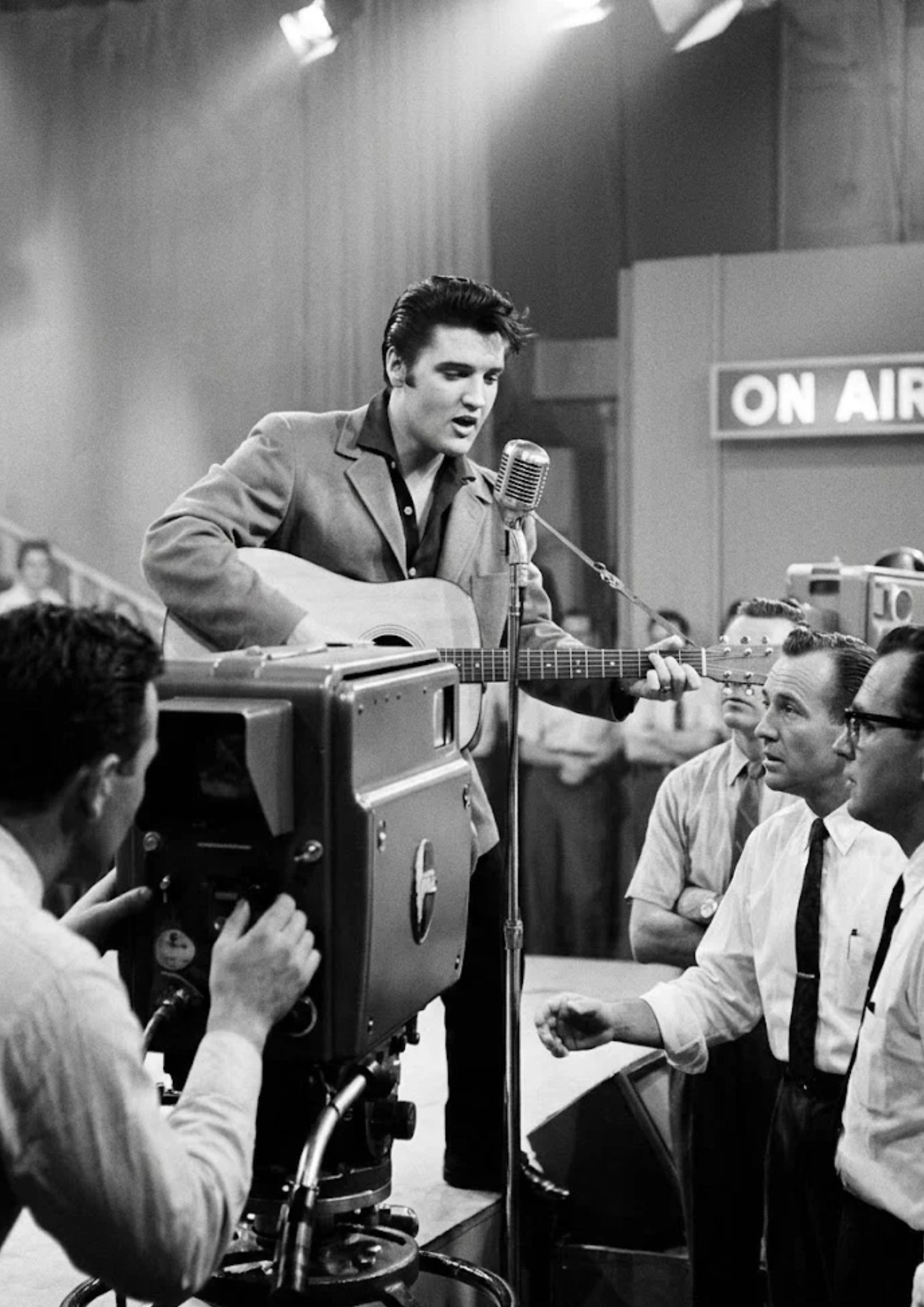
The Dangerous Sound: How a Young Elvis Presley Stood on the Brink of the Airwave Ban
When we look back at the origins of American rock and roll through the gentle lens of mid-century nostalgia, it is easy to forget just how startling the early days truly were. Today, Elvis Presley is celebrated as an enduring cultural institution, a beloved son of Tupelo, Mississippi whose records occupy a revered place in our personal collections. Yet in the mid-1950s, the introduction of this unassuming young truck driver to the national broadcast landscape was viewed by the cultural establishment not as entertainment, but as an unsettling earthquake.
The mid-1950s American living room was an orderly, deeply traditional space, governed by polished crooners, gentle orchestral melodies, and wholesome variety hours. Presley arrived armed with little more than an acoustic guitar, an authentic Southern cadence, and a revolutionary musical synthesis. By seamlessly intertwining the raw emotional grit of Black rhythm and blues with the rural storytelling of country music, he forged a sound that fundamentally challenged the boundaries of post-war society. To a vibrant younger generation weary of postwar restraint, his music felt like absolute liberation; to civic leaders and anxious parents, it appeared dangerously unruly.
The institutional reaction was swift and remarkably severe. Across the nation, radio station executives convened heated editorial meetings debating whether his records should be barred from the airwaves altogether. Certain municipal councils openly discouraged venues from hosting his appearances, while moral guardians publicly denounced his syncopated arrangements. The anxiety reached its apex on network television, where producers made the famous compromise of filming Presley strictly from the waist up—an extraordinary measure of broadcast censorship designed to sanitize a national phenomenon.
Yet, as history so often demonstrates, the impulse to silence groundbreaking art only served to amplify its resonance. Each public condemnation, each banned broadcast, and each carefully framed camera lens transformed Elvis from a regional novelty into an unmistakable symbol of youthful independence. Far from diminishing his reach, the resistance cemented his status as a trailblazer who irrevocably reshaped modern music. Long after the controversies faded, the King’s early trials remind us of a timeless truth: genuine cultural reinvention rarely asks for permission before it changes the world.