Introduction
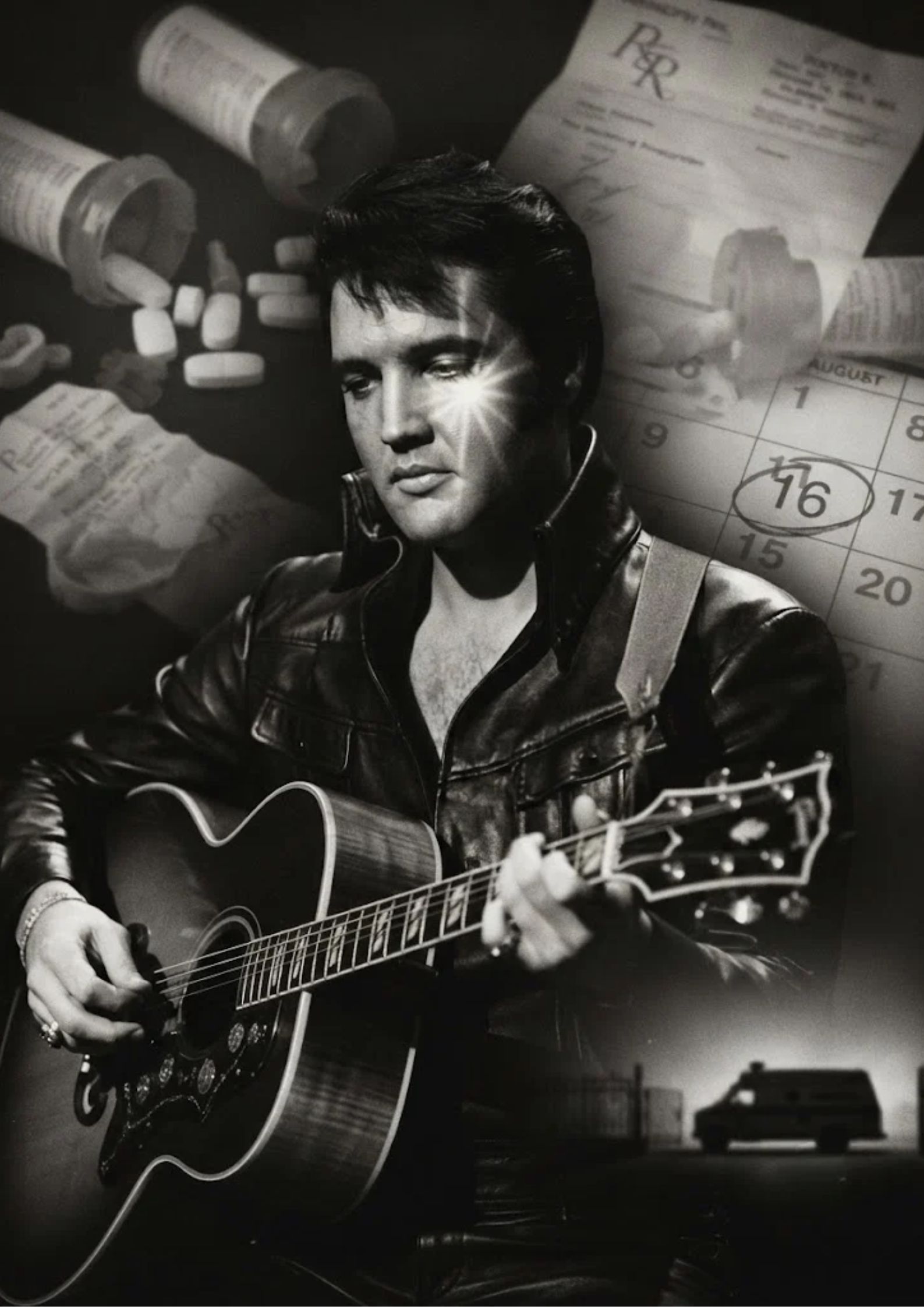
THE CHILLING TRUTH BEHIND THE COLLAPSED EMPIRE: The Silent Tragedy and Painful Final Years of the “King of Rock” Elvis Presley
The world once hailed him as an immortal King with a colossal fortune and millions of devoted fans. Yet behind the dazzling glittering capes and thunderous applause, Elvis Presley was fighting a desperate battle that success could not save.
Was the planet’s biggest music star slowly losing control of his own life? And could the suffocating pressures from the peak of fame have turned the final chapter of his life into an ultimate agony?
On August 16, 1977, Elvis passed away forever at his Graceland mansion at just 42 years of age. His sudden departure dealt a fatal blow to millions of fans’ hearts, leaving a haunting question to this day: How could a man who seemed to hold the entire world in his hands fall at such a youthful age?
The Hefty Price of the Title “Monarch”
Born in Tupelo, Mississippi in 1935, Elvis emerged from humble beginnings to single-handedly overturn and redefine the entire American popular music landscape. His mesmerizing voice, energetic performance style, and bold genre-blending ignited a cultural phenomenon named rock ‘n’ roll in the mid-1950s.
Yet success was never free. The more famous Elvis became, the more his life was choked by commercial contracts, tight schedules, and suffocating public expectations. Standing at the center of that professional world was Colonel Tom Parker—a manager who helped Elvis rise to international stature, but also a figure sparking endless controversy. Parker’s pressure on Elvis to star in a slew of mediocre commercial movies inadvertently stifled his genuine artistic ambitions, turning a brilliant talent into nothing more than a money-making machine.
1968: A Roaring Awakening or a Dead End of Loneliness?
After years of being imprisoned in tedious Hollywood films, Elvis delivered a sensational television comeback in 1968 wearing his legendary black leather outfit.
The moment he unleashed his powerful voice before the cameras reminded the entire globe why he was once a true King. However, that brilliant stage spotlight could not heal the fractures in his private life. The pressures of being Elvis Presley never released him.
The Underground War in the Shadows and Physical Collapse
When he stepped onto the Las Vegas stage starting in 1969 with an exhausting performance schedule, Elvis’s body began sending red alert signals. High blood pressure, chronic conditions, and severe insomnia plunged him into heavy reliance on prescription medications.
The heartbreaking truth was that Elvis faced his worst health struggles under the microscopic gaze of millions of the public. The world only saw the glittering suits and booming voice, completely blind to a body deteriorating day by day. Why did the show have to go on? Because a massive entertainment empire had been built around his name—where stopping meant total collapse.
The Day Music Plunged into Mourning
When fate struck on August 16, 1977, Elvis was found unresponsive at Graceland. Unsuccessful medical rescue efforts put a tragic end to a human life at 42. Medical reports afterward pointed to cardiac arrhythmia, hypertensive heart disease, and the presence of multiple drugs in his system. Though no single factor could fully define his death, physical and mental exhaustion after years of enduring pressure is undeniable.
Elvis’s departure left an enduring legacy, turning Graceland into a pilgrimage sanctuary for generations. Yet his story transcends a famous name—it serves as a stark warning about the limits of fame and wealth in the face of human suffering. That even the brightest star can collapse behind closed doors, and the applause of millions out there could never compensate for cold, lonely isolation within.
Video: