Introduction
“Neither Am I”: The Nine Words from Elvis Presley That Shattered Segregation and Stunned America
By an Arts & Heritage Correspondent
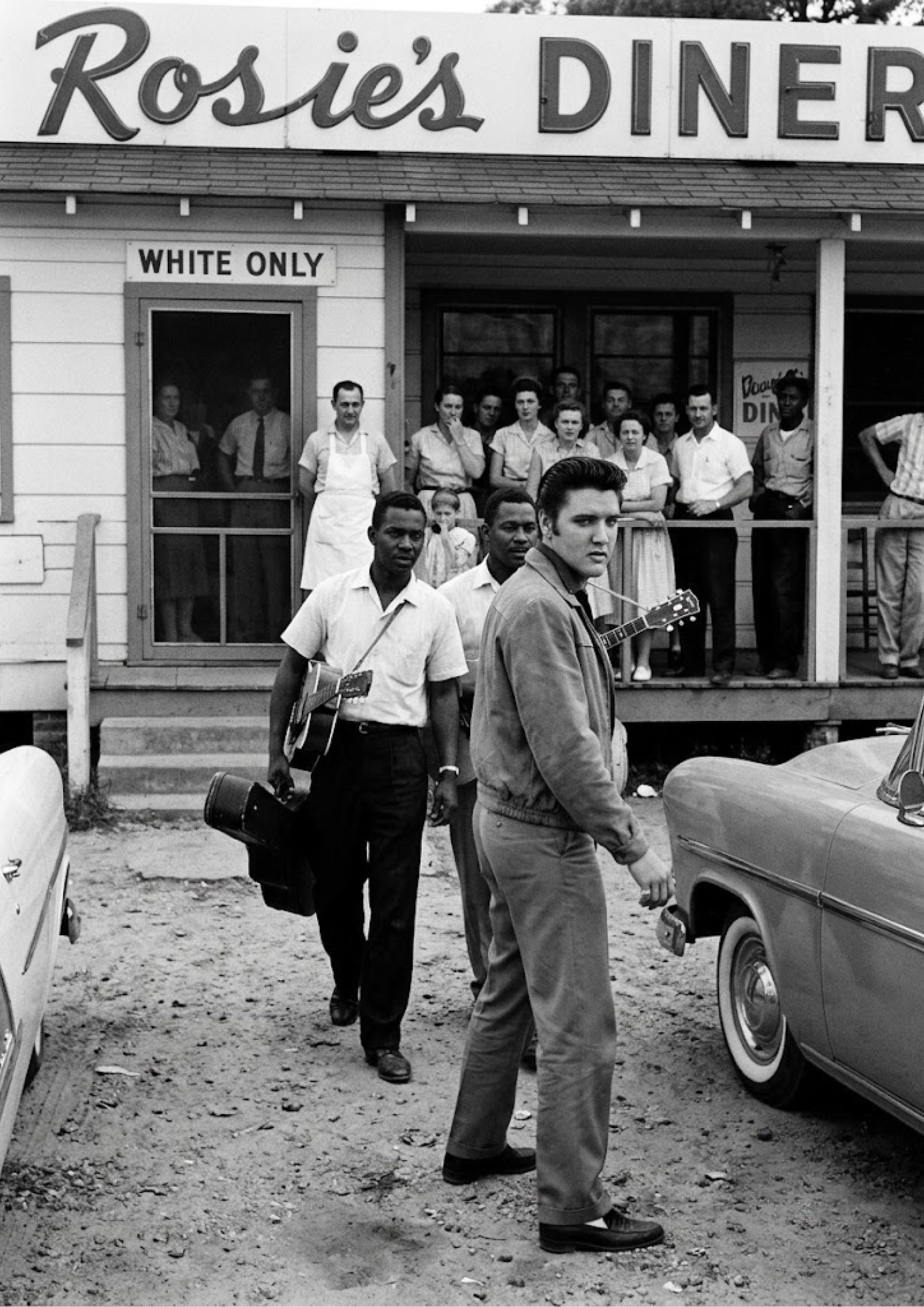
On a warm spring afternoon in May 1956, inside the small town of Tupelo, Mississippi, a moment occurred that tested the character of an artist on the verge of conquering the world. Elvis Presley, only twenty-one years old and riding the explosive first wave of his national fame, stepped into a local establishment known as Rosie’s Diner. By his side were fellow musicians—talented Black artists who had shared rehearsal rooms, harmonies, and creative bonds with him.
The warmth of their camaraderie, however, met a harsh and immediate barrier. Hanging in the doorway was the familiar, rigid sign of the segregated American South: “WHITE ONLY.” The diner’s proprietor stepped forward without hesitation, barring the Black performers from crossing the threshold and making it abundantly clear that they were unwelcome inside.
What transpired next was not a heated public brawl or a calculated publicity stunt. Instead, it was an act of quiet, unyielding integrity. Presley looked directly at the owner and uttered words that would echo far beyond Tupelo: “If they aren’t good enough for this place, then neither am I.” With that calm pronouncement, he turned his back on the establishment and walked out, his bandmates walking alongside him.
In the volatile social climate of 1956, such defiance carried immediate and severe consequences. The young singer found his burgeoning career placed in acute peril across his home region. Within days, influential radio stations pulled his records from their playlists, and corporate sponsors canceled contracts totaling over $100,000—a devastating financial blow at that stage of his career. Pundits and regional power brokers predicted that his meteoric rise had come to an untimely halt.
Yet history chose a very different path. Rather than silencing the young artist, the incident ignited a quiet revolution among music lovers nationwide. Presley’s record sales more than tripled in the ensuing months, driven by listeners who admired not only his distinct vocal phrasing, but his willingness to stand shoulder-to-shoulder with the musicians who inspired him. More profoundly, the ripple effect of his stance helped dismantle long-standing barriers, inspiring twenty-three Southern dining establishments to quietly abandon their segregation policies within months.
For many of us who look back at the golden age of American music, the encounter at Rosie’s Diner serves as an enduring reminder that true greatness is rarely measured by chart records or television ratings alone. Sometimes, the most consequential stage an artist will ever occupy is not under the glare of theatre spotlights, but on the threshold of a modest roadside diner, choosing dignity over compromise.