Introduction
Guarded Until 21: The SHOCKING Legal Web That Bound Priscilla to Graceland!
The romance between Elvis and Priscilla Presley has long been enshrined as one of pop culture’s most enduring fairy tales. Yet, beneath the glossy photographs and retro glamour lies a timeline fraught with legal complexities, intense parental oversight, and historical laws that modern audiences frequently misunderstand. Behind the public image of the “King of Rock and Roll” and his young bride is a delicate, often uncomfortable narrative of age, authority, and the intricate deals that shaped a teenager’s life.
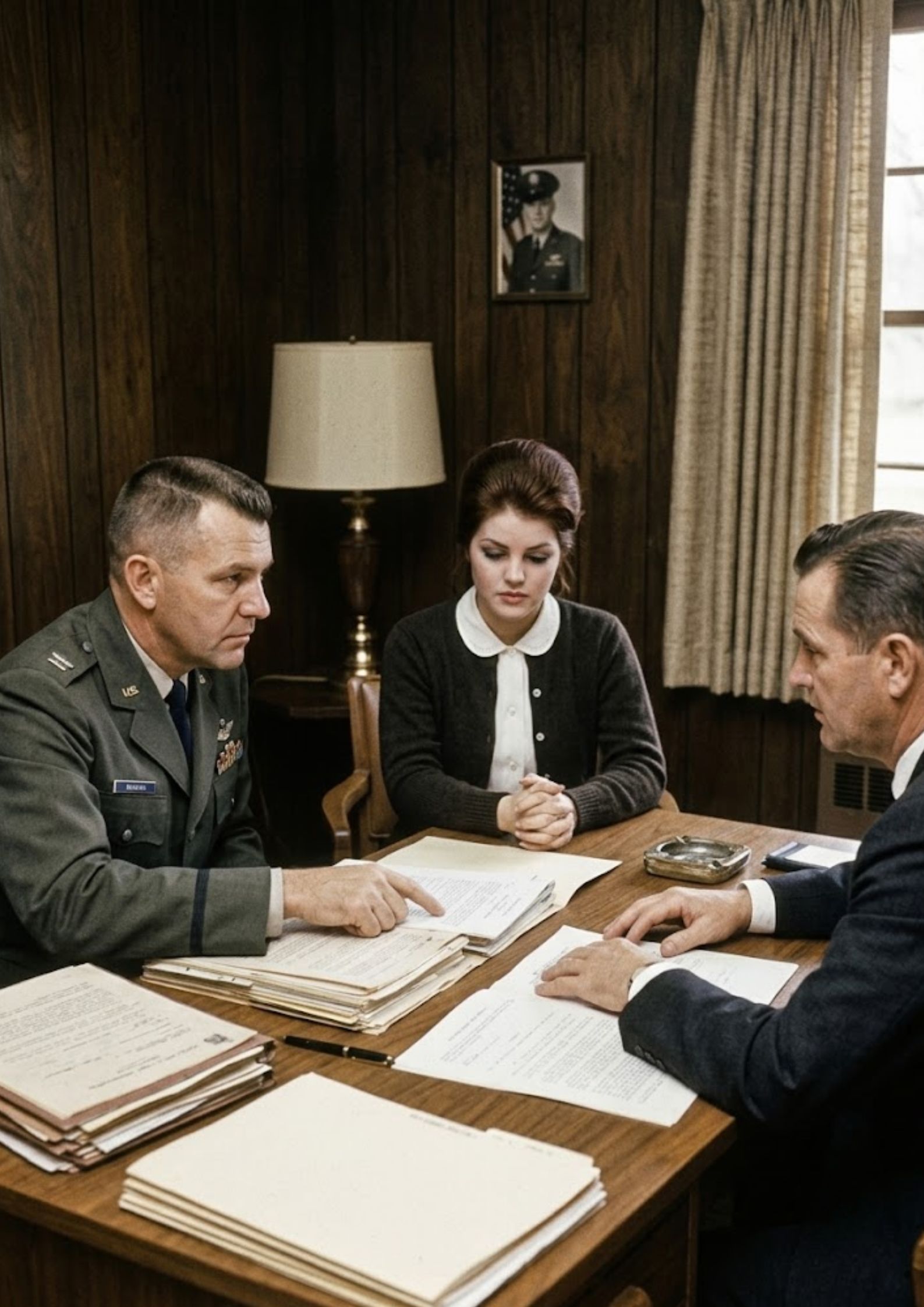
When fourteen-year-old Priscilla Beaulieu met twenty-four-year-old Elvis Presley in West Germany in 1959, the age gap was stark. As a global superstar serving in the U.S. Army, Elvis was already navigating a world of immense wealth and influence, while Priscilla was a schoolgirl living under the strict discipline of her adoptive father, Air Force Officer Paul Beaulieu. When the prospect of Priscilla moving to Memphis arose a few years later, it was not a simple matter of young love, but rather a highly negotiated arrangement. To secure her parents’ consent, Elvis had to agree to rigorous conditions: Priscilla would finish her education at a local Catholic school and live under the direct supervision of Elvis’s father, Vernon, and his wife, Dee, rather than moving straight into Graceland.
To modern observers, Priscilla’s eighteenth birthday on May 24, 1963, might seem like the moment she became entirely free to make her own choices. However, this assumption overlooks a critical historical fact: in 1960s Tennessee, the legal age of majority was twenty-one, not eighteen. Until she reached twenty-one on May 24, 1966, Priscilla was still legally a minor, subject to the authority of her parents and the legal guardianship of Vernon Presley.
This legal timeline puts her entire relationship with Elvis into a completely new perspective. Elvis did not propose until Christmas of 1966—just seven months after Priscilla finally reached the legal age of twenty-one—and they were married on May 1, 1967. This sequence demonstrates that the strict legal boundaries of the era dictated their courtship far more than fans realized, exploding the myth that turning eighteen gave her full autonomy over her life.
The reality of Priscilla’s life at Graceland also conflicted sharply with the wholesome image projected to the press. While some defenders claimed Elvis maintained a conventional routine during his Hollywood years, biographies and Priscilla’s own memoir, Elvis and Me, paint a far more chaotic picture. Her days as an adolescent were spent adapting to Elvis’s notoriously nocturnal lifestyle, which routinely revolved around late-night movie screenings and dawn-breaking adventures, making her search for normalcy as a high school student an exhausting struggle.
Ultimately, the marriage that began under such highly controlled, legally guarded circumstances did not last, culminating in divorce in 1973. Yet, in a striking twist of fate, the girl who spent her youth adapting to Elvis’s world would eventually become the protector of his legacy, orchestrating the public opening of Graceland in 1982. Re-evaluating this legendary romance requires looking past nostalgia and acknowledging the complex web of historical laws, parental bargains, and personal sacrifices that truly dictated Priscilla’s teenage years.