Introduction
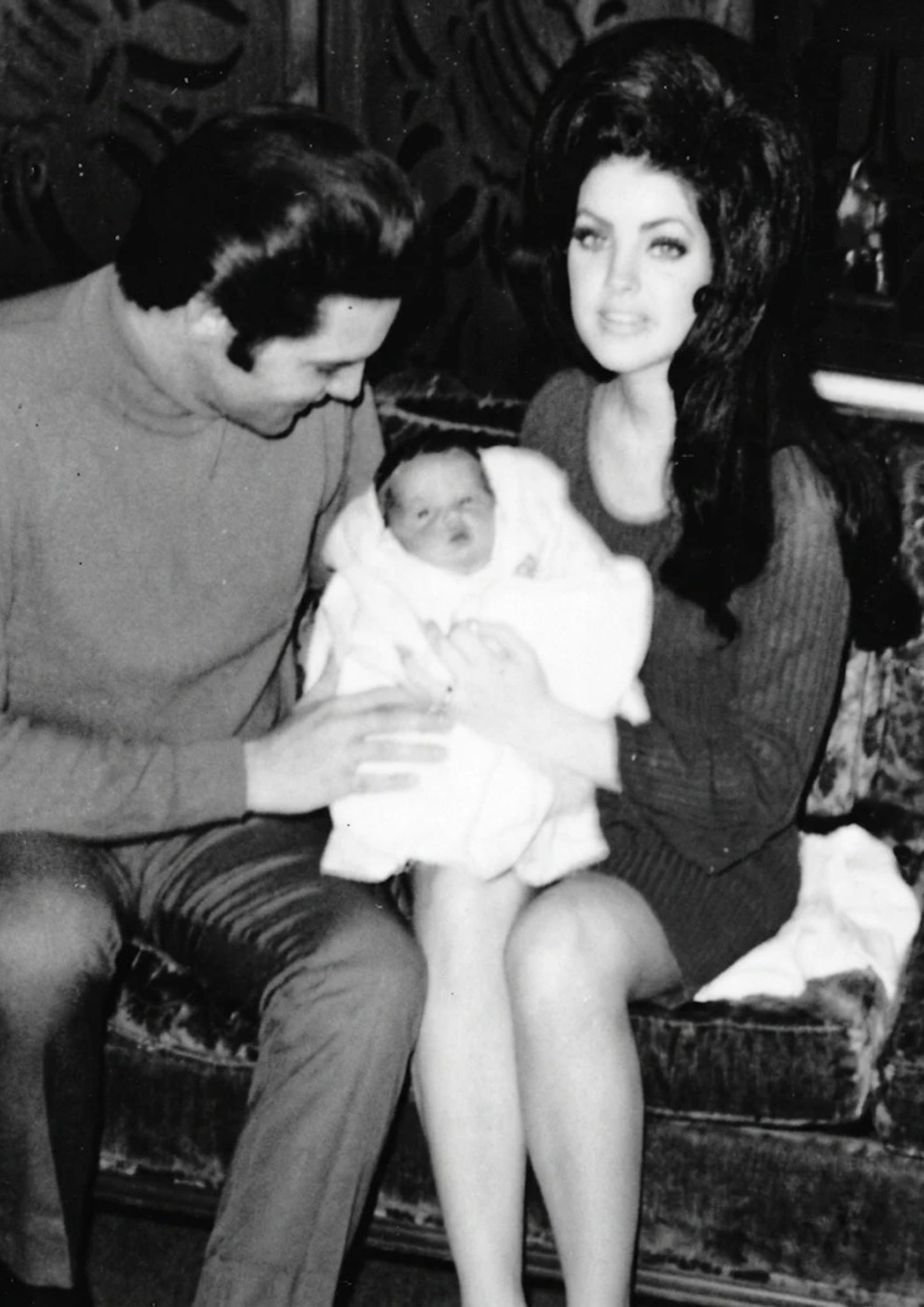
Fatherhood Before the Fire: How the Birth of Lisa Marie Preceded Elvis Presley’s Greatest Musical Resurrection
MEMPHIS, TN — On February 1, 1968, inside Baptist Memorial Hospital in Memphis, Tennessee, Elvis Presley experienced a milestone no gold record, box-office gross, or sold-out arena could ever replicate. At 5:01 p.m., Priscilla Presley gave birth to their only child, Lisa Marie Presley—weighing 6 pounds, 15 ounces, and arriving exactly nine months to the day after their Las Vegas wedding.
For a man accustomed to deafening applause and blinding spotlights, the quiet hospital room marked a profound personal turning point. Yet what makes that February afternoon so compelling in rock-and-roll history is its dramatic timing: Elvis became a father at the exact moment his musical relevance was hanging by a thread—just months before he would stun the world with one of the greatest comebacks in entertainment history.
A King Caught at a Creative Crossroads
By the winter of 1968, Elvis Presley’s career stood at a precarious juncture. Throughout the 1960s, Hollywood’s assembly-line movie schedule—producing forgettable musical comedies like Clambake, Double Trouble, and Speedway—had steadily eroded his artistic credibility.
Meanwhile, the musical landscape had shifted beneath his feet. The Beatles were rewriting the rules of rock, Bob Dylan had elevated songwriting into literature, and a rebellious new counterculture was dominating the airwaves. To many critics and industry insiders, the man who had ignited the rock-and-roll revolution in the 1950s looked increasingly like a relic of a bygone era. Behind closed doors, the uncomfortable question lingered: Had the King of Rock and Roll finally lost his crown?
Black Leather, Memphis Soul, and a Musical Rebirth
Elvis, however, had never forgotten the raw electricity of his earliest Sun Studio sessions—and within months of holding his newborn daughter, he reclaimed his artistic destiny.
Recorded in June and broadcast on NBC on December 3, 1968, the legendary ’68 Comeback Special shattered his polished Hollywood image overnight. Clad in form-fitting black leather and seated in the round with his original musicians, Elvis delivered a gritty, magnetic performance that reminded millions why he had conquered the world in the first place. When he closed the broadcast with an impassioned, soaring rendition of “If I Can Dream,” it wasn’t merely a television triumph—it was a declaration that Elvis Presley was still a vital, commanding force in American music.
He proved the revival was no fluke just weeks later. In January and February 1969, Elvis stepped into Memphis’s American Sound Studio with producer Chips Moman, emerging with timeless masterpieces like “Suspicious Minds,” “In the Ghetto,” and the critically acclaimed album From Elvis in Memphis.
A Legacy Measured in Love, Not Just Legend
Biographers have never uncovered a secret diary entry or authenticated vow proving that Lisa Marie’s birth directly triggered Elvis’s artistic rebellion. History doesn’t need an invented fable to make the parallel remarkable.
At the very moment his professional future looked most uncertain, Elvis welcomed the little girl who would become the center of his private world—and within the span of a single calendar year, he reclaimed his throne. Though tragedy would cut their time together heartbreakingly short when Elvis died at Graceland on August 16, 1977, leaving nine-year-old Lisa Marie to carry his name forward, the story of 1968 remains a powerful reminder: behind the rhinestones and global mythology stood a father whose greatest year began not under stage lights, but inside a Memphis hospital room.
Looking back at Elvis Presley’s monumental 1968—from welcoming Lisa Marie in February to triumphing in black leather that December—do you believe becoming a father gave the King a renewed sense of purpose, or was his legendary comeback simply an artist finally refusing to be silenced? Share your thoughts in the comments below!