Introduction
A $7.75 Guitar, Stage Fright, and a Homesick Call from Germany: Inside Elvis Presley’s Rare 1956 & 1959 Tapes
Before the rhinestone jumpsuits, sold-out arenas, and untouchable global mythology, Elvis Presley was a remarkably shy young man from Mississippi trying to make sense of a fame that had exploded almost overnight.
Two rare archival audio recordings—one captured at the height of his 1956 breakout, and another recorded via long-distance telephone from a U.S. Army base in West Germany in January 1959—offer an unfiltered look behind the curtain. Stripped of Hollywood polish, these vintage interviews reveal the real human being behind the King of Rock and Roll: a self-taught kid who wanted a bicycle instead of a guitar, a sudden superstar battling stage nerves, and a homesick soldier wondering if his audience would still be waiting when his uniform came off.
A $7.75 Birthday Gift and Quiet Stage Nerves
Long before millions of fans screamed his name, Elvis Aaron Presley grew up in modest circumstances in Tupelo, Mississippi, soaking up the gospel, country, and blues sounds around him. On January 8, 1946—his eleventh birthday—his mother, Gladys Presley, took him to the Tupelo Hardware Store. Young Elvis reportedly hoped for a bicycle or a rifle, but his mother steered him toward a modest guitar costing roughly $7.75 before tax, according to the recollection of former store employee Forrest Bobo.
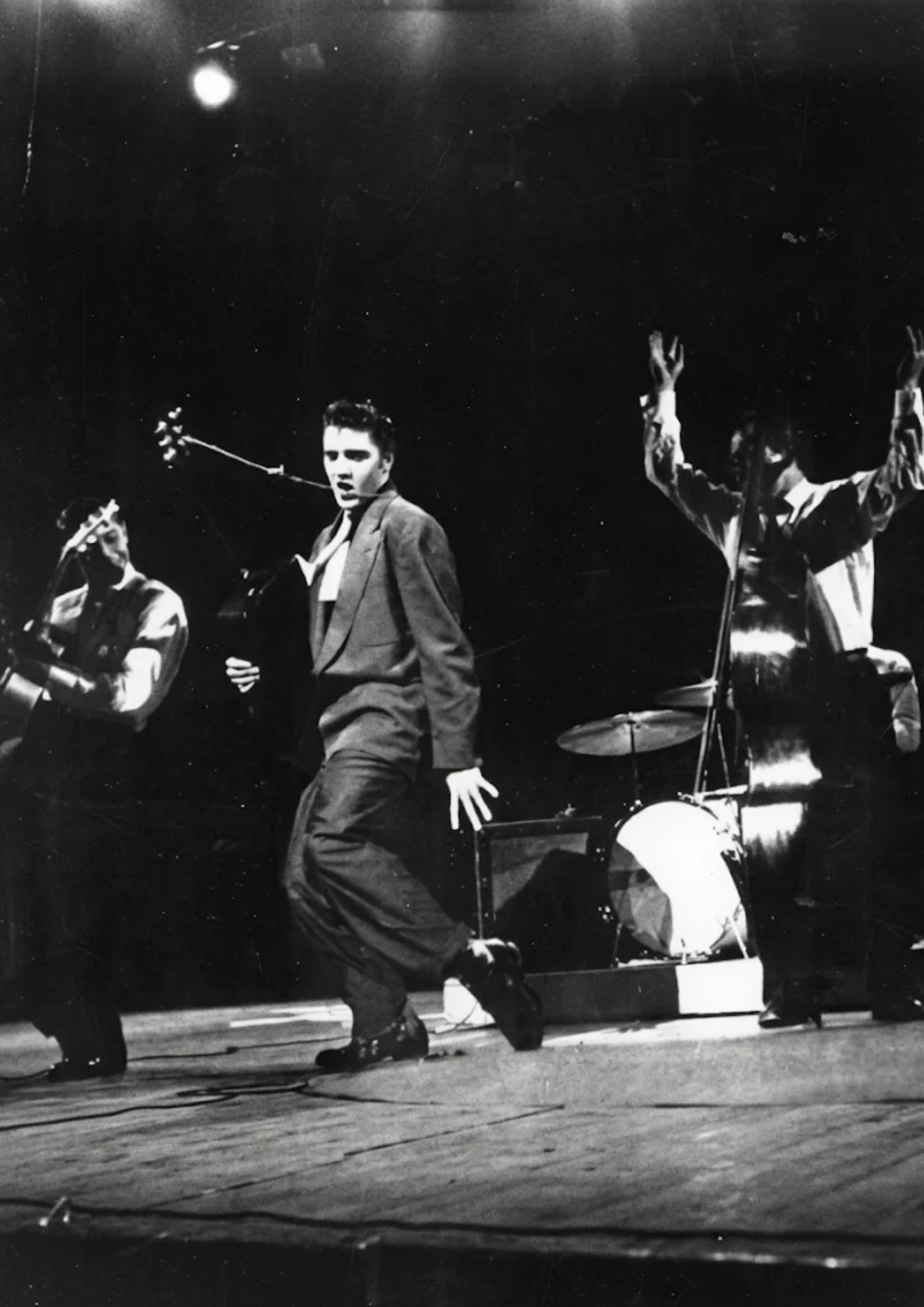
Elvis learned largely by ear, watching others play and practicing relentlessly. Yet despite the fearless swagger that would soon electrify television screens across America, the 1956 interview reveals a surprisingly candid admission: early in his career, Elvis struggled with intense nervousness and self-consciousness when stepping in front of large audiences. Even as his records shattered charts and his hip-swiveling performances ignited fierce cultural debates among conservative critics, Presley insisted he was never trying to manufacture controversy—he was simply reacting naturally to the rhythm of the music.
Behind the Breakthrough Hits and Early Rumors
The 1956 tape also captures Elvis’s dry, understated humor during the whirlwind year that changed music history. Discussing his landmark January 1956 smash “Heartbreak Hotel”—which sold over a million copies—Elvis admitted with a laugh that he actually preferred its B-side, “I Was the One,” musically, though he certainly appreciated the financial rewards “Heartbreak Hotel” brought in. By May of that year, demand had reached fever pitch, with RCA Victor announcing 653,219 advance orders for his follow-up single, “I Want You, I Need You, I Love You.”
With “Elvis Mania” triggering near-riots at live venues and forcing him to duck backstage to escape surging crowds, Presley quickly discovered the double-edged sword of celebrity: his private life had become public property. Reporters pressed him on everything from marriage plans to rumors surrounding a ring given to him by early confidante Judy Spreckels—forcing the 21-year-old singer to navigate relentless media scrutiny alongside his overnight success.
January 3, 1959: A Soldier’s Honest Phone Call from Germany
Three years later, the setting—and the tone—had changed dramatically. On January 3, 1959, interviewer Keith Sherriff placed a transatlantic telephone call to Bad Nauheim, West Germany, where Private Elvis Presley was serving in the U.S. Army.
Answering the phone right after returning from duty and still wearing his military fatigues, Elvis sounded far removed from the glamour of Hollywood. Asked whether he was afraid his popularity would evaporate during his two-year absence from the stage and recording studio, Elvis offered a disarmingly grounded response: he had no way of predicting the future, and trying to worry about everything while managing his daily responsibilities would only drive him crazy.
Yet when the conversation turned to Memphis, his voice carried unmistakable emotion. Proud as he was to serve alongside his fellow soldiers, Elvis openly confessed that he was homesick all the time—missing his family, his hometown, and the creative thrill of making music and movies. Still, he assured listeners that his ambitions remained intact, expressing gratitude to the millions of fans who continued writing letters and buying his records while he was overseas.
The Voice Behind the Legend
Decades later, the enduring power of these 1956 and 1959 recordings lies in their contrast. In 1956, listeners hear a breathless young phenomenon trying to keep his footing amid a cultural earthquake; in 1959, they hear a grounded, reflective soldier thousands of miles from home, holding onto his dreams while fulfilling his duty. Together, they preserve something no concert film or studio master ever could: the unguarded voice of the man behind the monument.
Which revelation from Elvis Presley’s rare 1956 and 1959 interviews surprises you the most—that he originally wanted a bicycle instead of his first $7.75 guitar, his early battle with stage fright, or his candid confession of homesickness while serving in Germany? Share your thoughts in the comments below!