“At 2:30 AM, Elvis Stopped Being the King… and Became Something Far More Powerful”
In the early hours of February 1966, inside RCA Studio B in Nashville, the atmosphere was drained. Musicians were exhausted. The session had dragged on for hours, filled with uninspired soundtrack recordings and commercial obligations. Instruments were being packed. Engineers were shutting down equipment. It was over.
Or at least, it should have been.
But Elvis didn’t move.
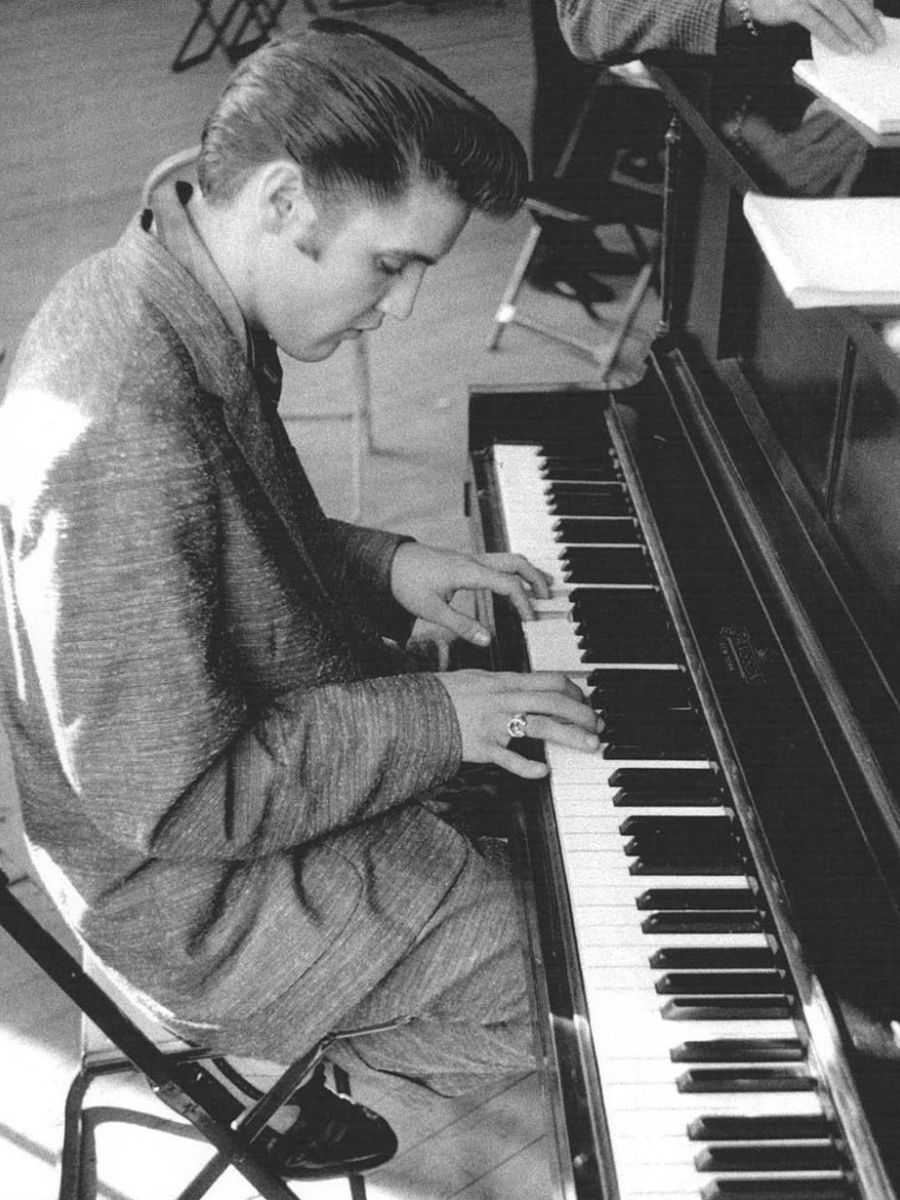
Instead, he sat quietly at the piano, staring at the keys as if searching for something deeper. Then, without warning, he began to play. Softly. Gently. The opening chords of How Great Thou Art filled the room.
And everything changed.
This wasn’t the polished superstar the world knew. This was something raw. Something ancient. Something real.
As his voice rose—fragile at first, then swelling with emotion—the room froze. Musicians who had already reached the door turned back. One by one, they returned. No one spoke. No one questioned it. They just knew.
What followed was not a recording session. It was a revival.
For six straight hours, the studio transformed into something closer to a small Southern church than a professional workspace. There were no contracts, no schedules, no expectations. Just voices rising together in harmony, driven by something far beyond music.
This was the sound that raised Elvis.
Growing up in Tupelo, Elvis had been immersed in the fire of Pentecostal gospel at the Assembly of God Church. It wasn’t about perfection—it was about truth. About surrender. About feeling something so deeply it shook your soul. That spirit never left him.
In fact, as fame consumed his life, gospel became his escape.
While the world saw the King of Rock and Roll, Elvis quietly told friends: “Gospel is the only music I really care about. Everything else is just how I make a living.”
And on that night in 1966, that truth came roaring back.
As the hours passed, voices blended into something almost supernatural. Veteran musicians—men who had worked with legends—found themselves overwhelmed with emotion. Some cried. Others stood in silence, unable to process what they were witnessing.
Producer Felton Jarvis realized something extraordinary was happening. Without permission, without announcement, he quietly began recording.
Because moments like this don’t come twice.
By 5:00 AM, when Elvis returned to How Great Thou Art, the energy in the room had reached something close to transcendence. His voice, after hours of singing, didn’t weaken—it soared. Stronger. Higher. As if fueled by something beyond exhaustion.
When he finished, silence fell.
No applause. No chatter. Just stillness.
Then someone began to cry.
And others followed.
Elvis sat there, breathing heavily, eyes wet. Finally, he looked up and said softly, “That’s the one.”
That recording would go on to become the centerpiece of the album How Great Thou Art, released in 1967—a project that would earn Elvis his first Grammy Award. Not for rock. Not for pop.
For gospel.
It meant more to him than anything.
Because beneath the fame, beneath the legend, Elvis was still that boy from Tupelo—sitting in a wooden pew, surrounded by voices lifted in faith, searching for something real in a world that often felt anything but.
Those late-night gospel sessions weren’t about charts or money. They were about survival. About reconnecting with his soul. About remembering who he was when the spotlight faded.
And maybe that’s why they still matter.
Because in those quiet, unplanned hours, Elvis Presley wasn’t the King of Rock and Roll.