Introduction
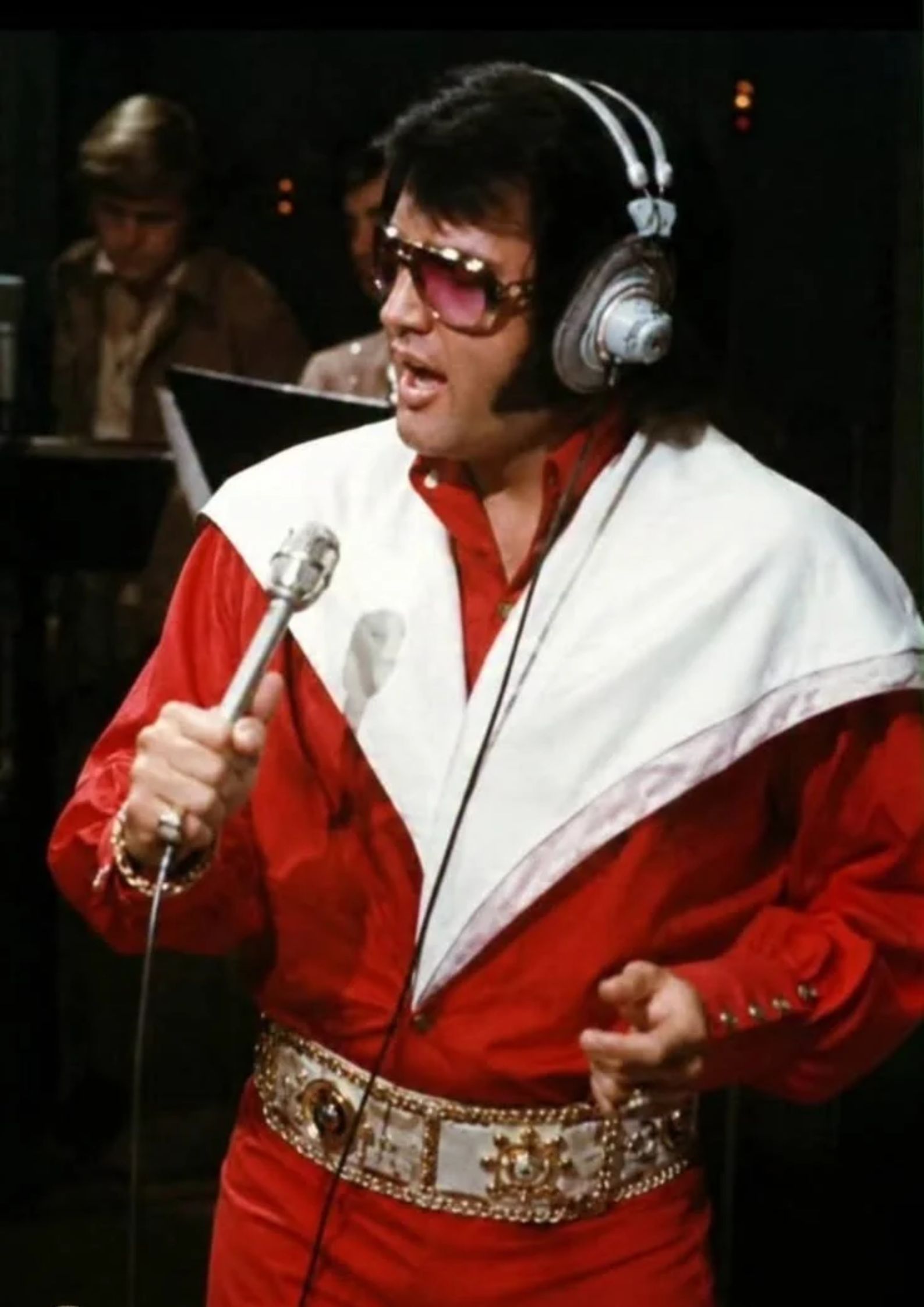
Behind the Microphone: Two Decades of Rare Studio Moments, Hollywood Detours, and the Voice That Defined Elvis Presley (1956–1975)
MEMPHIS, TN — Long before the rhinestone jumpsuits, the sold-out arenas, and the global mythology, there was simply a young man from Memphis standing alone in front of a microphone. Across two turbulent decades—from his explosive 1956 studio breakthroughs to the reflective twilight of his 1975 performances—that single piece of studio hardware served as the most intimate witness to Elvis Presley’s extraordinary evolution.
Behind every screaming crowd and chart-topping single lay countless unguarded hours in recording booths and press rooms, capturing the transformation of an ambitious Southern teenager into the undisputed King of Rock and Roll.
The Spark of 1956 and the Price of Overnight Fame
Elvis’s story began quietly at Memphis’s Sun Records under producer Sam Phillips in 1954, yet by 1956—now recording for RCA Victor—he was detonating a cultural revolution. On July 2, 1956, Elvis stepped up to the microphone to record two tracks that would permanently alter popular music: “Hound Dog” and “Don’t Be Cruel.” Candid photographs from that landmark session capture a carefree, laughing young artist leaning beside the mic, seemingly oblivious to the seismic wave he was about to unleash.
By 1957, however, the microphone was no longer confined to the recording studio. While cutting “Jailhouse Rock” alongside The Jordanaires, Elvis remained an unstoppable creative force—yet microphones now trailed him onto film sets, television stages, and chaotic press conferences as global mania closed in.
That momentum came to an abrupt halt in 1958 when Elvis was drafted into the U.S. Army. Trade-in his guitar for olive drab, the biggest star on earth spent two years away from the charts, fielding relentless questions across crowded press tables. When he finally returned to civilian life at Fort Dix, New Jersey, in March 1960, industry skeptics wondered aloud whether rock’s original rebel could reclaim his throne.
From Hollywood Exile to the Fire of 1968 and 1969
Elvis answered with his voice. In April 1960, he returned to the studio to record the soundtrack for “G.I. Blues”—archival images showing a more seasoned, focused artist studying lyric sheets, directing session players, and delivering international smashes like “It’s Now or Never.”
Yet as the 1960s wore on, Hollywood’s lucrative assembly line—yielding glossy vehicles like “Viva Las Vegas” and “Harum Scarum”—gradually sidelined the raw recording pioneer. It took the landmark 1968 NBC television special to shatter that mold, stripping away the cinematic polish and restoring the visceral urgency that had made him famous.
One year later, in 1969, Elvis returned home to Memphis to record with producer Chips Moman at American Sound Studio. Standing before the studio mic once again, he poured hard-won maturity, vulnerability, and soul into classics like “In the Ghetto” and “Suspicious Minds”—proving his voice had only deepened with time.
Global Triumph and the Weight of the Crown (1972–1975)
Entering the 1970s, the microphone became Elvis’s lifeline to millions across Las Vegas residencies and cross-country tours. Following a November 1972 press conference announcing his ambitious satellite broadcast, Elvis delivered one of entertainment history’s crowning spectacles on January 14, 1973: “Aloha from Hawaii.” Clad in his iconic white eagle jumpsuit and a crimson lei, he beamed his voice to a global television audience, reaffirming his unmatched international reach.
Yet behind the dazzling stage lights and relentless touring schedule, the toll of two decades in the spotlight was mounting. By 1975, studio candid shots and live footage carried a noticeably quieter, more reflective weight—showing a seasoned performer still commanding rooms with his guitar and unmistakable baritone, even as the years behind the mic began to show.
The Voice That Outlived the Spotlight
From Sun Records to the grand stages of the mid-1970s, hairstyles changed, musical eras shifted, and crowds came and went—yet the microphone remained the one constant companion through Elvis Presley’s triumphs, interruptions, and reinventions.
Photographs freeze a single second in time, but the recordings captured behind that microphone preserved something far more enduring: a human voice capable of bridging generations long after the final curtain fell.
Looking across Elvis Presley’s remarkable journey from 1956 to 1975, which era behind the microphone speaks to you most—the raw, laughing energy of his 1956 RCA sessions, the soulful 1969 Memphis comeback recordings, or the towering global spectacle of the 1970s? Share your favorite Elvis recording moment in the comments below!