Introduction
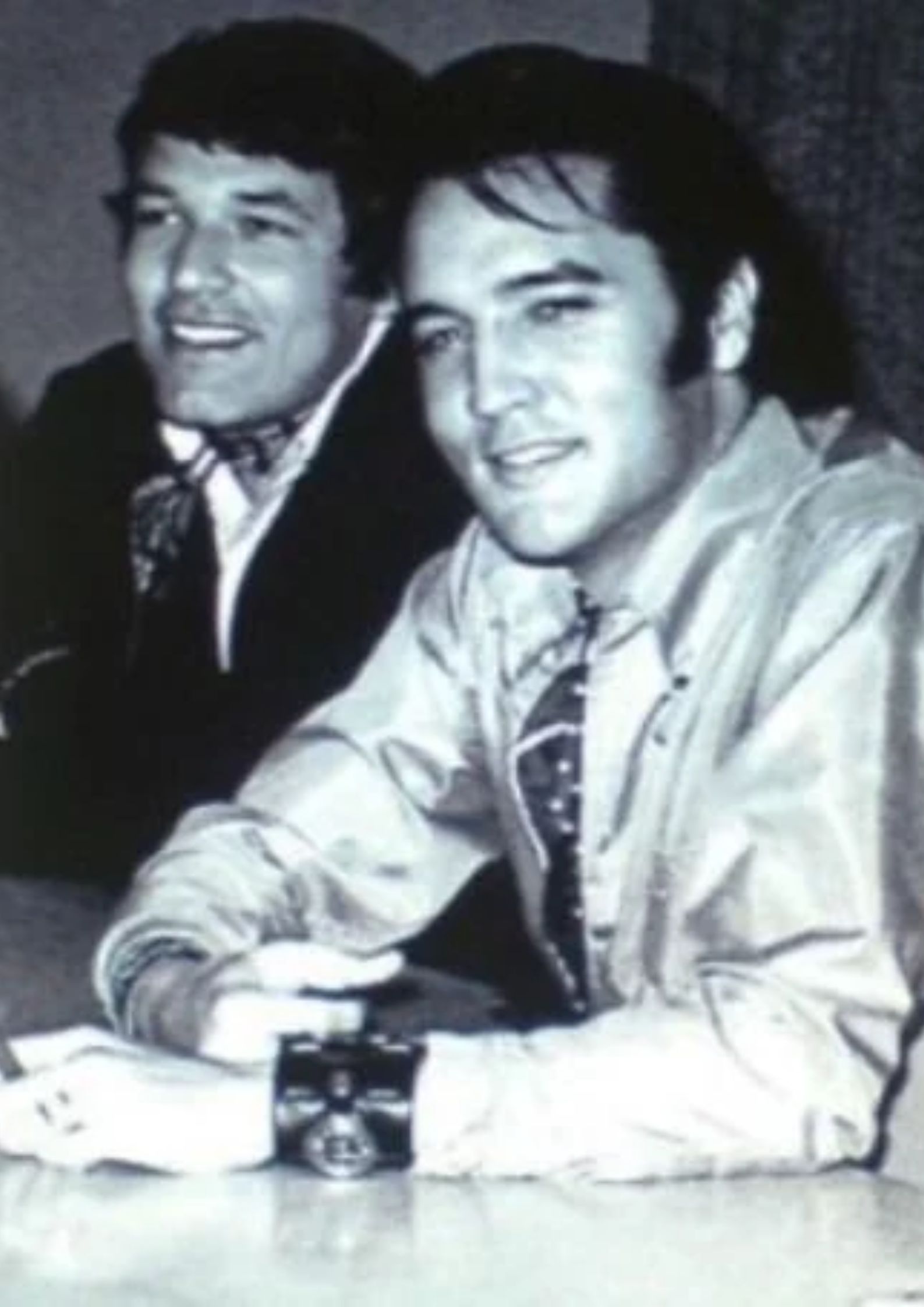
The Black Leather Rebellion: How Elvis Presley Defied Colonel Parker’s Safe Christmas Special to Pull Off the Greatest Comeback in Music History
BURBANK, CA — By the summer of 1968, Elvis Presley was trapped in a gilded cage of his own superstardom. For nearly a decade, the man who had once detonated a cultural revolution with a swivel of his hips had been reduced to a predictable Hollywood formula—churning out assembly-line musical comedies and forgettable soundtrack albums while newer, hungrier acts like The Beatles and Jimi Hendrix reshaped the musical landscape.
To the outside world, Elvis was still the King. Behind closed doors, however, he was an artist starved of creative freedom, quietly watching his relevance slip away under the tight commercial grip of his longtime manager, Colonel Tom Parker.
It took a bold television director named Steve Binder—and an act of quiet rebellion inside an NBC studio—to shatter the mold, bypass Parker’s safe Christmas special blueprint, and resurrect the raw, dangerous magic of Elvis Presley.
The Brutal Honesty That Changed Everything
When Colonel Tom Parker initially negotiated the 1968 NBC television special, his vision was unmistakably conventional: a cozy, family-friendly Christmas broadcast featuring Elvis in a tuxedo, singing holiday standards in front of a fireplace. It was safe, predictable, and entirely aligned with the commercial machine Parker had built around his client.
Director Steve Binder had other ideas.
Rather than delivering a polished promotional vehicle, Binder wanted to strip away the Hollywood veneer and capture the raw, authentic musician who had first electrified the world in the 1950s. When Elvis privately asked Binder what he genuinely thought about the state of his career, the young director bypassed the usual sycophancy of Elvis’s inner circle and delivered a blunt verdict: his career was in the toilet.
Instead of taking offense, Elvis was visibly relieved. For years, surrounded by managers and entourage members who told him only what he wanted to hear, the King had been waiting for someone with the courage to tell him the truth. That moment of unvarnished honesty forged an immediate creative alliance between director and star—setting the stage for a direct collision with Colonel Parker’s carefully guarded control.
Reclaiming the Throne in Black Leather
Defying the original holiday concept, Binder and Elvis transformed the production into a visceral, intimate celebration of rock and roll’s roots. In one of the special’s defining segments, Binder seated Elvis in the round alongside his original bandmates—Scotty Moore and D.J. Fontana—creating an unscripted, electric jam session filled with spontaneous laughter, old memories, and searing musical chemistry.
Then came the visual statement that would echo through pop culture history.
Instead of Parker’s conservative holiday attire, Elvis stepped onto a minimalist stage clad head-to-toe in a form-fitting black leather suit. Sweating under the hot studio lights, his voice richer, grittier, and more commanding than it had sounded in years, Elvis didn’t just perform—he reclaimed his throne. The swagger, the danger, and the unmistakable soul that had been buried beneath years of Hollywood scripts erupted back onto television screens across America.
A Turning Point Between Commerce and Art
Behind the cameras, tensions over creative influence simmered throughout the production, highlighting the fundamental friction at the heart of Elvis’s career. While Colonel Parker had masterminded Elvis’s rise into an unmatched global brand, his risk-averse, profit-driven strategy had increasingly isolated Elvis from the evolving music industry.
Elvis never needed to issue a public manifesto to declare his independence. His performance on the 1968 special—which aired in December 1968 to massive ratings and universal critical acclaim—spoke louder than any press release ever could. It proved that when freed from commercial formulas and allowed to trust his own instincts, Elvis Presley remained an unmatched force of nature.
Decades later, the 1968 comeback special stands as far more than a triumphant television broadcast. It was the moment a global icon stared down the entertainment machine, reclaimed his own artistic voice, and reminded the world why he was—and always would be—the King.
Looking back at the legendary 1968 comeback special, do you believe Steve Binder’s creative intervention saved Elvis Presley’s musical legacy from his Hollywood years, or was the King simply waiting for the right moment to break free from Colonel Parker’s safe formula? Share your thoughts in the comments below!
Video: