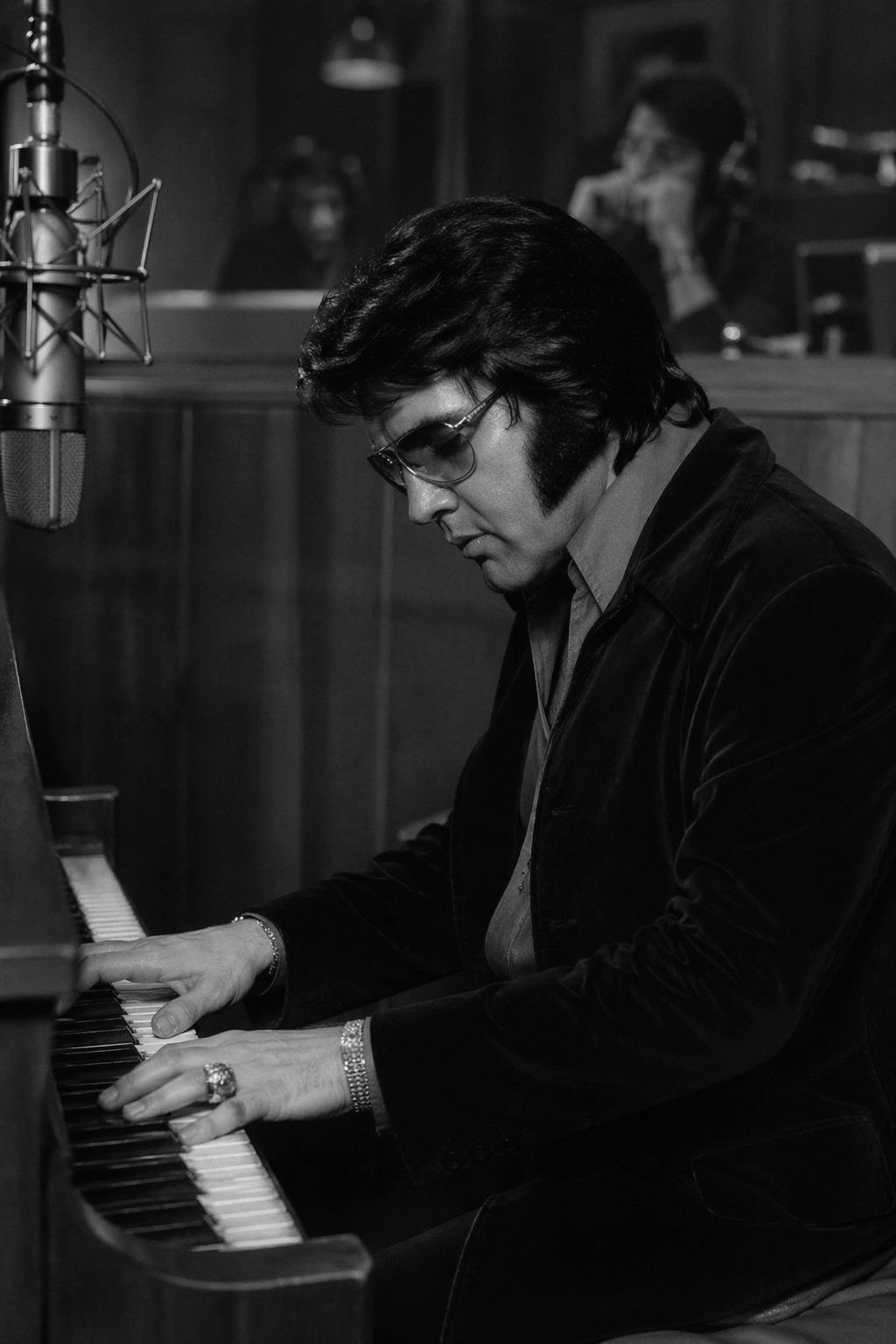
He Broke Down in the Studio… And What Elvis Recorded That Night Still Haunts Fans Today
Memphis, 1977 — long after the musicians had packed up and the lights in the studio had gone dim, Elvis Presley remained seated at the piano, motionless, staring into the keys as if they held every secret he had spent a lifetime trying to outrun. Those inside that room believed they were about to witness another ordinary late-night session. They were wrong.
What unfolded became the kind of moment music history whispers about but rarely captures.
There was no grand announcement. No cameras rolling. No audience waiting.
Just Elvis… alone with a song many say cut too close to the truth.
According to those who were there, the track had shaken him from the first moment he heard the demo. It wasn’t just lyrics. It was a reflection. A haunting confession wrapped in melody. A song about lost chances, fading love, and the unbearable ache of looking back.
And Elvis reportedly could not escape it.
For weeks, he played the demo over and over through the halls of Graceland, late into the night. Staff heard the same melody drifting through empty rooms at 3 a.m. Friends noticed a change. His mood darkened. His silence grew heavier. Something about the song had reached a place inside him no spotlight ever touched.
When he finally agreed to record it, the atmosphere in the Jungle Room felt unlike any session before.
No laughter.
No joking.
No showmanship.
Only tension.
The first take collapsed within seconds.
His voice reportedly cracked.
The second nearly made it through the verse… then stopped.
Again.
And again.
Take after take, emotion kept overtaking the performance.
But maybe it was never a performance.
Maybe it was something far more revealing.
Around two in the morning, after repeated attempts, Elvis asked everyone to leave.
Imagine that scene.
A global icon. A man worshipped by millions.
Sitting alone in a dim room, facing a microphone, trying to sing words that seemed to expose every scar he had carried in silence.
Then it happened.
One final take.
No polished vocals.
No dramatic flourishes.
Just a voice trembling with feeling.
A recording so raw that even those who heard it later said it didn’t sound like entertainment — it sounded like a soul speaking out loud.
Some say you can hear tears in the phrasing.
Some say you can hear exhaustion.
Some say you can hear a man making peace with things he could never change.
And that is what makes this story impossible to forget.
Because it wasn’t about fame.
It wasn’t about the legend.
It was about the rare moment when Elvis Presley seemed to step out from behind the myth and reveal something startlingly human.
Months later, the world would be stunned by tragic news from Graceland.
And suddenly, people began hearing that recording differently.
Not just as a song.
But as something almost prophetic.
A message hidden in plain sight.
A late-night confession the world was never supposed to hear this way.
To this day, many devoted fans believe that session captured one of the most emotionally exposed performances of Elvis’s life — not because it was technically perfect, but because it wasn’t.
Its flaws made it unforgettable.
Its vulnerability made it timeless.
And its pain made it feel real.
That is why decades later, people still return to this moment asking the same chilling question:
Was this merely a recording session…
Or was it a farewell disguised as a song?
One thing is certain —
That night in Memphis, the King didn’t just sing.
He left a piece of himself on tape.
And once you know what happened in that studio, you may never hear his music the same way again.