Introduction
The Gluttony and the Gilded Cage: The SHOCKING Hidden Appetites and Crushed Hollywood Dreams of Elvis Presley
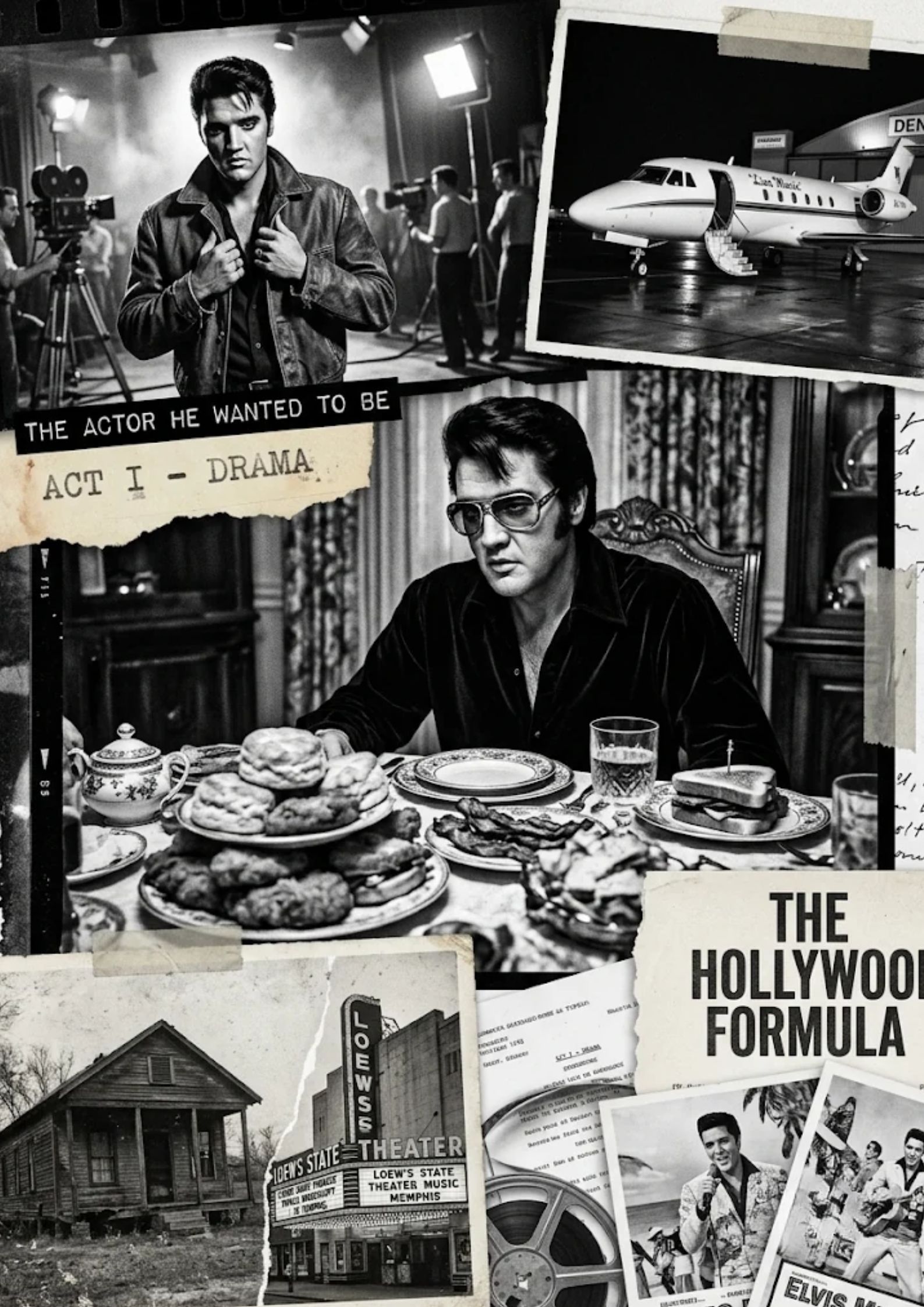
To mid-century America, Elvis Presley was the immaculate archetype of post-war indulgence: the man who had conquered every medium, driving custom Cadillacs up the winding drive of Graceland and commanding the marquee across thirty-one Hollywood feature films. Yet behind the white gates and technicolor publicity stills lay a profound, dual tragedy of excess and creative asphyxiation. The King was simultaneously consuming himself through compulsive culinary habits born of rural deprivation and slowly suffocating inside a studio apparatus that traded his genuine dramatic gifts for assembly-line box office profits.
The forensic examination of Presley’s relationship with food—most notably documented in David A. Adler’s exhaustive study The Life and Cuisine of Elvis Presley—unveils an appetite that transcended mere indulgence to become a psychological fortress. Raised in the grinding, Great Depression-era poverty of Tupelo, Mississippi, where Vernon and Gladys Presley frequently struggled to scrape together pocket change for basic school lunches, the young boy internalized scarcity long before he encountered wealth.
When absolute wealth arrived, his dietary rebellion was extreme. At Graceland, the King demanded monumental volumes of heavily salted, well-done comfort staples: stacks of buttermilk biscuits, towers of fried chicken, and the iconic, scorched peanut-butter-and-banana sandwiches.
Nothing encapsulated this compulsion quite like the notorious “Fool’s Gold Loaf” episode. In February 1976, Presley commandeered his private jet, the Lisa Marie, flying over a thousand miles from Memphis to Denver simply to consume hollowed-out loaves of warm Italian bread packed with an entire jar of peanut butter, grape jelly, and a full pound of crisp bacon inside a private airport hangar. It was not merely rock-and-roll eccentricity; it was the unchecked manifestation of a man attempting to fill a bottomless, unresolved emotional void with the fried, heavy flavors of his Southern roots.
Yet Presley’s deepest private agony took place far from the dining table. It unfolded beneath the arc lights of Hollywood.
Elvis had never set out to be a lighthearted matinee idol. Revering intense, method-driven contemporaries like James Dean and Marlon Brando, Presley desperately wanted to establish himself as a serious dramatic actor. In his early forays—most vividly seen in Jailhouse Rock (1957), Michael Curtiz’s gritty King Creole (1958), and Don Siegel’s brooding Western Flaming Star (1960)—critics caught glimpses of a brooding, instinctive screen presence capable of carrying severe emotional gravity.
Then came the catastrophic commercial triumph of 1961’s Blue Hawaii.
Recognizing a foolproof, risk-free cash machine, his autocratic manager, Colonel Tom Parker, along with major studio executives, locked Presley into an algorithmic assembly line. For nearly a decade, the King was forced into identical, low-budget formulas: exotic tourist backdrops, cookie-cutter romantic triangles, attractive starlets, and a half-dozen hasty, mediocre soundtrack numbers cranked out on tight production schedules. Serious scripts were dismissed out of hand by Parker if they didn’t guarantee lucrative publishing kickbacks and zero artistic risk.
Presley was keenly aware of the joke his cinematic career had become. Trapped under contract, he watched from trailer windows as the New Hollywood revolution—spearheaded by gritty, authentic storytelling—passed him by, leaving him stranded as a cinematic novelty act singing to children and animals on soundstages.
It was not until the raw, stripped-down triumph of the ’68 Comeback Special and his final dramatic feature, Change of Habit (1969), that he began to wrest back his artistic soul. But by then, the golden years of his dramatic potential were lost.
Elvis Presley’s legacy remains a paradox of modern celebrity culture. The world crowned him an untouchable monarch, but behind the gates, he lived as an exile of his own fame—soothing the starvation of his impoverished youth with extravagant feasts, while mourning the formidable screen actor that Hollywood’s ruthless commercial engine refused to set free.
Video: