Introduction
“He Didn’t Have to Die”: The SHOCKING 23-Year Truth Behind Elvis’s Final Collapse
Before Graceland became an international shrine and the name Elvis Presley turned into an untouchable corporate monolith, there was simply a lonely, awkward eighteen-year-old on a Memphis playground who could not find enough boys to complete a pickup football game. When twelve-year-old orphan Jerry Schilling walked into that neighborhood huddle in 1954, neither could have foreseen that their meeting would forge a twenty-three-year brotherhood. Over two decades later, Schilling would stand as one of the very few confidants who witnessed the ascent, the creative imprisonment, and the agonizing final descent of music’s most isolated monarch.
Now, breaking decades of silence, Schilling has laid bare a harrowing assessment of Presley’s tragic end: Elvis was not simply brought down by health issues or burnout—he was suffocated by a corporate apparatus that systematically crushed his artistic spirit.
Their journey began on the fringes of a segregated city. Moving from Tupelo to Memphis at age thirteen, Elvis had struggled intensely to assimilate, finding refuge primarily with his immediate family. Yet Schilling observed something extraordinary in the young truck driver long before Sun Records captured lightning in a bottle. Elvis was a cultural sponge, obsessively listening to Dewey Phillips’s late-night Red Hot and Blue broadcasts and absorbing the electric, forbidden rhythms of Black artists on Beale Street—such as Chuck Berry, Little Richard, and the soul legends broadcast over WDIA. When Phillips debuted “That’s All Right” in the summer of 1954, Schilling recognized instantly that Elvis, backed by guitarist Scotty Moore and bassist Bill Black, had unleashed a sound that dismantled social and racial barriers across post-war America.
For Schilling, Scotty Moore’s contribution was the indispensable engine behind the King’s sonic revolution. Long before Colonel Tom Parker engineered a commercial monopoly, it was Moore who directed early bookings, managed logistics, and laid down the hair-raising, echo-drenched guitar leads on masterpieces like “Heartbreak Hotel” and “Mystery Train.”
Yet as the 1960s rolled on, that pure musical fire was traded for formulaic Hollywood soundtracks and rigid studio contracts. Schilling witnessed firsthand Elvis’s mounting despair. The King felt artistically muzzled, longing for creative autonomy and craving genuine musical dialogue. That pent-up frustration erupted during the legendary 1968 NBC Comeback Special. Reunited in a tight circle with Scotty Moore and drummer D.J. Fontana, Elvis discarded the sanitized Hollywood sheen. Schilling remembers watching a visibly joyful Elvis rediscover the primal, raw confidence of his youth—a creative triumph that Schilling passionately argued should have served as the permanent touring foundation for his live comeback, rather than being abandoned for the rigid demands of the Las Vegas grind.
The most devastating chapter of Schilling’s account centers on Presley’s untimely death on August 16, 1977. When the news broke, Schilling was left not merely in mourning, but in absolute terror. Graceland had been his sanctuary; Elvis had bought him his first home and served as his emotional anchor. But beneath the profound grief lay a seething anger that has never faded.
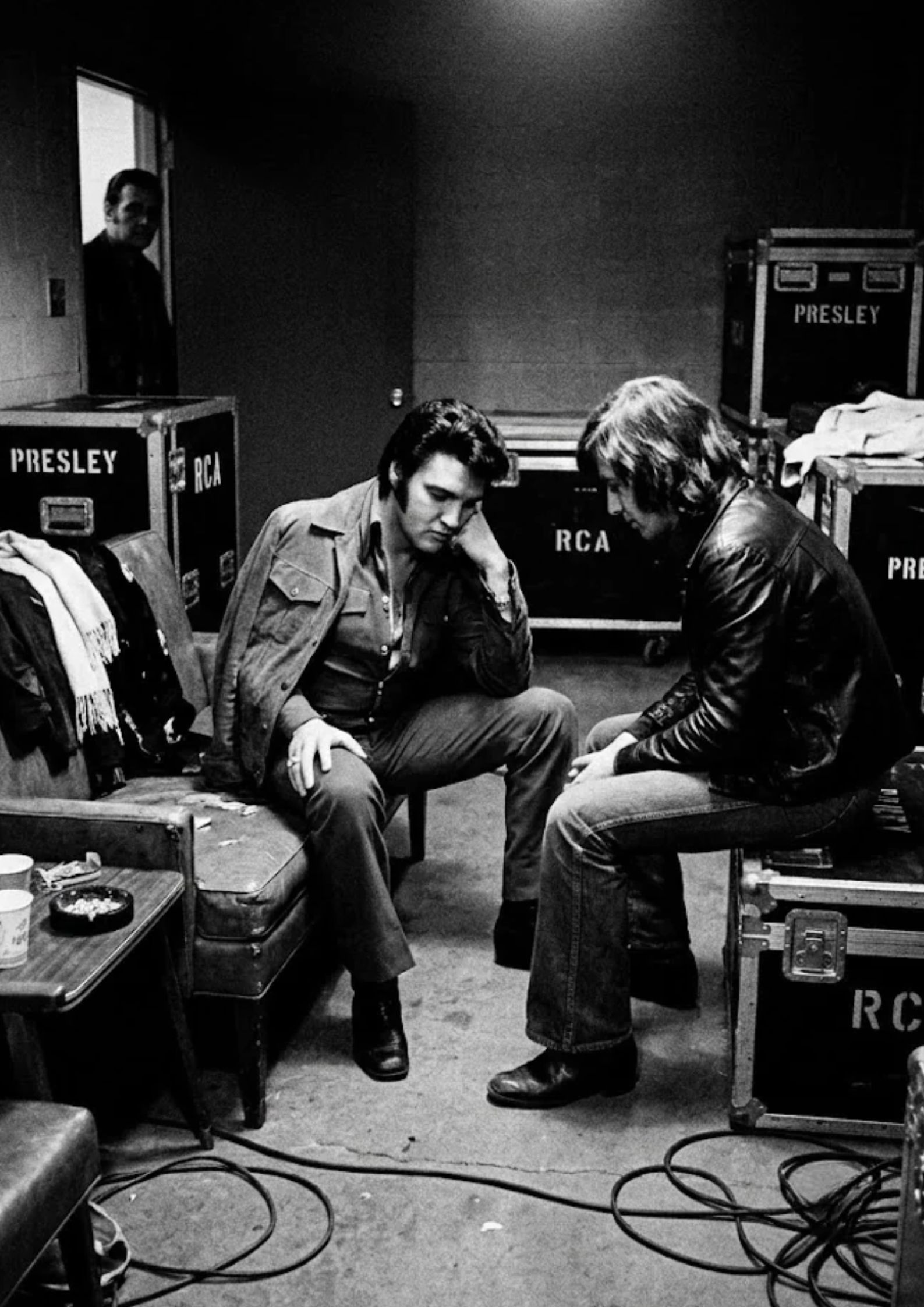
Schilling remains convinced that Elvis didn’t have to die at forty-two. He watched the singer endure years of creative sabotage: Presley desperately wanted to embark on an ambitious international world tour, explore serious acting roles, and break out of the repetitive concert cycles that drained his physical and mental vitality. Instead, his management and commercial handlers dismissed his aspirations, leaving him trapped inside an unyielding revenue machine. In Schilling’s eyes, Elvis died of a broken spirit—discouraged and defeated by those who prioritized financial extraction over the human being inside the rhinestone jumpsuits.
Jerry Schilling’s memories peel away the layers of pop-culture myth to reveal the tragic core of the Presley legacy. Elvis was never just an untouchable icon living in marble halls; he was a generous, sensitive, and deeply isolated artist who needed to be heard. The true tragedy of rock history is not that the King died young—it is the lingering reality that if the industry gatekeepers had actually listened to his voice, his final chapter might have been written very differently.