Introduction
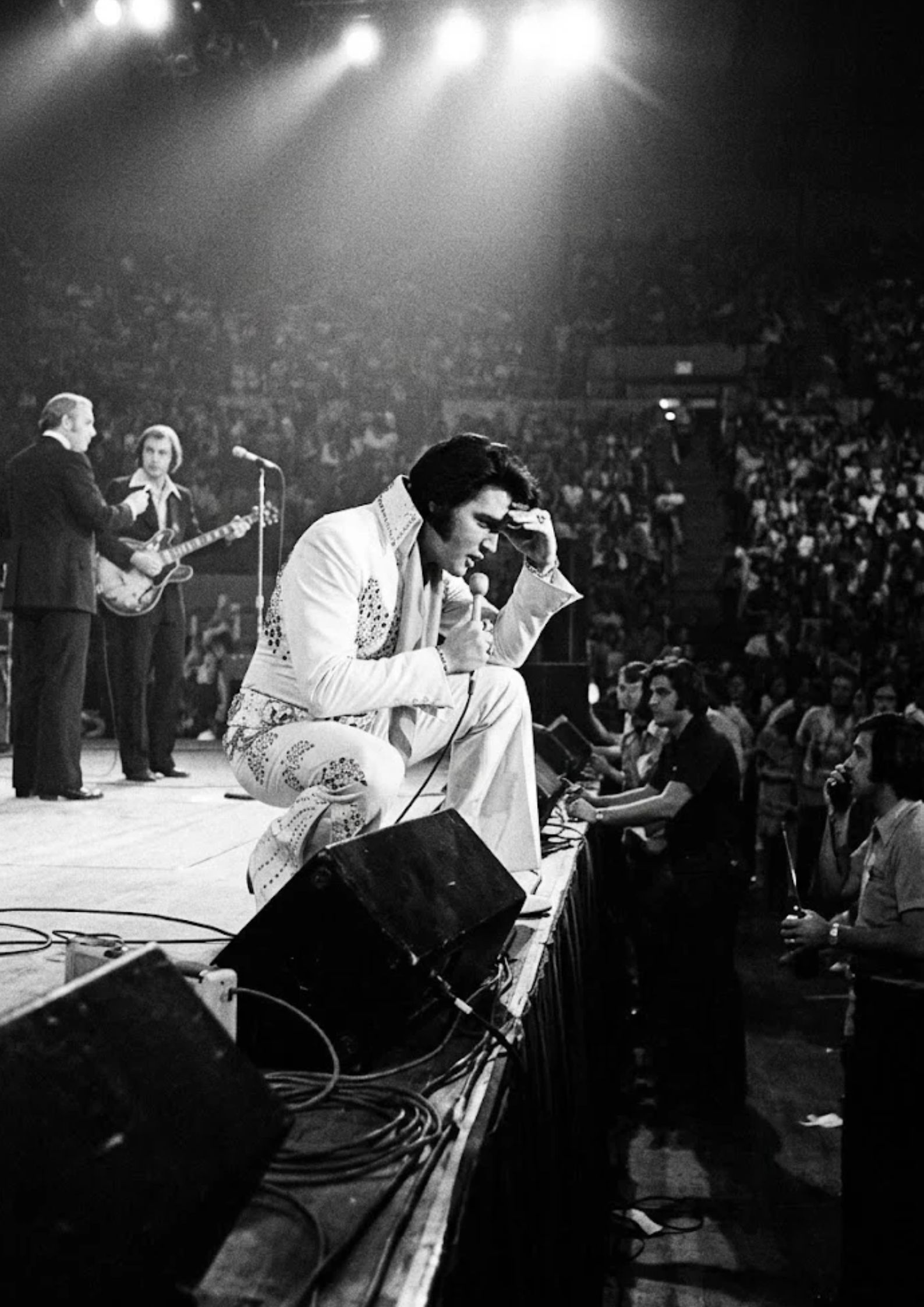
Mid-Song Shock: Why Elvis Presley Suddenly Froze and Refused to Sing Another Word
On the sweltering evening of August 3, 1973, over twenty thousand spectators packed into the Convention Center Arena in San Antonio, Texas. Outside, the summer heat lingered stubbornly above ninety degrees, yet within the walls of the auditorium, the atmosphere was thick with sheer anticipation. For nearly an hour, Elvis Presley had commanded the room with customary brilliance—delivering the signature jumpsuits, the warm baritone timbre, and the effortless magnetism that had defined American popular entertainment for two decades.
The crowd hung on every note, reaching a fever pitch as the band launched into the opening chords of Suspicious Minds. The song, long celebrated for its grand orchestration and driving momentum, was just two minutes underway when something unusual occurred. Working the stage from left to right beneath blinding spotlight banks that typically reduced the audience to a blur, Presley’s eyes locked onto Row Four of the center floor section.
Where others might have seen only a sea of waving hands, Presley caught sight of a patron slumped sideways, motionless in her seat. While nearby attendees remained caught in the euphoria of the performance, Elvis recognized immediately that this was not a fan merely overcome with emotion, but an individual in acute physical distress.
Without hesitation, Presley cut off his vocals mid-lyric. As the rhythm section stumbled forward for a bewildered beat, the singer turned toward his musical conductor with a single, sharp gesture. Instantly, the roaring brass and percussive thunder fell dead silent. A collective gasp of disappointment and confusion swept across twenty thousand patrons as the monumental performance ground to a complete halt.
Crouching low at the rim of the stage and shading his eyes against the glaring lamps, Presley addressed the hall over the microphone with calm, authoritative precision: “We need a doctor in Row 4, center section, right now.” His road manager, Joe Esposito, was already coordinating emergency response personnel over his radio. Rather than prioritizing the momentum of an arena spectacle, the King of Rock ’n’ Roll refused to resume until medical assistance arrived to attend to the ailing patron.
For those in attendance, the abrupt halt to the evening’s centerpiece brought a fleeting sense of regret, yet it gave way to profound respect. In a career celebrated for sweeping showmanship, that quiet, unscripted intervention revealed the enduring character of a performer who never placed theatrical illusion above the welfare of a single life.