Introduction
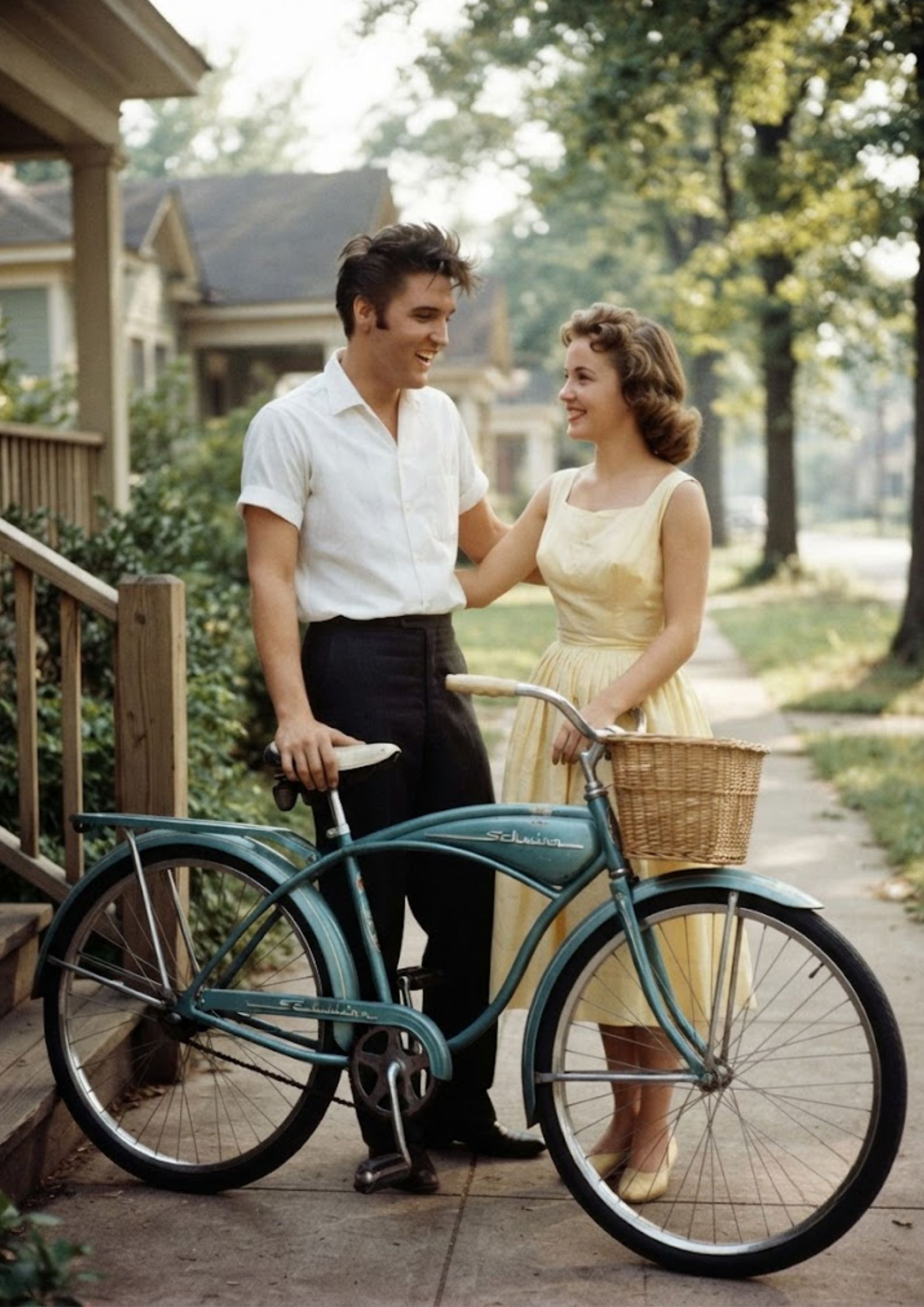
The Silent Witness: How a Simple Bicycle Preserved Elvis Presley’s Purest First Love
For millions around the globe, the name Elvis Presley evokes an unforgettable cultural symphony: the blinding flash of rhinestone-studded jumpsuits, the electric roar of sold-out arenas in Las Vegas, the trademark curled lip, and the midnight-black pompadour that defined an era. We remember him as the undisputed King of Rock and Roll—a global titan whose magnetic charisma permanently transformed the landscape of modern music. Yet, if we gently push aside the glittering curtain of Hollywood premieres and platinum records and wander down the sun-drenched, quiet streets of 1950s Memphis, we discover a much softer, more tender narrative. Long before he belonged to the world, Elvis belonged to a simpler time, and his heart was anchored by a quiet, innocent romance with his very first serious girlfriend, Dixie Locke.
To understand the young man behind the budding legend, one must look at the quiet corner of his life where fame had not yet intruded. Dixie was a grounding, steadfast presence during those dizzying months when a shy former truck driver from Tupelo was suddenly finding his voice and shaking up the musical world. Their courtship belonged to an era of front porch swings, shared milkshakes, and slow afternoons. But every young romance has its lighthearted trials, and in Elvis’s case, one of the most endearing witnesses to his youthful devotion wasn’t a grand gesture or a poetic love letter—it was a humble bicycle.
As the story goes, the future King spent an amusing amount of his free time engaged in a playful, puppy-dog rivalry with Dixie’s bicycle. While Dixie enjoyed riding around the neighborhood with her friends, a deeply smitten Elvis would often huddle close, gently pouting and casting humorous, mock-jealous glances at the two-wheeled vehicle that dared to steal her attention away from him. It was a wonderfully human, charmingly innocent dynamic. Instead of a towering rock star commanding a stadium, here was a teenager simply learning how to navigate the sweet anxieties of first love, wishing nothing more than for his sweetheart to look his way and share a laugh.
Looking back across the decades, these quiet domestic vignettes offer a warmth that grand historical biographies often overlook. The sheer magnitude of Elvis Presley’s legacy can sometimes feel monumental, almost larger than life. Yet, it is these small, gentle fragments of his youth—the sunlit Memphis afternoons, the innocent pouts, and the bicycle that silently witnessed a young man’s first experience of deep affection—that truly humanize him. They remind discerning readers that beneath the legendary voice and the global fame beat the heart of an ordinary, tender-hearted young man experiencing the timeless magic of first love.