Introduction
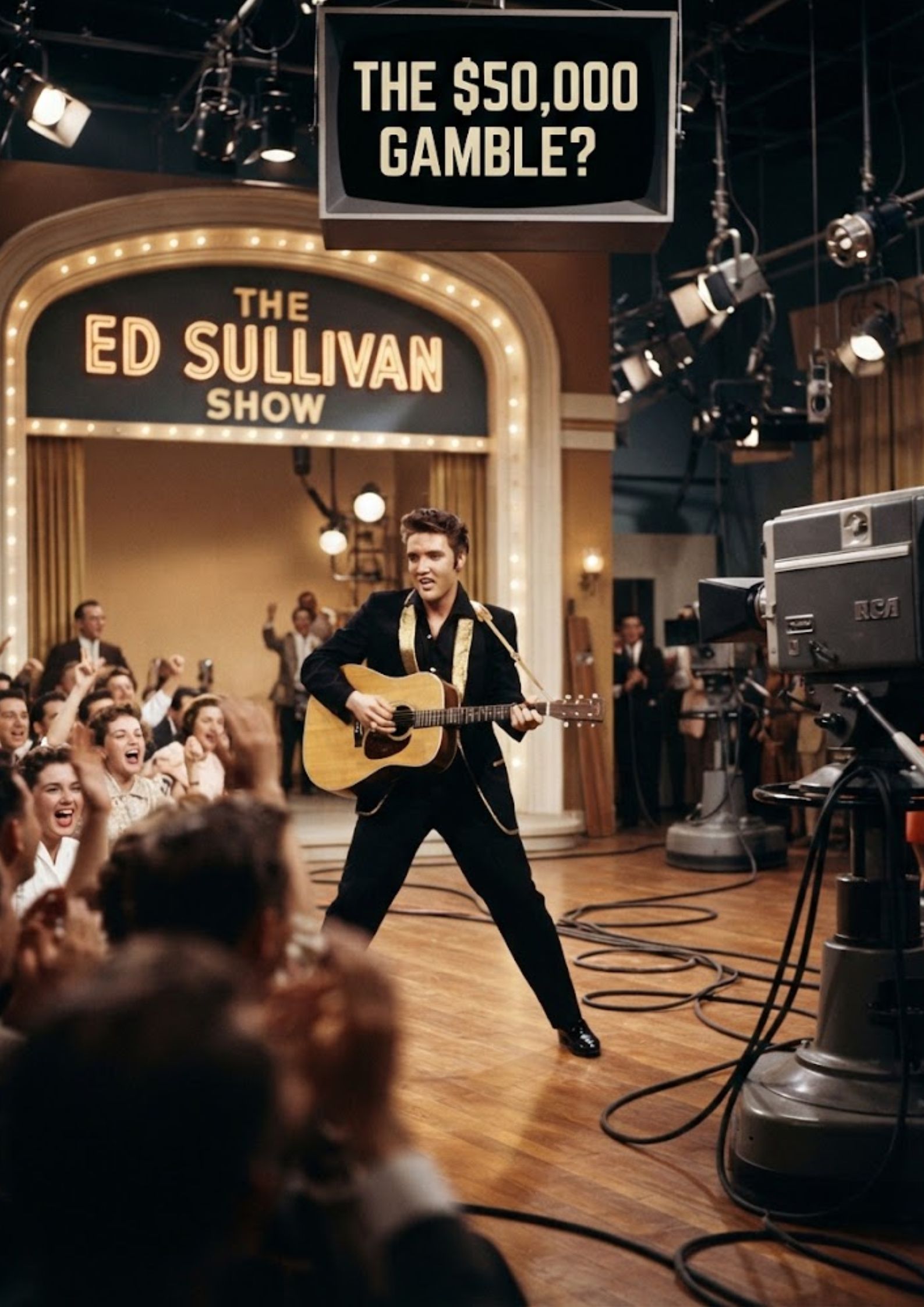
THE FIFTY-THOUSAND-DOLLAR GAMBIT: When Ed Sullivan’s Costly Gamble Turned a Television “Nightmare” Into Entertainment History!
In the summer of 1956, the American entertainment landscape was consumed by an intense undercurrent of corporate rivalry as network executives wrestled with the explosive cultural phenomenon known as Elvis Presley. Initially, Ed Sullivan—the undisputed king of Sunday night family television—firmly declared that he would not book Elvis on his program at any price, insisting that the young Mississippi singer’s uninhibited stage presence was simply not his cup of tea and posed a risk to family-oriented viewing.
However, the tide shifted dramatically when a competing network broadcasted Elvis and completely dominated the Sunday night ratings. Facing a staggering loss in viewership, Sullivan had to reconcile his personal reservations with cold commercial reality. Shortly thereafter, a historic contract worth $50,000 for three appearances was struck between Sullivan and Elvis’s manager, Colonel Tom Parker. At the time, offering such an extraordinary sum for a twenty-one-year-old performer was unprecedented in national television history.
Fascinatingly, during Elvis’s historic first appearance in September 1956, Ed Sullivan had not even met the young star in person, as the host was recovering in a hospital following a severe car accident. Yet that single broadcast shattered previous records, drawing an estimated 60 million viewers—capturing over 80 percent of the television audience. When the two men finally met and collaborated for subsequent shows, Sullivan’s perspective completely transformed. He not only praised Elvis as a genuinely fine and decent young man but also strategically integrated him throughout the entire hour to retain viewers. That $50,000 investment proved that true magnetism could conquer initial skepticism and reshape the golden age of television forever.