Introduction
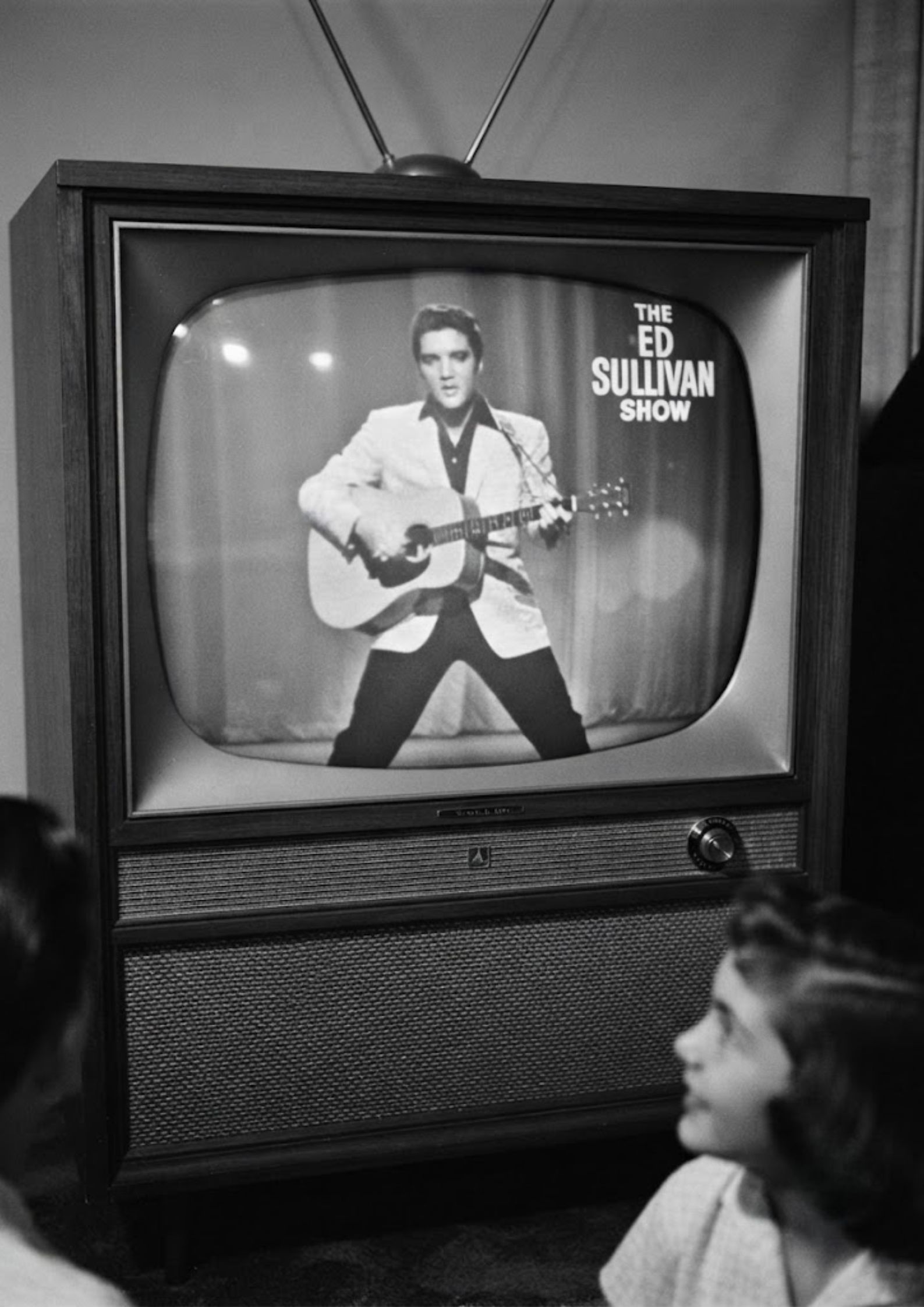
LIVING ROOM SHOCKWAVE: When the “Elvis Storm” Sparked Panic in American Households and a High-Stakes Battle for Television Supremacy!
In the autumn of 1956, as rock and roll began to sweep across the United States, the emergence of a young artist named Elvis Presley sent unprecedented tremors through American culture. His electrifying, uninhibited stage performances on television not only captivated millions of young fans but also sparked intense controversies within traditional households. For parents of that era, who were accustomed to the polished and restrained demeanor of Sunday evening family television, Elvis’s dynamic style felt like a bold disruption—leading critics and older viewers to label his movements as excessive and contrary to social norms.
Family anxieties reached a boiling point following his live television appearances, where his unconstrained musical expression and physical energy challenged the status quo. Many parents felt deeply uneasy watching their children cheer wildly for an idol who broke all conventional rules. Broadcasters and television executives suddenly faced a daunting dilemma: how to bring this explosive musical phenomenon into family living rooms without alienating older audiences or facing widespread public backlash. Influential network figures, such as veteran host Ed Sullivan, even famously declared that he would not book Elvis at any price, insisting that the young singer was simply not suited for a family-oriented program.
However, the sheer magnetic pull of millions of young admirers and soaring ratings from competing networks ultimately forced the entertainment industry to reevaluate. Over time, as producers and hosts like Ed Sullivan came into direct contact with Elvis, early prejudices began to dissolve. They discovered that behind the rebellious exterior and controversial stage presence lay a respectful, deeply talented young man who deeply appreciated his audience. Transitioning from a perceived threat to family living rooms, Elvis Presley gradually won over even his harshest critics, transforming music into a bridge that united generations across national television.