Introduction
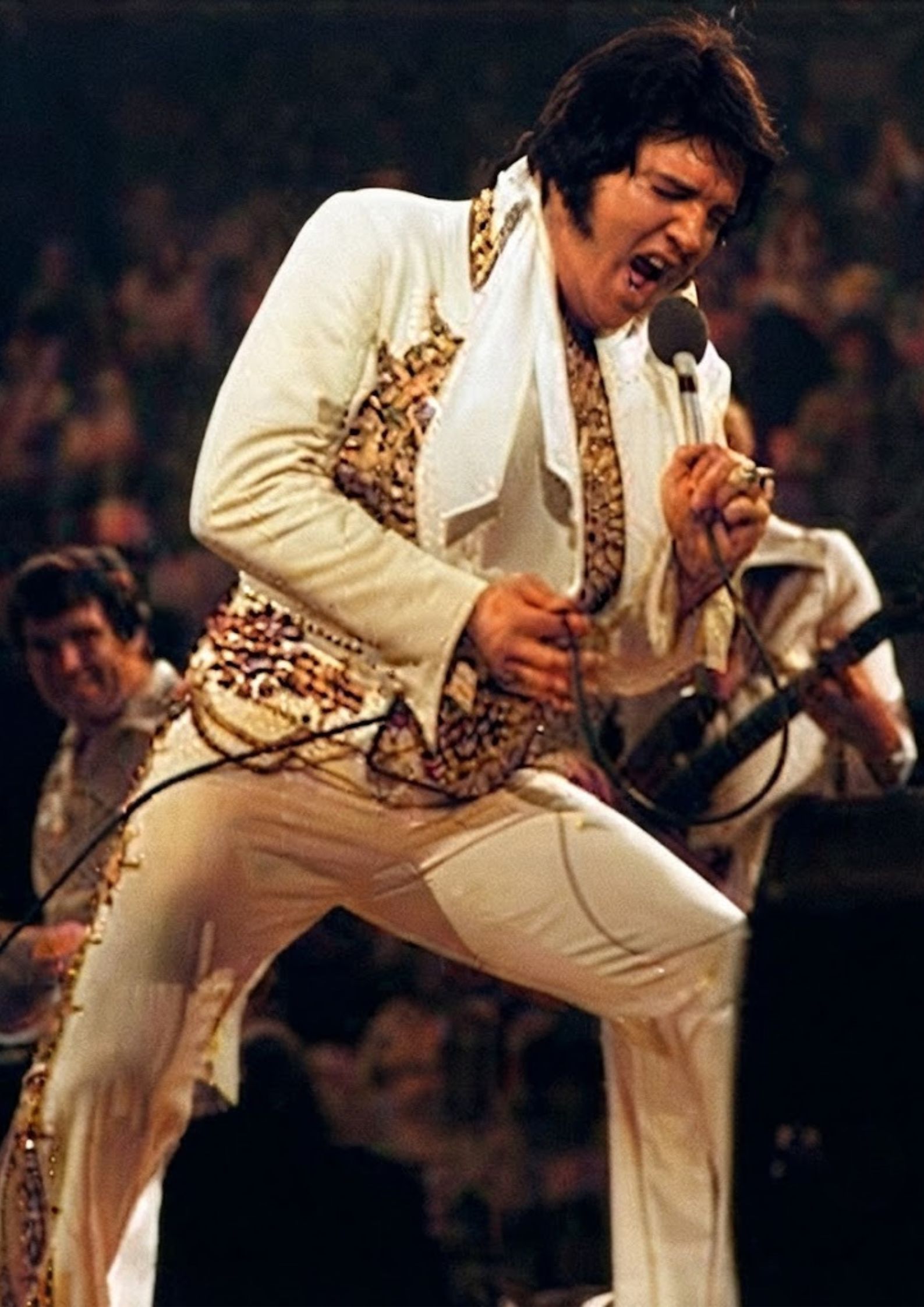
Did Elvis Want to Stop? Unraveling the Truth Behind His Final Days
When we look back at the life of Elvis Presley, the tragic finality of August 16, 1977, often casts a heavy shadow over everything that came before it. It is easy to fall into the trap of hindsight—to imagine that the King of Rock and Roll sensed the end approaching, that his career was winding down, or that he was quietly preparing to step away from the spotlight. But if we strip away decades of romanticized myth and examine the actual calendar of his final week, an entirely different truth comes to light. Elvis Presley was not stopping; he was planning for tomorrow.
The Unstoppable Machinery of Tomorrow
To understand Elvis’s frame of mind during his final days, one only needs to look at the massive logistical operation that was already in motion. His upcoming twelve-show concert tour was not a distant, hypothetical idea. It was fully booked, and the opening night was scheduled for August 17, 1977, in Portland, Maine.
While Elvis was resting at Graceland, his manager Colonel Tom Parker and the advanced crew had already arrived in Maine to prepare the arena. His private jet, the Lisa Marie, had been fueled and readied on the tarmac, packed with the signature silk scarves he handed out to fans night after night. Sound equipment was being moved backstage, and record stores across the region were stocked for the expected surge in album sales. Ticket holders were making their plans, and thousands of fans were eagerly awaiting the opening chords of his performance. To the world around him, the machinery of his career was operating at full speed.
Preparing for the Stage and Facing the Critics
Far from checking out or wishing to abandon his craft, Elvis was actively tweaking and refining his live show right up until his final hours. In the early morning hours of August 16, following a late dental appointment, he reached out to his security team to compile a list of new songs he wanted worked into the upcoming concert repertoire. He wanted the arrangements and chord changes prepared so his band could be briefed.
Moreover, Elvis was well aware of the intense public scrutiny and the recent controversies surrounding his personal life, including critical allegations published in a newly released book. Rather than retreating in defeat, those close to him noted his determination to answer his critics where it mattered most: on stage, through his performances. He was mindful of his physical conditioning, watching his diet and trying to slim down because he wanted to look and feel his absolute best for his audiences.
Dreams Beyond the Tour
Beyond the immediate concert dates, Elvis’s mind was filled with future aspirations. He had expressed a serious desire to return to dramatic acting—exploring a script with spiritual themes titled The Mission because he wanted a role where he could prove himself as an actor without singing. He also frequently talked about taking his legendary show to international audiences in Europe, discussing the logistical possibilities with genuine enthusiasm. Furthermore, personal milestones were on his horizon, including plans to spend time with family and future celebrations at home in Memphis.
A Legacy of Forward Motion
For mature readers and lifelong admirers who grew up alongside his timeless voice, examining these details changes our understanding of the King’s final chapter. Elvis Presley did not experience those days as a final goodbye. He lived them with the expectation of a future, carrying the same dedication to his art that defined his entire life. When the music abruptly stopped on that warm August afternoon, it interrupted a man who was still looking forward—proving that up until his very last breath, Elvis’s heart belonged entirely to tomorrow.