Introduction
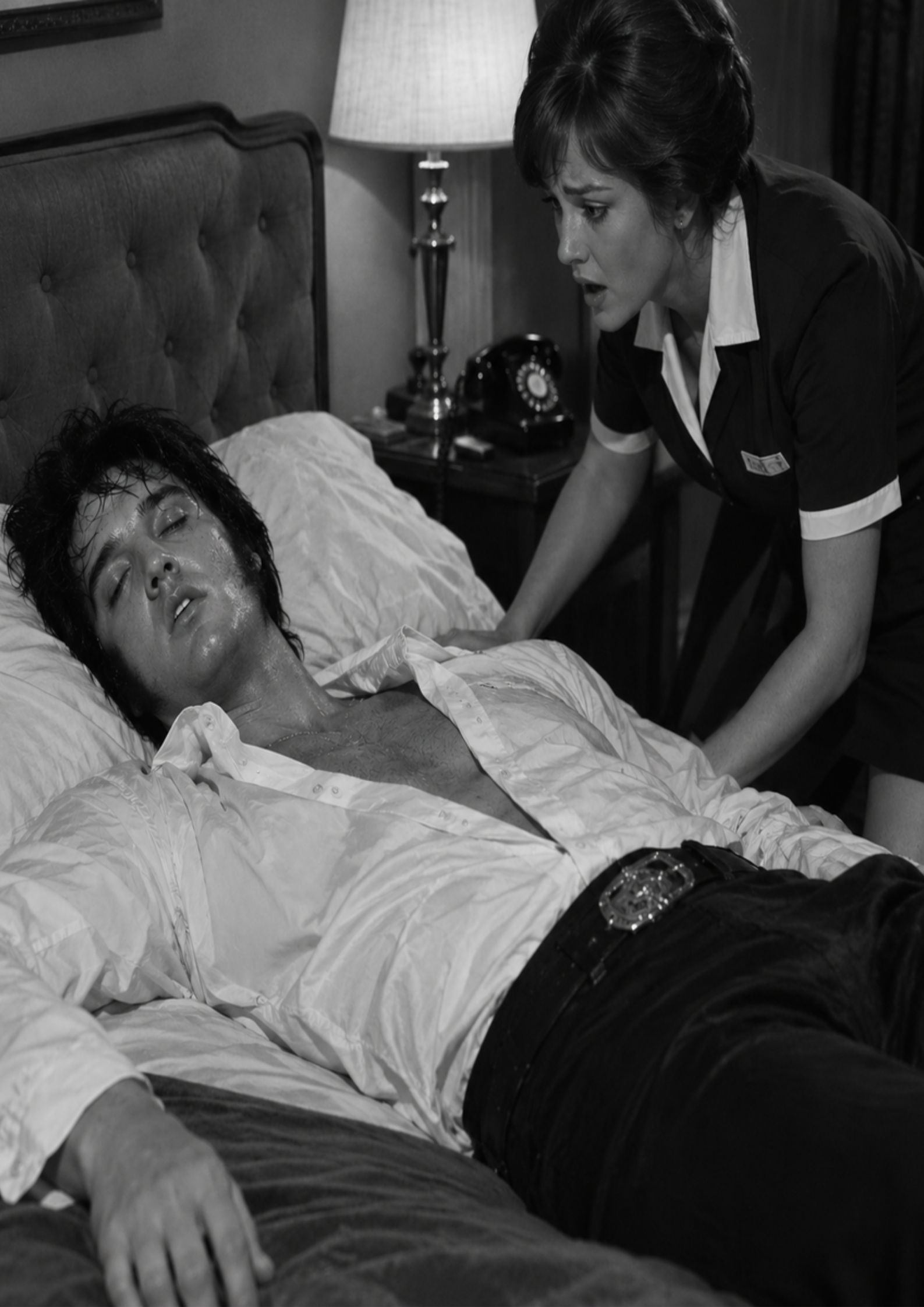
The Final Hours at Graceland: The Quiet Midnight Symphony and Tragic Fall of Elvis Presley
For those of us who have walked through the decades carrying the soundtrack of the twentieth century in our hearts, the name Elvis Presley evokes an era of unmatched glamour and cultural revolution. Yet, the story of the King of Rock and Roll possesses a deeply melancholic chapter—one that culminated behind the gates of Graceland on a quiet August morning in 1977. Understanding his final twenty-four hours offers a sobering look at a legendary artist caught between the crushing weight of fame and his own physical exhaustion.
By the summer of 1977, Elvis was forty-two years old, battling severe health complications, an enlarged heart, and a crippling battle with insomnia that had trapped him in a perpetual cycle of exhaustion. Despite having a tour scheduled to begin the very next day and a planned Christmas wedding to his fiancée Ginger Alden, his body was failing under the strain. On the night of August 15th, after visiting his dentist late in the evening and returning to the mansion around midnight, Elvis remained restless and unable to find peace.
In a poignant display of his lifelong nocturnal habits and searching spirit, Elvis woke up his cousin in the predawn hours of August 16th to play a quiet game of racquetball on his private court. When the game concluded, he sat alone at the piano in the dark, softly singing hymns and ballads, including “Blue Eyes Crying in the Rain” and “Unchained Melody”. For the few people present, it was simply a man filling the silent hours with music; looking back, history recognizes it as the final, haunting performance of a musical titan.
Hours later, after retreating to his private quarters and struggling once more against relentless sleeplessness, Elvis passed away quietly in his bathroom. While official medical reports pointed to a sudden cardiac event, subsequent investigations into the heavy regimen of medications prescribed during his final months ignited a decades-long debate over the complex web of health struggles that ended his life prematurely. For mature music connoisseurs and devoted admirers, reflecting on these final moments does not diminish his brilliance. Instead, it humanizes the icon, reminding us of the profound human cost borne by a boy from Tupelo who gave everything to his art and his audience until the very end.