Introduction
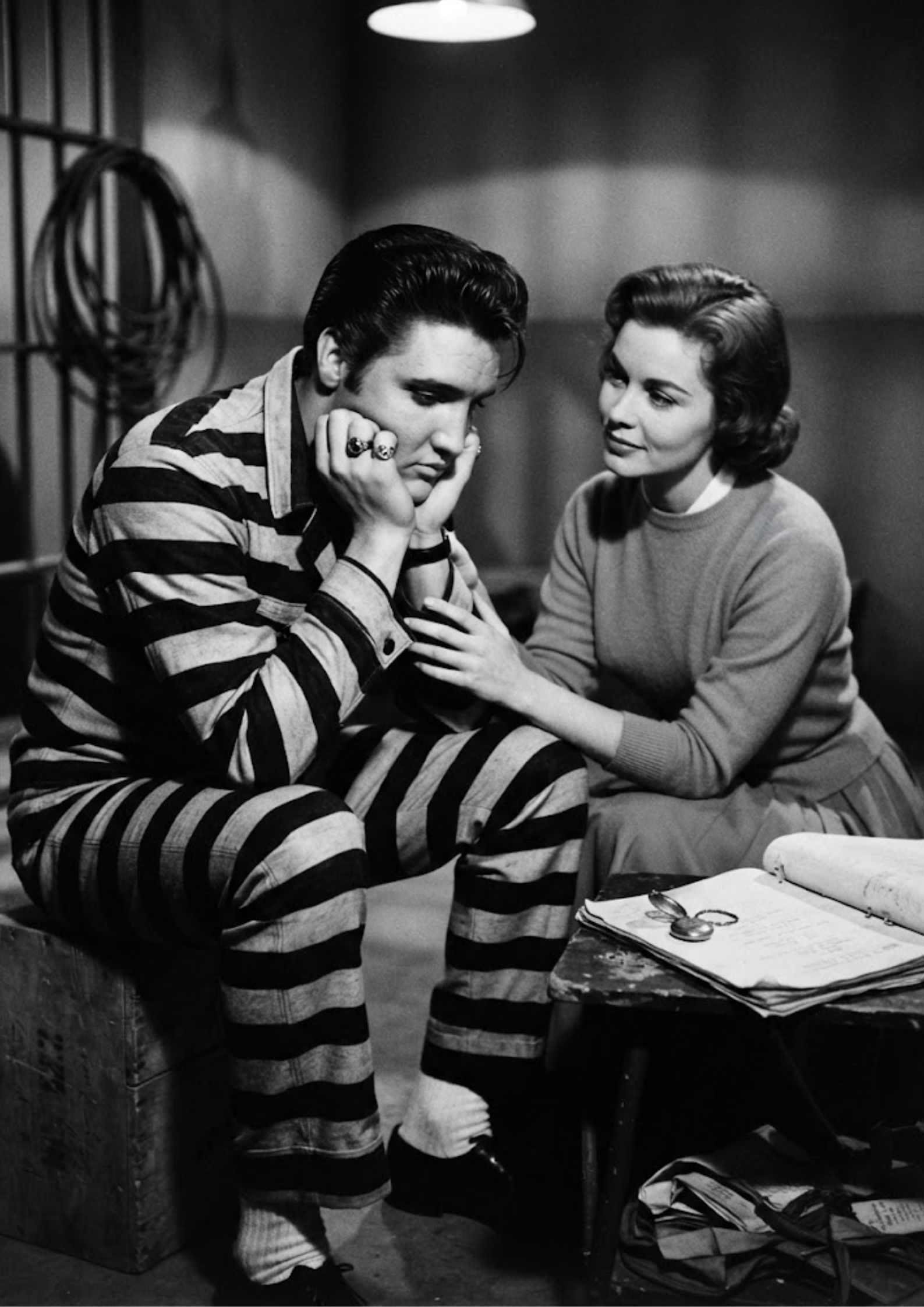
The Hidden Sorrow Behind the Screen: Why Elvis Could Never Bear to Watch Jailhouse Rock Again
For those of us who grew up alongside the timeless rhythm and enduring charm of mid-century American music, the name Elvis Presley carries a lifetime of golden memories. We remember the roaring crowds, the flashing studio cameras, and the electric energy of a generation defining its own cultural heartbeat. Yet, behind the bright lights of Hollywood premieres and the glossy posters hanging outside packed theaters, some stories carry a quiet, heavy sorrow that the public rarely understood. A particularly poignant and heartbreaking revelation from the summer of 1957 sheds light on a strict, lifelong vow Elvis made regarding one of his most iconic cinematic achievements—a promise born not of vanity, but of a profound and enduring grief.
In the summer of 1957, while shooting the MGM classic Jailhouse Rock, Elvis found a rare and genuine friend in his leading lady, a vibrant red-headed Broadway actress named Judy Tyler. Unlike so many others in Hollywood who approached the young superstar with anxious hesitation or careful politeness, Judy treated him with refreshing warmth, quick humor, and absolute authenticity. Between takes on the fake cell block set, they shared coffee, swapped stories, and forged a close bond. Just days after wrapping production, Judy married the man she loved and set out on a joyful honeymoon drive across the country toward New York.
Tragically, that joyous journey was cut devastatingly short. Just days later, a fatal automobile accident on an empty stretch of highway in Wyoming took Judy’s life at the young age of twenty-four. When the news reached Elvis in Memphis, it struck him with crushing force, leaving a wound that standard Hollywood public relations and polite press interviews could never heal. While the studio machinery marched relentlessly forward, demanding premiere dates, magazine layouts, and promotional smiles, Elvis drew a firm line that even his powerful manager, Colonel Tom Parker, could not cross.
For mature readers who appreciate the heavy emotional realities hidden behind legendary fame, this story explains why Elvis maintained a strict, unyielding rule for the rest of his life: he never once stepped into a dark screening room to watch Jailhouse Rock. While he continued to happily perform the film’s hit songs on stage for his fans, sitting in a theater to watch a beloved friend come alive on screen when she was no longer in the world was a burden too heavy to bear. It stands as a touching reminder of the man behind the crown—someone who cherished true friendship far above box office success and chose to keep a sacred silence to honor a lost companion.