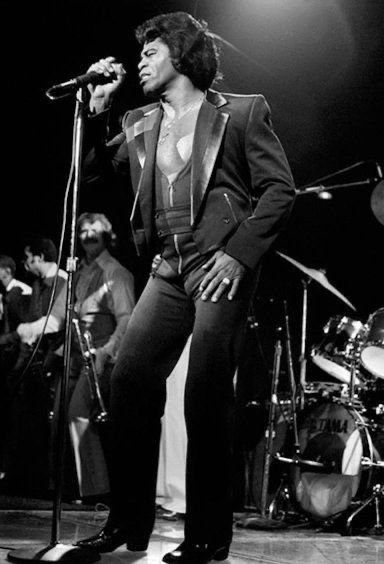
“I Knew Elvis… And They Don’t Tell You This Part.” — James Brown’s Emotional Truth Finally Revealed
“Man, I don’t care what nobody says… I knew Elvis.”
When James Brown spoke these words after the passing of Elvis Presley, it wasn’t just another interview—it was a moment that quietly challenged years of rumors, assumptions, and misunderstood history.
Because behind the headlines, behind the spotlight, there was something real: a friendship few people truly understood.
At a time when the world often tried to divide music by labels, James Brown made it clear: “Soul has no color. No barrier.” And Elvis? He wasn’t just a global icon—he was, in Brown’s own words, “a good friend… a brother.”
Their story began in 1966 in Los Angeles. Instead of waiting to be approached like a superstar, Elvis made a surprising move when told Brown was nearby.
“Take me over to James,” he said.
That simple decision sparked a bond that would last for years.
What followed wasn’t about fame—it was about music, respect, and shared passion. At Graceland, the private home of Elvis, the two legends spent nights doing something few fans ever imagined: singing gospel together for hours.
No audience. No cameras. Just two icons, laughing, challenging each other, and trading verses like old friends.
And it didn’t stop there.
In Las Vegas, inside a penthouse suite, they turned casual evenings into something unforgettable—an intimate, two-hour gospel session filled with playful competition and deep admiration. Witnesses described it as two giants of music acting like kids, pushing each other, joking, and proving just how much they both loved the same roots.
But perhaps the most powerful moment came later.
When Elvis passed in 1977, James Brown didn’t stay silent. He went to Graceland лично—to stand beside his friend one last time. Those who were there remember how deeply it affected him. No performance. No spotlight. Just quiet grief.
In his own words: “His passing hit me very hard… That’s my friend. I had to go.”
That says everything.
And here’s something many fans overlook: both legends even shaped each other’s stage presence. James Brown’s dramatic cape performances became iconic in the 1960s—moments of collapse, revival, and raw emotion. Years later, Elvis introduced his own capes, transforming into a larger-than-life figure on stage, blending music with theatrical power.
Different styles. Same brilliance. Mutual influence.
In the end, their story isn’t about comparison—it’s about connection.
Two of the greatest performers in history. Two different worlds. One shared respect.
And maybe that’s the part history doesn’t talk about enough.
Because beyond the noise, the rumors, and the debates…
James Brown knew Elvis. And what he knew… changes everything.